How Curiosity, Connection, Consistency, and Creativity Transform Modern Special Education
admin December 3rd, 2025

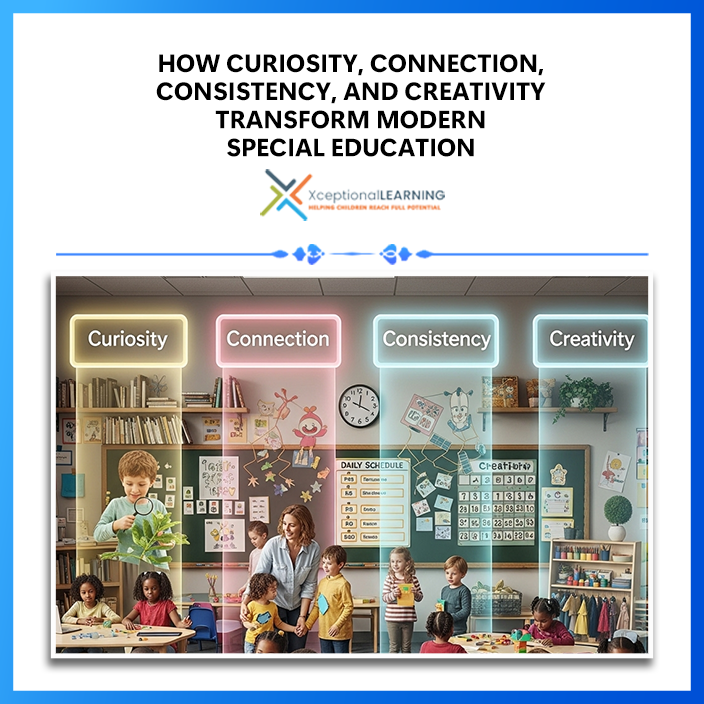
For years, special education has often meant separate classrooms, outdated labels, and low expectations. But that’s finally beginning to change. Thanks to new technology and a growing shift in mindset, we’re moving toward a more inclusive, student-centered way of learning—one that meets learners where they are and helps them grow beyond what anyone thought possible. At the heart of this shift are four simple but powerful principles: Curiosity, Connection, Consistency, and Creativity—together known as the Four Cs.
These aren’t just buzzwords. When woven into the fabric of a student’s Individualized Education Program (IEP), the Four Cs can spark real growth—academically, emotionally, and socially. They help students build confidence, resilience, and a sense of independence, all while discovering what makes them shine.
1. Curiosity: Sparking the Desire to Learn
Curiosity is the natural drive to explore, ask questions, and seek answers. Tapping into a student’s natural desire to explore can transform passive learning into active discovery. This is especially relevant for students with special needs, since curiosity often becomes the key to unlocking their engagement and progress.
Curiosity helps motivate students to participate actively, improves their attention span and memory retention, and makes lessons relevant and enjoyable.
Classroom Applications
- Inquiry-Based Learning:
Instead of simply teaching facts, educators guide students to ask questions and make predictions. For example, in a science class, rather than explaining how plants grow, students might plant seeds and be asked, “What do you think will happen in a week?” This approach builds anticipation and encourages students to wonder, observe, and investigate—key habits of curious minds. - Choice Boards:
Giving students a menu of learning activities (like art projects, storytelling, or digital games) based on a theme lets them follow their interests. When learners have agency, they’re more likely to explore topics in depth, ask questions, and take risks—all of which feed curiosity and intrinsic motivation. - Technology for Exploration:
Tools like virtual reality field trips open doors to new worlds—literally. A student who can’t physically visit a museum can still walk its halls in VR, ask questions about what they see, and feel inspired to learn more. Digital Activity Books transform learning into a playful experience, inviting students to explore content at their own pace and in their own way—fueling both curiosity and joy.
Case Example
A child with Autism Spectrum Disorder (ASD) often resisted traditional reading lessons. When teachers used his curiosity about trains to build a “train-themed reading activity” on his Digital Activity Book, his engagement skyrocketed. Curiosity turned a challenge into an opportunity.
2. Connection: Building Trust and Belonging
Learning doesn’t happen in isolation—it thrives in relationships. For students in special education, a sense of connection can be the bridge between challenge and growth. When students feel valued and supported, they are more likely to engage fully and take healthy risks.
Connection goes beyond friendliness—it builds trust and belonging, helping to ease isolation and foster communication and social skills within an inclusive classroom culture.
Practical Applications
- Teacher-Student Relationship:
Start the day with an emotional check-in using visuals, mood meters, or feelings charts. This not only helps students identify and express their emotions but also shows them they are seen and supported. Simple affirmations like, “I noticed you worked really hard on that puzzle,” go a long way in building trust. They reinforce the idea: You matter here, and your efforts are noticed. - Peer-to-Peer Connection:
Intentional grouping of students with diverse abilities for collaborative activities—like building projects or storytelling role-plays—encourages empathy, communication, and teamwork. These structured interactions help students build friendships, practice social skills, and feel like valued members of the classroom community. - Parental Engagement:
Using platforms like XceptionalLEARNING dashboards helps keep families informed and involved in their child’s day-to-day progress. When parents are included, students feel more supported both at school and at home, reinforcing a sense of security and belonging. - Therapy Collaboration:
When educators, speech therapists, occupational therapists, and counselors collaborate regularly, it ensures a more holistic understanding of each student’s needs. This kind of team-based support fosters consistency and reduces gaps in care—making the student feel surrounded by a network of connection, not a fragmented system.
Case Example
A child with ADHD showed disruptive behaviour until teachers introduced peer mentoring. By assigning him a “reading buddy,” his confidence grew, and his behaviour improved. The power of connection turned frustration into motivation.
3. Consistency: The Backbone of Progress
For many students with special needs, predictability is powerful. Knowing what to expect each day helps reduce anxiety, builds trust, and creates the mental space students need to focus, participate, and grow. Consistency isn’t just about doing the same thing every day—it’s about creating a steady, reliable environment where students feel safe enough to take risks and thrive. Consistency reinforces learning through repeated practice and builds trust and independence over time, helping students gain a sense of control in their daily routines.
Classroom Applications
- Visual Schedules:
Posting the day’s routine on colourful charts or digital boards helps students understand what’s coming next. This visual roadmap reduces stress during transitions and supports smoother classroom flow—especially for students with autism or executive functioning challenges. Consistent and predictable routines reduce anxiety and help students mentally prepare for changes in activity. - Consistent Language and Signals:
Using the same phrases, hand signals, or visual cues for common instructions—like “quiet time,” “line up,” or “good job”—makes expectations clear and accessible, especially for non-verbal learners or those with language delays. This repetition helps students process instructions more quickly and feel more in control of their environment. - Behaviour Reinforcement:
Tools like token boards, sticker charts, or point systems help reinforce positive behaviors. When paired with consistent praise (e.g., “I love how you waited your turn!”), students begin to associate effort with reward, which encourages internal motivation over time. Consistent reinforcement helps shape behavior and builds emotional resilience by celebrating effort, not just outcomes. - Home–School Routine Alignment:
When parents and educators work together to mirror consistent routines—like reading before bedtime or using the same calming strategies during meltdowns—students benefit from a sense of continuity across environments. These shared routines create a predictable world, which supports emotional regulation and generalization of skills.
Case Example
A student with Down Syndrome struggled with sudden changes in class. Teachers introduced a visual calendar and gave him 5-minute warnings before transitions. With consistency, his anxiety decreased, and his participation improved.
4. Creativity: Breaking Barriers in Learning
Creativity transforms special education by allowing students to express themselves, solve problems, and engage in learning beyond traditional methods. Creativity helps children with limited verbal communication in expressing themselves in newer and more innovative ways. It also makes lessons adaptable to multiple learning styles.
Creative Applications
- Art as Expression:
Students can create mood collages, drawings, or storyboards to express feelings they may not be able to verbalize. This empowers children with speech or language difficulties to share their emotions in a meaningful, visual way. - Music Therapy:
Rhythms, melodies, and repetition support memory, language development, and emotional regulation. For example, a child with apraxia may find it easier to practice words through singing than through spoken drills alone. - Play-Based Learning:
Activities like role-play (e.g., pretending to be a shopkeeper or teacher) foster social interaction, problem-solving, and confidence. Board games also build patience, turn-taking, and cooperative skills in a fun, low-pressure setting. - Digital Tools:
Devices like VergeTAB and interactive Digital Activity Books use colours, animations, and gamified content to keep learning exciting and adaptive. These tools allow for personalized, engaging experiences that respond to each student’s pace and interests.
Case Example
A child with selective mutism used drawing activities to communicate at school. Over time, combining art with speech therapy gradually encouraged her to use words. Creativity gave her a safe outlet to grow.
The Four Cs in Action: Integration for Impact
When the Four Cs are combined, they create holistic learning experiences that address academic, emotional, and social needs. Consider this scenario:
- Curiosity: Students explore animal habitats through a digital story.
- Connection: They work in groups to share findings.
- Consistency: Each group follows the same structured reporting format.
- Creativity: They present findings using posters, songs, or role-play.
This integration turns a single lesson into a multidimensional growth experience.
Role of Teachers, Parents, and Therapists
Teachers
- Encourage curiosity with engaging activities.
- Maintain consistency in classroom rules.
- Support creative outlets like art, music, and technology.
Parents
- Extend consistency at home with routines.
- Support connection by attending school activities.
- Fuel curiosity by exploring hobbies with children.
Therapists
- Use creative tools in therapy sessions.
- Align therapy goals with classroom routines.
- Build strong connections with both the child and family.
Challenges and Practical Solutions
Challenges
- Limited training for teachers.
- Inadequate resources in schools.
- Over-reliance on traditional methods.
Solutions
- Professional Development:
- Continuous teacher training in digital tools and inclusive practices.
- Technology Integration:
- Using therapy platforms like XceptionalLEARNING for personalized support.
- Collaborative Models:
- Joint action plans between teachers, parents, and therapists.
- Policy Support:
- Government incentives for schools adopting inclusive education.
The future of Special Education with the Four Cs
The future of special education is not about one-size-fits-all programs—it’s about personalized, inclusive, and technology-integrated learning. At the heart of this evolution are the Four Cs: Curiosity, Connection, Consistency, and Creativity.
- Curiosity inspires inquiry-driven, hands-on learning that empowers students to ask questions and explore.
- Connection strengthens collaboration between families, educators, and therapists—creating a support system that surrounds each child.
- Consistency brings structure and progress through tools like AI-powered learning dashboards and routine-based strategies.
- Creativity unlocks new ways of learning through immersive technologies like virtual and augmented reality, along with expressive tools like art and music.
Together, these principles turn limitations into possibilities—supporting not just academic growth, but emotional resilience, confidence, and independence.
At XceptionalLEARNING, we’re proud to lead this shift. Our platform connects families with licensed therapists online and offers comprehensive child development support through accessible, tech-enabled solutions. We’re transforming therapy and learning—making every child’s journey more connected, more engaging, and more meaningful.
Contact us today to discover how we can support your child’s unique potential.