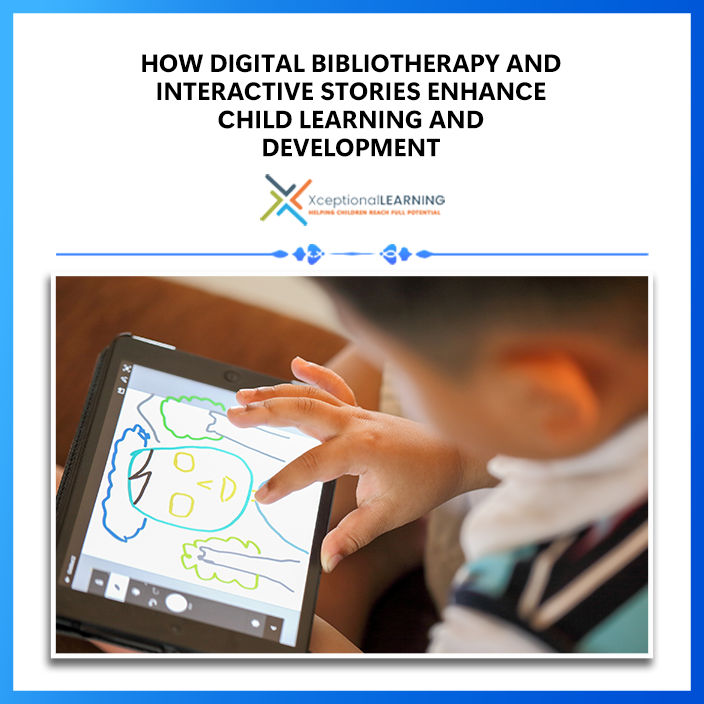
How Digital Bibliotherapy and Interactive Stories Enhance Child Learning and Development
admin December 10th, 2025

Who does not like a good story? Bedtime fairy tales and picture books did it for the foregone generation, and the digital cartoon versions make the story world come alive for today’s children. Despite the medium, stories have always helped children make sense of the world and engage with new ideas in a safe and structured way.
Unbeknownst to many, this age-old method is also a powerful therapeutic tool. Known as Bibliotherapy, this approach uses books and narratives to support children’s emotional and psychological development. Now, with the rise of technology, digital bibliotherapy is taking this age-old practice into exciting new, interactive formats that make learning more engaging and accessible.
Wondering how digital stories and therapeutic learning is implemented consistently in real therapy sessions?
XceptionalLEARNING supports therapists, schools, and parents with structured activity plans, goal-based programs, and progress tracking tools that help children achieve measurable improvements.
Chat with our team on WhatsApp
What is Digital Bibliotherapy?
Digital bibliotherapy is the use of technology-enabled reading experiences as a therapeutic intervention. It integrates interactive elements such as audio, visuals, and adaptive content, creating immersive story experiences that help children focus, retain information, and enjoy learning.
Methods of Therapeutic Engagement
- E-books with audio narration: Supports children with reading difficulties and auditory learning styles.
- Interactive apps with quizzes, prompts, or games: Encourage active participation and critical thinking.
- Gamified storytelling platforms: Combines the fun of gaming with educational content, maintaining attention and motivation.
Psychological and Developmental Benefits
Emotional Development
- Children see themselves reflected in characters, enhancing empathy and self-awareness.
- Prompts encourage children to express feelings and explore coping strategies.
- Helps children navigate stress, fear, or frustration safely.
Cognitive Growth
- Improves memory, comprehension, and problem-solving skills.
- Decision-making, predicting outcomes, and answering story-based questions strengthen critical thinking.
- Exposure to diverse vocabulary and sentence structures supports language development.
Behavioural and Social Skills
- Stories model social interactions and ethical decision-making.
- Children learn cooperation, patience, and perspective-taking.
- Can reduce behavioural difficulties and improve classroom and therapy participation.
Practical Applications in Therapy
Digital bibliotherapy can be integrated with other therapies such as speech, occupational, and behavioural therapy, enhancing outcomes by embedding story-based tasks into therapeutic goals.
Speech Therapy
Applications
- Interactive stories with audio narration
- Repetitive phrases for speech clarity
- Quizzes & word games for vocabulary
Benefits
- Strengthens language comprehension & expression
- Engages children resistant to drills
- Provides trackable progress
Case Example
A child practices guided story prompts, improving sentence formation and speech confidence.
Occupational Therapy
Applications
- Story-based sequencing tasks
- Fine motor exercises (tracing, dragging, arranging)
- Daily routine simulations
Benefits
- Enhances hand–eye coordination & motor skills
- Improves planning & problem-solving
- Provides safe practice for real-life tasks
Case Example
A child helps a character organize items, boosting sequencing & organization skills.
Behavioural Therapy
Applications
- Stories on emotions & problem-solving
- Prompts to link feelings to personal experiences
- Reflection exercises for mindfulness
Benefits
- Builds empathy & emotional vocabulary
- Teaches coping strategies
- Reduces anxiety & outbursts
Case Example
A story about school anxiety sparks discussion, helping the child practice coping strategies.
Social Skills / Group Therapy
Applications
- Group story sessions with shared decision-making
- Role-play scenarios in stories
- Collaborative story-building
Benefits
- Improves cooperation, empathy & perspective-taking
- Encourages peer interaction
- Provides low-pressure social practice
Case Example
Children decide a character’s action collectively, learning negotiation & turn-taking.
Home Use / Parent-Led Therapy
Applications
- Guided reading with parent prompts
- Therapy-aligned interactive stories
- Progress tracking for feedback
Benefits
- Strengthens parent–child bonding
- Extends therapy into daily routines
- Reinforces coping & academic skills
Case Example
Parents use a story on sharing to reinforce teamwork during playdates.
The Added Advantage of Progress Tracking: Digital platforms make therapy measurable by recording engagement, responses, and learning outcomes. These insights allow therapists, parents, and educators to adjust strategies in real time, ensuring interventions remain personalized and effective.
Advantages Over Traditional Methods
- Accessibility: Children can access interactive stories anytime, anywhere, making therapy flexible and continuous.
- Personalization: Adjustable difficulty levels and pacing make digital stories especially effective for neurodivergent children (e.g., autism, ADHD), ensuring therapy remains accessible and enjoyable.
- Engagement: Multimedia elements like sound, animation, and quizzes maintain attention and motivation.
- Data-Driven Insights: Digital tracking enables therapists and educators to identify challenges, measure progress, and adapt interventions effectively.
Bridge Theory With Structured Digital Support
Real progress happens when therapeutic strategies are supported with consistent routines and measurable tracking. With XceptionalLEARNING, caregivers and professionals can monitor development, align goals, and ensure continuity beyond sessions.
Book a free demo
Case Example
Improving Focus and Engagement in a Child with Attention Difficulties
- Challenge: The child struggles to stay attentive and engaged during therapy sessions.
- Intervention: Use of an interactive story application featuring short segments, quizzes, and prompts to maintain interest.
- Outcome: Gradual improvement in focus, comprehension, and participation.
- Therapist Role: Progress is tracked digitally, allowing the therapist to adjust story difficulty and session structure to suit the child’s needs.
Parent and Educator Involvement
Parent Engagement
- Participate in guided reading and discussion sessions to reinforce therapy goals.
- Encourage consistent at-home reading routines.
- Use story prompts to discuss emotions, problem-solving, and social situations.
Educator Role
- Incorporate interactive stories into classroom lessons and social-emotional learning activities.
- Collaborate with therapists to create a unified approach that reinforces learning across environments.
- Choose culturally relevant stories to reflect the child’s background and increase relatability.
Practical Tips for Parents and Therapists
- Choose interactive stories aligned with therapy goals.
- Use guided discussion prompts to deepen reflection and comprehension.
- Schedule consistent short sessions rather than long, overwhelming periods.
- Track progress using digital platform insights to adjust activities and difficulty.
- Combine reading with hands-on activities, art, or role-play for reinforcement.
Emerging Trends
- Culturally Relevant Stories: Using local folktales and multicultural content enhances relatability and engagement.
- Integrative Approaches: Combining stories with movement, art, or mindfulness exercises for multisensory learning.
- Future Technologies: Adaptive digital platforms offer personalized, real-time feedback while remaining accessible to all users.
Applying Therapy With Digital Structure
Combining therapy techniques with digital structure helps improve clarity, consistency, and collaboration between therapists and families, leading to better outcomes for children.
WhatsApp our team
In Brief
Digital bibliotherapy transforms storytelling into a dynamic tool that supports children’s growth and well-being. By combining technology with therapeutic strategies, it creates engaging learning experiences that build resilience, empathy, and essential life skills.
If you are looking for ways to turn therapeutic insights into measurable, trackable progress for your child or students, XceptionalLEARNING can help. Our digital platform offers guided therapy-aligned activities, progress dashboards, and caregiver-friendly tools that transform therapy into consistent daily practice.
Chat with us on WhatsApp