
How Digital Tools Can Help You Grow Your Private Therapy Practice

Reading Time: 10 minutes

Clinically Reviewed By Rakshitha S

Senior Subject Specialist – SLP

A practical guide for private practitioners on visibility, retention, and reducing administrative overhead using digital systems.

You didn’t become a therapist to spend your evenings chasing parents on WhatsApp. You didn’t go through years of clinical training to worry about where next month’s referrals will come from. And yet, here you are.

If you’re building a private practice in India, you already know the gap between the work you love and the business of sustaining it. Whether you’re helping a child find their first words, supporting fine motor development, working through a teenager’s anxiety, or designing individualised learning plans, the clinical picture is clear. It’s everything around it that gets complicated.

This piece is about one thing: digital tools have changed what’s possible for private practitioners in ways that weren’t true even three years ago. Not on the surface level, but in ways that affect how you get discovered, how you deliver care, how you prove your value, and how much of your time actually goes to clinical work versus everything else.

Why most private practices stay small

Before we talk about tools, it’s worth being honest about why growth stalls, because the answer is rarely “not enough effort.” Most private practitioners face the same three structural problems.

Visibility is almost entirely local and through word of mouth. This works until it doesn’t. One slow month, a family that relocates, a new clinic down the road, and a referral network that felt stable can thin out faster than expected. There’s no buffer.

Progress is hard to see from the outside, which makes it hard to explain. A clinician knows that a child who couldn’t hold scissors in January and is cutting along a line in June has made real progress. But if that journey isn’t documented and communicated clearly, the parent just sees six months of sessions and a fee they’re beginning to question. The outcomes are real. The visibility of those outcomes often isn’t.

Administration absorbs clinical capacity. Session notes, home programme instructions, parent follow-up, and scheduling. Across every discipline, this is where hours quietly disappear. Hours that either extend your working day or reduce the number of clients you can actually see.

Digital tools address all three, not by replacing clinical judgement (that’s irreplaceable), but by handling the infrastructure that currently competes with it.

Digital tools should support clinical judgement — not replace it. They handle the infrastructure around therapy so practitioners can spend more time on clinical work.

The ChallengeWhat digital tools can do 
Low local visibilityGoogle Business Profile + verified therapy platform
Parents not seeing progressDigital progress reports + parent-facing dashboard
Manual session documentationIntegrated progress tracking tools
Last-minute cancellationsTeletherapy slots with flexible scheduling
Informal school communicationStructured digital reports and IEP-aligned documentation

Five habits that slow practice growth

1. Depending entirely on word-of-mouth referrals. This feels organic and safe, but it gives you no control over your pipeline. When it slows, there’s nothing to fall back on. 

2. Delaying progress documentation. Many clinicians track informally and plan to write it up properly later. That documentation rarely gets done, and parents who can’t see progress don’t renew.

3. Ignoring online reviews. A 2022 survey by Reputation and YouGov found that over 70% of healthcare consumers read patient reviews before choosing a new provider, and 72% would only consider a provider rated 4 stars or higher. A profile with no reviews loses out even if the clinician is excellent. 

4. Using too many disconnected apps. A scheduling app, a WhatsApp group, a shared Drive folder, and a billing sheet. This is how administrative overhead compounds. One integrated platform does the same work with far less friction.

5. Not involving parents consistently. Parent engagement between sessions is one of the strongest predictors of outcomes. When it’s left to informal reminders, it becomes inconsistent. When it’s built into the session structure, it becomes reliable.

1. Build an Online Presence That Reflects Your Actual Expertise 

There’s a moment that happens in most families’ journeys with a child who has a developmental, behavioural, or learning challenge. The house is quiet. The parent pulls out their phone and searches.

They’re not searching for “therapy.” They’re searching for something specific: “ABA therapist for autism in Hyderabad,” or “child psychologist for ADHD near me,” or “occupational therapist for sensory issues in Chennai.” These are high-intent searches from people who are ready to act. Google has publicly stated that roughly 1 in 20 of its searches is health-related, which translates to hundreds of millions of health queries every single day. The families in your city who are searching for support are part of that volume.

Start with a Google Business Profile. It’s free and takes under an hour to set up. Be specific about your discipline, your specialisations, and the presentations you work with most. Add photos of your space, your working hours, and the age groups you serve.

Ask two or three families, with their permission, to leave an honest review. Specificity is what matches your profile to the right search; reviews are what turn a search into an enquiry.

Getting listed on a verified therapy platform matters too. A parent who finds you through a platform where credentials are checked starts with a baseline of trust that cold discovery doesn’t provide. Together, local search presence and platform visibility mean you’re working two channels at once: one for families who search locally, and one for families referred by a paediatrician or school.

2. Use Teletherapy to Expand Without Burning Out 

The biggest financial opportunity for most clinicians isn’t more local clients. It’s removing the geography constraint entirely.

Think about a typical week. Some cancellations leave gaps you can’t fill on short notice. Families who’ve enquired but can’t manage the commute. A child who’s been making excellent progress whose family has just relocated. And there are only so many clients you can see in person each day before the intensity catches up with you.

Teletherapy doesn’t just fill cancellation gaps. It changes your geography. A clinician in Thiruvananthapuram can work with a family in Nagpur who can’t find local support. A therapist with a specialised skill set can serve families in smaller cities where that expertise simply doesn’t exist. In a country where rehabilitation services remain heavily concentrated in major urban centres, this is a meaningful and underused opportunity.

Project DHRISHTI, a technology-driven initiative operating across multiple Indian states, demonstrated exactly this. Trained educators delivering structured digital intervention reached children in areas with almost no access to rehabilitation services. The outcomes were measurable, and the reach was far beyond what any in-person practice footprint could have achieved.

For your own practice, the step is straightforward: designate two or three teletherapy slots per week and market them explicitly to families outside your city. Price them equivalently to in-person sessions. Remote delivery of an evidence-based intervention by a qualified professional is not a discount service, and it shouldn’t be positioned as one.

One thing that separates effective teletherapy from a regular video call is the structured session content that the child engages with during the session and continues at home. The session becomes a model and a checkpoint. The work happens continuously, not only when the child is on screen.

Teletherapy also naturally places the parent in the room in a way that centre-based therapy often doesn’t. When that’s used well, coaching the parent through a home activity in real time, adherence to home programmes improves noticeably. Better home practice means better outcomes. Better outcomes mean families stay enrolled and refer others.

3. Make Progress Visible, Because Invisible Progress Doesn’t Retain Clients

This is the single most underrated lever in private practice, and it costs almost nothing to fix once the right system is in place.

Here’s a pattern that plays out constantly. A family invests in therapy for six months. The child is genuinely improving. But the parent is largely going on faith, because nobody has shown them the data. Sessions start getting missed. Eventually, they stop, not because therapy wasn’t working, but because its value was invisible to the people paying for it.

Make progress visible.

When families can clearly see where therapy started, what has changed, and what
comes next, they can better understand the value of ongoing care.

Contrast that with a family that receives, every month, a structured progress update. A clear record of where the child started, what the goals are, what’s been achieved, and what the next milestone looks like. That family doesn’t just stay enrolled. They understand what they’re investing in. They tell other parents.

Clinicians who introduce structured monthly digital progress reports tend to find that parents arrive at review meetings better prepared and more engaged. Not because the clinical work changed, but because the family could finally see it. Parents who understand the therapy process become some of the most reliable sources of referrals a practice has.

Digital therapy platforms with built-in progress tracking and parent-facing dashboards make this the default rather than something that gets done when time allows. Documentation during the session generates the parent update automatically. Parents can log in between sessions and see where things stand. And documented outcomes protect you professionally, too. When a family questions whether progress was made, your response isn’t a verbal account. It’s a report.

4. Build a Specialty Identity, Then Let Content Work for You

Generalist practitioners compete on availability and price. Specialists compete on expertise and reputation.

Every clinician reading this has a specific angle that makes them different, whether they know it or not. The psychologist is trained in trauma-focused CBT. The behaviour analyst is working with adolescents on independent living skills. The occupational therapist specialising in sensory integration and DCD. The special educator has deep experience in dyslexia remediation. That specificity is genuinely rare, and most practitioners leave it buried in their CV rather than putting it front and centre.

Content (written, spoken, or video) is how specialists become known beyond their existing client network. The content that works isn’t promotional. It’s genuinely useful.

A clinician who writes a piece explaining what executive function actually means and how it shows up in a teenager’s daily life is giving something of real value to a parent who’s been confused by that term for months. You don’t need a content calendar. You need one piece, done well, written for a parent rather than a colleague, answering a question you frequently hear in the clinic. Then another. Over time, this builds a professional reputation that works for you around the clock.

Case stories, appropriately anonymised and shared with explicit consent, are the most powerful format. Not clinical reports. Narratives. A child who came to therapy with no functional communication is now initiating conversation. A teenager whose learning difficulty went undetected for years, and what proper assessment and school advocacy actually looked like for that family. These stories consistently draw more engagement from parents than any amount of clinical explanation, because families recognise their own situation in them.

5. Get Certified in Digital Practice

A practitioner who is visibly trained in digital therapy delivery is positioned differently from one who simply uses digital tools informally. This distinction has grown more meaningful as hybrid therapy becomes the norm rather than the exception.

Parents and school referrers increasingly understand that online therapy is a real option, and they’re looking for practitioners who can do it well, not just practitioners who have Zoom. Institutional partners, government programmes, and schools building therapy support arrangements want providers with documented competency in digital delivery.

XceptionalLEARNING’s Digital Practice Training (DPT) course is built for rehabilitation professionals across disciplines who want to formalise this competency. Completing it can strengthen how you present your services to schools, institutions, and families while demonstrating competency in digital practice. For clinicians who are doing excellent work and simply want their expertise seen more clearly, this credentialing is often the missing piece.

6. Move From Referral Source to Institutional Partner

Most private practitioners think of schools as a source of referrals. A more useful framing is to think of them as institutional partners.

Here’s what that looks like in practice. A school has children who’ve been flagged for communication, behavioural, cognitive, or motor support needs. They either lack in-house expertise or their current resources are stretched. A clinician who arrives with a structured proposal, defined scope, clear deliverables, professional progress reports, and a digital system that the school can review is offering something a principal can present to their governing board and to parents.

When you can show a school a progress report across fifteen children with outcomes tracked and sessions documented, you’re not presenting as a freelancer. You’re presenting as a professional service with accountability infrastructure. That distinction determines whether a school partnership is a one-time arrangement or a multi-year one.

Digital documentation tools make this kind of credibility accessible to individual practitioners, not just large clinics. The infrastructure that makes institutional work look professional is the same infrastructure that strengthens your individual practice.

7. Stop Building Alone

Private practice is isolating in a way that nobody really prepares you for. You care deeply about your clients. But between sessions, you’re the marketer, the administrator, the professional development department, and the billing team, all at once.

The clinicians who grow fastest are usually those who have stopped trying to build everything independently and connected with a platform or professional network that handles the infrastructure, so they can focus on the work they were actually trained to do.

Before choosing any platform, it’s worth asking three questions: Does it reduce my administrative
workload? Does it improve how I communicate with families? Does it make my clinical outcomes easier to demonstrate?

Before choosing a digital platform, ask:
Does it reduce my administrative workload?
Does it improve how I communicate with families?
Does it make my clinical outcomes easier to demonstrate?

A platform that answers yes to all three isn’t an overhead. It’s a growth tool.

XceptionalLEARNING is built on this model. Clinicians who enrol as providers connect with an existing parent audience, discipline-appropriate clinical tools, and an ongoing peer and training community. The clinical work stays at the centre. The infrastructure is already there.

The question worth asking before anything else: how many hours last week did you spend on things that had nothing to do with actually helping a client?

A Practical Starting Point 

If this feels like a lot, start with one thing at a time. Here’s a sequence that works for most practitioners: 

Month 1: Get found.

Set up or update your Google Business Profile. Be specific about your discipline, specialisations, and the presentations you work with. Ask two or three families for a review. This is free and takes under a day.

Month 2: Expand your reach. 

Add one or two teletherapy slots to your weekly schedule. Start with existing clients who have logistical challenges. Get your remote setup right: structured session content, clear home-programme materials, and a consistent way to involve the parent.

Month 3: Make your work visible. 

Write one piece of content for parents, or set up a simple progress reporting system that generates a structured monthly update for every family. Not both at once. One thing, done well.

Month 4 Ongoing — Build Credibility

Explore a therapy management platform. Consider a digital practice certification. Approach one school with a structured proposal.

Growth in private practice is not a single big move. It’s a series of smaller, consistent ones that compound. The clinicians who are thriving now understood early that clinical excellence alone doesn’t build a practice, and they made deliberate changes to how they operate beyond the session room. The families who need your expertise are already searching. The right digital systems help them find you and help them stay with you.

Ready to Take the Next Step?

Growing a therapy practice isn’t about working longer hours. It’s about building better systems. If you’re looking to streamline your practice, improve communication with families, and document progress more effectively, XceptionalLEARNING offers tools and pathways designed specifically for therapy professionals.


ISHA Connect and Collaborate Lucknow 2026: Key Insights on Technology in Speech and Therapy Practice

Reading Time: 3 minutes

Written by

Brijith Maria Anto

Subject Specialist – Speech Language Pathology

Exploring the future of clinical practice through technology, collaboration, and shared learning

Introduction  

On March 29, 2026, we had the opportunity to attend the ISHA Connect & Collaborate conference held at the Composite Regional Center (CRC), Lucknow. This speech therapy and audiology conference brought together private practitioners from across India, creating a dynamic platform for collaboration, knowledge sharing, and professional growth. With around 150 participants, the event highlighted the growing importance of technology in speech therapy, audiology, and rehabilitation practices, especially in modern clinical environments where structured and measurable outcomes are becoming essential.

Our Participation  

Representing XceptionalLEARNING, Ms. Rakshitha and I actively participated in the conference and presented on the topic:

“Integration of Technology for Sustainable Clinical Practice”  

Our session focused on how digital therapy tools can enhance engagement, improve consistency, and support long-term outcomes in therapy settings.

Our team presenting at ISHA Connect & Collaborate 2026, Lucknow

We demonstrated how the Digital Activity Book by XceptionalLEARNING enables structured, goal-based learning and supports therapists in delivering more effective and measurable interventions.

The session generated strong interest among participants, particularly around:

  • Improving client engagement using digital tools
  • Making therapy more structured and trackable
  • Enhancing accessibility for children with diverse needs

Key Sessions and Learnings  

The conference featured several insightful sessions led by experienced professionals in the field:

  • Using Digital and AI Tools for Voice Therapy in Clinical Practice – Dr. Sanyukta Jaiswal
    Highlighted the growing role of artificial intelligence in voice therapy and its practical clinical applications.
  • Managing Phonological Disorders in Private Practice – Dr. Neha Tiwari
    Focused on evidence-based strategies and practical intervention approaches.
  • Panel Discussion: Optimizing Outcomes in Cleft Lip & Palate
    Emphasized early intervention and continuous, multidisciplinary support.
  • Dysphagia in Clinical Practice: From Assessment to Intervention – Mr. Dhanush
    Provided a case-based perspective on effective assessment and management.

A key takeaway across all sessions was the increasing integration of technology and AI in therapy and rehabilitation, reinforcing the need for clinicians to adapt to evolving practices.

Key Takeaways from the Conference  

  • Technology is becoming essential in modern therapy practice
  • AI tools are gradually transforming clinical interventions
  • Structured digital systems improve therapy consistency and outcomes
  • Collaboration among professionals enhances learning and innovation
  • Early and continuous intervention remains critical for success.

Interactions and Networking  

Beyond the sessions, the conference provided valuable opportunities for networking and professional interaction.

We engaged with several practitioners, exchanging ideas and discussing challenges in clinical practice. A notable interaction was with Dr. Ram Pravesh Kumar, Chair – Private Practice, ISHA, which offered deeper insights into the evolving landscape of private practice in India. These discussions reinforced the importance of continuous learning, collaboration, and adapting to new technologies in therapy.

Reflections  

Attending the ISHA Connect & Collaborate conference was a highly enriching experience. It expanded our understanding of current trends in speech therapy and audiology while highlighting the growing role of digital transformation in clinical practice. Experiences like these strengthen our commitment to innovation and continuous improvement. They motivate us to develop solutions that not only support therapists but also improve real outcomes for children and individuals receiving therapy.

Event Gallery  

Explore more moments from the ISHA Connect & Collaborate conference:

Explore Digital Therapy in Practice  

Want to see how structured digital tools can support your clinical practice?

Discover how XceptionalLEARNING helps therapists improve engagement, consistency, and measurable outcomes.

Learning Beyond Theory: Evidence and Technology in Neurodiverse Intervention

Reading Time: 3 minutes

Written by

Kavya S Kumar

Speech Language Pathologist

Bridging Evidence, Practice, and Technology

The field of neurodiverse intervention is rapidly evolving, demanding approaches that are evidence-based, multidisciplinary, and adaptable to technological advancements. Addressing this need, the National Workshop on “Emerging Trends in Multidisciplinary Evidence-Based Intervention of Neurodiverse Population”, held on 18–19 December 2025 at AIISH, Mysuru, brought together clinicians, students, and professionals from allied disciplines for two days of immersive learning and dialogue.

With close to 60 participants, the workshop created a collaborative space to explore emerging clinical practices, technological innovations, and interdisciplinary perspectives shaping the future of neurodiverse care.

A Holistic View of Neurodiversity

The workshop began with sessions that strengthened the theoretical and clinical foundation of neurodiverse intervention. Topics such as neuroscience of language in autism, gestalt language processing, and parent-mediated intervention highlighted the importance of understanding neurodiversity beyond isolated skill deficits.

These sessions reinforced a growing consensus in clinical practice—that meaningful outcomes emerge when intervention is individualized, family-centered, and grounded in evidence.

“Effective intervention begins with understanding the neurobiology, environment, and lived experience of the neurodiverse individual.”

Play, Participation, and Functional Communication

Sessions on play-based strategies emphasized naturalistic, child-led approaches to communication development. Rather than focusing solely on structured drills, speakers highlighted the importance of embedding learning within play, interaction, and everyday contexts.

This approach resonated strongly with participants, reinforcing the shift toward functional communication and participation-based goals in therapy.

Technology in Neurodiverse Intervention: From Concept to Practice

One of the most engaging segments of the workshop focused on the interaction of technology in neurodiverse intervention. The sessions explored how XceptionalLEARNING digital solutions can support clinicians in assessment, goal tracking, documentation, and caregiver collaboration.

A live demonstration of the XceptionalLEARNING platform showcased how technology can streamline clinical workflows while maintaining therapeutic integrity. Participants observed how structured digital systems can enable multidisciplinary teams to work collaboratively and consistently.

“Technology does not replace the clinician—it enhances collaboration, continuity, and clarity in care.”

The discussion also extended beyond clinical use to address scalability and sustainability, highlighting how thoughtfully designed platforms can support institutions, clinics, and individual practitioners alike.

Translating Knowledge into Clinical Action

Day two of the workshop emphasized applied learning through sessions on PROMPT therapy, AAC systems, sensory integration, nutritional considerations, and psychological perspectives on emotional and behavioural needs.

A standout component was the interactive technology segment, which included open query discussions and a live case discussion by XceptionalLEARNING team. These sessions demonstrated how technology can be seamlessly integrated into real-world clinical reasoning, from assessment interpretation to intervention planning.

“When technology aligns with clinical reasoning, it becomes a powerful tool for individualized intervention.”

Key Takeaways

  • Neurodiverse intervention thrives on multidisciplinary collaboration
  • Evidence-based practices must remain functional, contextual, and family-centered
  • Technology enhances efficiency, access, and outcome monitoring
  • Live demonstrations and case discussions deepen clinical understanding
  • Ethical and sustainable technology integration is essential for long-term impact

Looking Ahead

The workshop concluded with a strong emphasis on the future of neurodiverse intervention—one that is inclusive, evidence-driven, and technology-enabled. As the needs of neurodiverse individuals continue to evolve, professionals must embrace innovation while staying rooted in sound clinical judgment.

Workshops such as this play a vital role in shaping informed, reflective, and future-ready practitioners committed to delivering meaningful outcomes.

To take this vision forward, contact us to learn how we support neurodiverse intervention through innovative, evidence-based solutions. Our Digital Activity Book empowers practitioners with technology-enabled tools for meaningful and measurable outcomes.

How Therapy Avatars and Digital Twins Are Becoming Your Child’s Emotional Coaches

Reading Time: 5 minutes

Clinically Reviewed by

Jinson Alias

Consultant Psychologist, Special Educator & Digital Therapy Trainer

The world of child development, therapy, and emotional growth is undergoing rapid change. Traditional approaches—such as face-to-face counselling, talk therapy, or classroom-based interventions—remain important, but they are no longer the only tools available. With advancements in artificial intelligence (AI), machine learning, and interactive technology, Therapy Avatars and Digital Twins are emerging as powerful allies for children’s emotional well-being.

  • Therapy Avatars act as virtual coaches, guiding children through emotions, social interactions, and daily challenges.
  • Digital Twins replicate a child’s developmental journey in a digital environment, helping therapists, parents, and educators track emotional patterns and predict needs.

Together, they are redefining what it means to support a child’s growth—not just in therapy rooms but in everyday life.

Understanding Therapy Avatars

What Are Therapy Avatars?

Therapy avatars are AI-powered virtual characters designed to interact with children therapeutically. Unlike static applications, they can respond, adapt, and provide emotional support

  • They can take forms children connect with—cartoon characters, friendly animals, or human-like guides.
  • They use natural language processing (NLP) to converse with children.
  • They offer real-time feedback, emotional validation, and skill-building exercises.
Why Avatars Work with Children  

Children are naturally drawn to storytelling and interactive play. A therapy avatar combines these two elements:

  • Engagement through play – Kids feel less pressured than in face-to-face therapy.
  • Safe space – Children often share more openly with avatars than with adults.
  • Consistency – Avatars provide steady responses without judgment.

Exploring Digital Twins in Therapy

What Is a Digital Twin for Children?

A Digital Twin is a digital replica of a child’s developmental profile. It collects and analyzes data to create a living model of the child’s learning style, behaviour, and emotional patterns.

  • Tracks emotional responses over time.
  • Predicts when a child may face stress, frustration, or disengagement.
  • Suggests tailored strategies for parents and therapists.
How Digital Twins Support Therapy  
  • Data-driven insights – Therapists gain a clearer picture of what strategies work.
  • Personalization – Every child gets tailored therapy recommendations.
  • Early intervention – Warning signs of anxiety, ADHD, or other concerns are spotted early.

Why Emotional Coaching Matters

Emotional Intelligence in Children

Children who develop strong emotional intelligence are better equipped for school, friendships, and life challenges. Key skills include:

  • Recognizing and naming feelings.
  • Managing emotions during stress.
  • Building empathy and social awareness.
  • Problem-solving in relationships.
The Role of Emotional Coaches  

Traditionally, parents, teachers, and therapists take on the role of emotional coaches. But avatars and digital twins extend this role by:

  • Providing 24/7 support when human guidance isn’t available.
  • Reinforcing lessons between therapy sessions.
  • Creating fun practice spaces for children to role-play emotions.

How Therapy Avatars Coach Children Emotionally

Key Features of Therapy Avatars
  • Interactive Conversations
    • Children can talk about their day.
    • Avatars respond with empathy and suggestions.
  • Emotional Games and Exercises
    • Breathing exercises for calming down.
    • Storytelling prompts for emotional expression.
  • Reward Systems
    • Encouragement through stars, badges, or digital praise.
    • Helps build confidence and self-esteem.
Practical Scenarios Where Avatars Help  
  • Managing Daily Routines
    • Morning Anxiety Before School – Avatar guides calming exercises and boosts confidence with positive affirmations.
    • Bedtime Struggles – Leads a mindfulness routine, storytelling, and worry-release before sleep.
  • Building Social Skills
    • Conflict with Friends – Role-play conversations to practice problem-solving and apology skills.
    • Shyness in Social Situations – Simulates greetings, conversation starters, and builds confidence for playdates or class.
  • Managing Emotions Effectively
    • Handling Big Emotions (Anger, Frustration) – Encourages naming feelings and teaches calming outlets like breathing or drawing.
    • Handling Disappointment – Models empathy and helps the child reframe situations with positive alternatives.
  • Supporting Learning and Growth
    • Homework & Test Stress – Breaks tasks into smaller steps and teaches calming strategies during study.
    • Learning New Skills – Provides step-by-step guidance (e.g., tying shoes) while rewarding effort, not just success.
  • Facing Transitions and Challenges
    • Separation Anxiety – Offers comforting strategies and “bravery mantras” to manage time apart from parents.
    • Preparing for Medical/Dental Visits – Role-play visits in a friendly way, practising relaxation to reduce fear.

How Digital Twins Act as Emotional Mirrors

Building a Child’s Emotional Profile

Digital twins gather data from:

  • Speech patterns.
  • Facial expressions (via devices with cameras).
  • Engagement with therapy apps.
Benefits for Parents and Therapists  
  • Progress Tracking – See improvements or setbacks clearly.
  • Personalized Roadmaps – Suggests goals like “improve frustration tolerance.”
  • Collaboration – Parents and teachers access insights in real time.

The Science Behind Therapy Avatars and Digital Twins

  • AI and Machine Learning
    • Avatars learn how children respond and adapt their communication style over time.
    • Digital twins use predictive analytics to forecast emotional challenges and developmental needs.
  • Psychology Meets Technology
    • Combines evidence-based Cognitive Behavioural Therapy (CBT) strategies with AI-driven interactions.
    • Incorporates play therapy techniques into digital platforms to make learning and emotional practice fun.

Advantages Over Traditional Therapy Alone

  • Accessibility
    • Available anytime, anywhere—even in rural or underserved areas.
    • Gives children consistent access to emotional support outside clinic hours.
  • Consistency
    • Reinforces therapy lessons through daily practice and reminders.
    • Helps children build habits and routines instead of waiting for weekly sessions.
  • Cost-Effectiveness
    • Reduces the need for frequent, expensive in-person therapy sessions.
    • Provides affordable ongoing support for families.
  • Child Comfort
    • Many children feel safer and more relaxed opening up to a friendly avatar.
    • Encourages expression without fear of judgment.

Addressing Concerns and Limitations

Concerns Parents May Have
  • Screen Time: Use avatars for short, focused sessions (5–10 minutes).
  • Privacy: Choose platforms with strong data protections.
  • Over-Reliance: Keep human interaction central—use avatars as helpers, not replacements.
Expert Recommendations
  • Use avatars and twins as supplements, not replacements.
  • Encourage joint use with parents for shared experiences.
  • Regularly review data with therapists to guide real-life strategies.

Future of Emotional Coaching with Avatars and Twins

  • Integration with Wearables
    • Smartwatches and fitness trackers monitor stress signals such as heart rate or sleep patterns.
    • Avatars adjust their guidance in real time based on this live data.
  • Virtual Reality Therapy
    • Children practice real-life scenarios like classroom presentations or social interactions in safe VR environments.
    • Provides a low-risk space to build confidence and emotional regulation skills.
  • Cross-Cultural Adaptation
    • Avatars adapt to local languages, traditions, and cultural norms for more relatable interactions.
    • Ensures therapy tools remain inclusive and effective for diverse families.

Tips for Parents Considering These Tools

  • Research Platforms – Choose trusted, child-focused therapy apps.
  • Balance Digital and Human Time – Use technology as a bridge, not a replacement.
  • Stay Involved – Review insights and practice emotional lessons together.
  • Ask Your Therapist – Discuss how these tools can complement your child’s care.

Conclusion: A New Era of Emotional Coaching

Therapy Avatars and Digital Twins are no longer science fiction—they are practical tools transforming child therapy. Acting as emotional coaches, they provide safe spaces for children to express themselves, build coping skills, and grow resilience. Simultaneously, they give parents and therapists valuable insights into emotional development, enabling personalized care and earlier interventions. Therapy is no longer limited to weekly sessions—it’s becoming a daily journey supported by compassionate AI companions, helping children thrive emotionally, socially, and academically.

XceptionalLEARNING is trying to bring such an advanced system to its working form. As this system of XceptionalLEARNING reaches perfection, children will have a safe space to understand their feelings, strengthen emotional skills, and grow more resilient every day. Parents can easily contact us to explore how these innovative tools can support their child’s unique needs. For families looking for specialized therapy services, the platform offers tailored programs that adapt to each child’s progress. Parents can also connect with licensed therapists online, ensuring professional guidance whenever it’s needed. Therapists can expand their therapy practice online, bringing their expertise to more children, while hybrid therapy services combine digital and in-person sessions to make therapy more flexible, effective, and engaging.

Returning Home: My Experience Conducting a Workshop on Technology-Integrated Sustainable Clinical Practice

Reading Time: 3 minutes

Written by

Minnu Mini Mathew

Occupational Therapist

A Homecoming to Remember

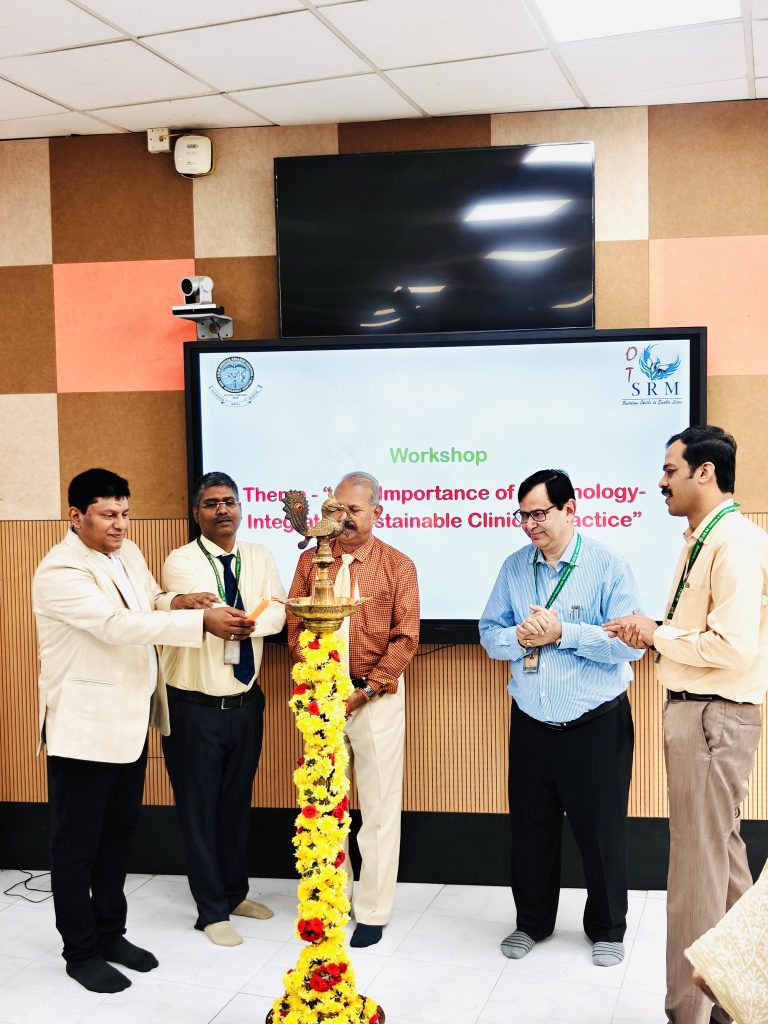
There are few moments in life that make your heart swell with pride — and for me, one such moment was stepping back into the corridors of SRM College of Occupational Therapy, not as a student this time, but as a guest speaker. Representing XceptionalLEARNING, alongside my colleague Gopika R., I had the wonderful opportunity to conduct a workshop on The Importance of Technology-Integrated Sustainable Clinical Practice.

Walking through the familiar campus brought back so many memories — late-night study sessions, classroom laughter, and the nervous excitement before practical exams. But this visit felt special. Coming back to share knowledge with the next generation of therapists was not just nostalgic, but deeply fulfilling.

Inauguration of the workshop on Technology-Integrated Sustainable Clinical Practice at SRM College of Occupational Therapy.

The workshop was part of SRM’s ongoing efforts to promote innovation and sustainability in healthcare. The welcome address by Dr. U. Ganapathy Sankar, Dean, set the perfect tone for the day. He spoke passionately about how embracing technology can shape the future of occupational therapy and lead to more sustainable outcomes.

Dr. U. Ganapathy Sankar delivering the welcome address.

Bringing Therapy and Technology Together

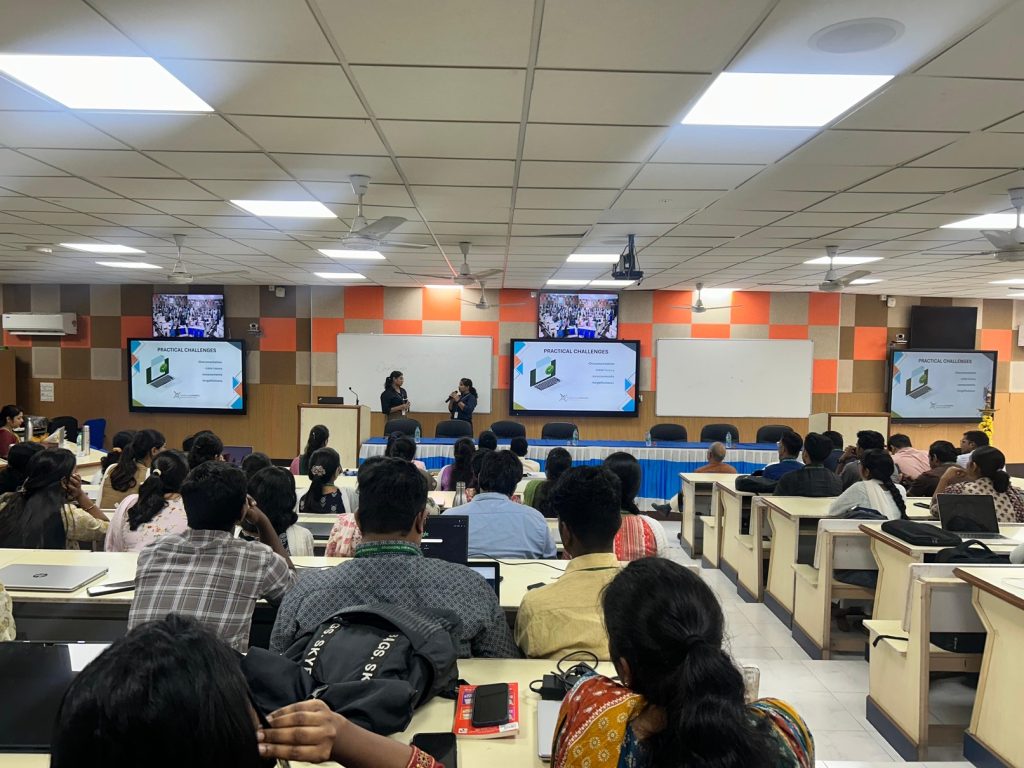
Our session took the form of an open conversation between Gopika and me — light, interactive, and full of practical insights. We began by discussing the challenges therapists often face in traditional clinical settings:

Interactive session led by XceptionalLEARNING team members Minnu Mini Mathew and Gopika R.
  • Irregular session follow-ups
  • Limited progress tracking
  • Difficulty keeping clients engaged over time

That’s where we introduced the idea of a hybrid therapy model — a blend of traditional techniques and digital innovation. We shared how this approach allows therapists to:

  • Stay connected with clients beyond clinic walls
  • Monitor progress seamlessly
  • Make therapy more structured and goal-oriented

Showcasing the XceptionalLEARNING Platform

We then demonstrated how the XceptionalLEARNING Platform empowers therapists to conduct interactive, well-structured therapy sessions using digital tools and activity books. Key features highlighted included:

  • Setting and tracking clear, measurable goals
  • Creating personalized home programs and follow-up plans for families
  • Enhancing therapist–client communication through engaging digital features

The participants were especially excited to see how these tools make therapy more accessible and consistent — bringing the seeker closer to the therapist. The room was filled with curiosity, reflection, and enthusiasm as everyone shared ideas about the future of sustainable therapy.

Reflections and Takeaways

What stood out to me most was how open the participants were to embracing change. Many shared their thoughts on how sustainability in therapy isn’t just about eco-consciousness — it’s also about building systems that are efficient, inclusive, and long-lasting.

Our discussion reaffirmed a simple truth: while technology can enhance therapy, it’s the human touch that gives it meaning.

Closing Thoughts

Representing XceptionalLEARNING at my alma mater was a moment of immense pride and gratitude. It felt like coming full circle — learning, growing, and then returning to give back.

A big thank you to SRM College of Occupational Therapy for the warm welcome, and to XceptionalLEARNING for giving me this platform to share our vision of a connected, sustainable future for therapy.

The day ended with smiles, thoughtful conversations, and a shared commitment to creating therapy environments that are innovative, inclusive, and truly sustainable.

At XceptionalLEARNING, our Hybrid Therapy Services blend expert care with innovation. Guided by the best occupational therapists, our Digital Activity Book makes every session engaging and effective. Contact us to experience smarter, connected therapy.