Tracking Progress in Pediatric Physiotherapy: A Guide for Therapists to Measure What Matters

Reading Time: 12 minutes

CLINICALLY REVIEWED BY
Meenu Mary Chacko
Physiotherapist

Every pediatric physiotherapist has heard some version of the same question from a parent. Is this actually helping?

It’s a fair question, and it’s harder to answer than it sounds. A child’s progress in physiotherapy rarely shows up as a single dramatic before-and-after. It shows up in small, cumulative changes: a few more seconds of independent standing, a smoother transition from sitting to crawling, one less prompt needed to complete a stair climb. If you’re not measuring those changes deliberately, they’re easy to miss and even easier to lose in a stack of subjective session notes.

This is where progress tracking stops being a documentation formality and becomes the backbone of good pediatric physiotherapy. Done well, it tells you whether your treatment plan is working, gives parents something concrete to hold onto, and gives you the data to defend your clinical decisions, whether that’s to insurers, referring pediatricians, or your own future self six months from now trying to remember why you changed a plan of care.

This guide explains what to measure, how to measure it, and how to build a practical tracking system that supports better clinical decisions throughout a child’s therapy journey.

Why Progress Tracking Deserves More Attention Than It Gets

Pediatric physiotherapists are busy. Between back-to-back sessions, documentation, and parent communication, tracking progress often gets reduced to a line or two in a SOAP note: “Child tolerated session well, continues to make gains.” That sentence isn’t wrong, but it isn’t useful either. It doesn’t tell you how much progress was made, compared to what baseline, or whether the rate of improvement is on track.

Structured progress tracking solves three problems at once.

First, it supports better clinical decision-making. You can’t adjust a treatment plan intelligently if you don’t know which interventions are producing measurable change and which aren’t.

Second, it improves communication with families. Parents remember how their child looked six months ago far less clearly than you’d expect. A tracked data point, such as a Gross Motor Function Measure score moving from 62% to 74%, is far more persuasive than “she’s doing great.”

Third, it strengthens accountability and documentation. Referring physicians, school teams, and insurance providers increasingly expect outcome-based evidence rather than narrative impressions alone. Data-driven documentation is quickly becoming the standard in pediatric rehabilitation rather than the exception, as we discussed in more depth in our broader look at outcome-based documentation in physiotherapy.

None of this means every session needs a battery of formal tests. It means every child needs a tracking framework that’s consistent enough to show a real trend over time.

The Problem With Subjective-Only Notes  

Subjective notes aren’t useless. They capture context that numbers can’t, like a child’s mood, engagement, or a family’s home situation on a given day. The problem is when subjective notes are the only record of progress.

A few reasons this breaks down over time. Memory bias is a real factor: therapists unconsciously compare a child’s current performance to last week rather than to where they started three months ago, which makes plateaus easy to miss. Language is inconsistent too. “Improved balance” from one note to the next doesn’t tell you whether balance improved by a small or large margin, or in which specific task. When more than one physiotherapist is involved, or a child transitions between clinics, subjective notes also rarely transfer clinical meaning cleanly. And when a parent, school, or insurer asks for evidence of progress, “she seems more confident” simply doesn’t hold up the way a validated score does.

The fix isn’t to abandon narrative notes. It’s to pair them with standardized, repeatable measures.

Standardized Outcome Measures Every Pediatric Physiotherapist Should Know

Choosing the right outcome measure depends on the child’s age, diagnosis, and goals. Below are the tools most pediatric physiotherapists reach for and when each one earns its place in a treatment plan.

1. Gross Motor Function Measure (GMFM-66/88)

Primary focus: Gross motor function

Typical age range: 5 months–16 years    |    Administration time: 45–60 minutes

Best used for: Cerebral palsy, neuromuscular conditions

This remains one of the most widely used and validated tools for tracking gross motor change in children with cerebral palsy and similar neuromuscular conditions. It scores performance across five dimensions: lying and rolling, sitting, crawling and kneeling, standing, and walking, running, and jumping. It is sensitive enough to detect small, clinically meaningful changes over a few months of intervention.

2. Pediatric Evaluation of Disability Inventory (PEDI-CAT)

Primary focus: Functional daily living skills

Typical age range: 0–20 years    |    Administration time: 15–20 minutes

Best used for: Self-care, mobility, social/cognitive function

Where the GMFM focuses on motor function in isolation, the PEDI-CAT captures functional performance in daily life: self-care, mobility, and social or cognitive tasks. It’s particularly useful for showing families how gains in the clinic are translating, or not yet translating, into real-world independence.

3. Pediatric Balance Scale

Primary focus: Static and dynamic balance

Typical age range: 5–15 years    |    Administration time: 15–20 minutes

Best used for: CP, developmental coordination disorder

For children working on postural control, a common goal in cerebral palsy, developmental coordination disorder, and post injury rehabilitation, this adapted version of the Berg Balance Scale offers a structured, repeatable way to score static and dynamic balance tasks.

4. Timed Up and Go (TUG) & Timed Floor to Stand

Primary focus: Functional mobility and gait

Typical age range: 3–17 years    |    Administration time: Under 5 minutes

Best used for: Quick transitional movement checks

These are simple, fast, and easy to repeat every few sessions. Timed functional tests like these are especially useful for tracking gait and transitional movement efficiency without requiring extensive setup.

5. Six-Minute Walk Test

Primary focus: Functional exercise capacity

Typical age range: 3–18 years    |    Administration time: 10 minutes

Best used for: Cardiopulmonary involvement, endurance

Useful for children with cardiopulmonary involvement or those building endurance after prolonged immobility, this test measures functional exercise capacity in a way parents intuitively understand: how far can they walk without stopping?

6. Goal Attainment Scaling

Primary focus: Individualized goal progress

Typical age range: All ages    |    Administration time: Varies

Best used for: Goals not captured by standardized tools

Not a standardized test in the traditional sense, but a scoring method that lets you quantify progress toward individualized goals. It’s useful when a child’s priorities, such as independently climbing playground equipment, don’t map neatly onto a standardized instrument.

A good rule of thumb is to pick one or two standardized measures aligned with the child’s primary goals, and use them consistently at defined intervals, commonly every eight to twelve weeks, rather than switching tools frequently for novelty’s sake. Consistency is what makes a trend line meaningful.

Key Takeaways

Pick one or two standardized measures per child and stick with them for the full episode of care.
Reassess on a consistent schedule, typically every 8–12 weeks, rather than on an ad hoc basis.
Pair every score with a short functional note so the number has context.
Match the tool to the goal: GMFM for gross motor change, PEDI-CAT for daily function, TUG or the 6MWT for quick, repeatable checks.

Beyond the Numbers: Functional Milestones That Matter to Families

Standardized scores matter clinically, but parents generally care about a narrower, more concrete set of questions. Can my child keep up with peers on the playground? Are they less exhausted after a day at school? Can they get in and out of the car, up the stairs, or onto the school bus independently? Are they falling less often?

Translating clinical measures into these functional terms is part of what makes progress tracking useful rather than just accurate. A GMFM improvement from 58% to 66% means little to a parent unless you connect it to something visible, such as explaining that the improvement is why their child can now climb the four steps at the front door without holding the railing. Knowing when physiotherapy should start in the first place also helps set realistic baseline expectations before tracking even begins.

This is also where milestone checklists, mapped against a child’s developmental stage, remain valuable, particularly for younger children, for whom standardized scales may be less applicable or too clinical for the goals at hand. When gross motor and fine motor goals overlap, as they often do, it also helps to coordinate with occupational therapy colleagues so families get a consistent picture of progress across disciplines. XceptionalLEARNING’s guide to pediatric occupational therapy is a useful companion read for physiotherapists working alongside OT teams.

Building a Progress Tracking Framework: Step by Step

A tracking system only works if it’s realistic enough to maintain across a full caseload. Here’s a framework that holds up in practice, and it tends to run in a repeating cycle rather than a straight line.

Start with a true baseline. Before treatment begins, document baseline scores on your chosen outcome measures, along with a short functional narrative describing what the child can and cannot yet do independently. This baseline is the anchor for every future comparison.

Set SMART goals tied to measurable outcomes. Vague goals like “improve gross motor skills” don’t map to measurable progress. Specific goals, such as independently transitioning from sit to stand from a standard chair within eight weeks, do. Where possible, tie each goal to the specific outcome measure or milestone that will demonstrate it’s been met.

Choose a realistic reassessment interval. Reassessing too frequently wastes session time on testing rather than treatment. Reassessing too infrequently risks missing a plateau or regression early enough to act on it. Most standardized measures are validated for eight-to twelve-week reassessment cycles, though functional milestone checks can happen more often.

Document both quantitative and qualitative data. Pair every standardized score with a short note on context, such as fatigue, mood, home practice consistency, or illness, that might explain a plateau or an unusually strong session. Numbers without context can mislead just as easily as narrative without numbers.

Visualize the trend, not just the snapshot. A single score tells you where a child is today. A record of scores over time tells you whether they’re improving, plateauing, or regressing, and that trend is what should actually drive clinical decisions.

Loop parents and the wider care team into the data. Sharing simplified progress summaries with parents and outcome data with referring pediatricians or school teams closes the loop and reinforces the value of consistent home practice.

Simplify Progress Tracking Without Adding More Paperwork

Tracking pediatric physiotherapy progress doesn’t have to rely on spreadsheets or scattered notes. XceptionalLEARNING helps therapists document assessments, monitor therapy goals, generate progress reports, and collaborate with parents through one secure digital platform.

The Role of Parent-Reported Data Between Sessions

Most pediatric physiotherapy happens outside the clinic, in the small, repeated moments of daily life at home. A child who only performs an exercise once a week in a session is progressing far more slowly than one whose family reinforces it daily.

This makes parent-reported data an underused but valuable layer of progress tracking. Simple structured check-ins, covering whether the home exercise program was completed, how many times, and whether there were any new falls or difficulties, give therapists visibility into the gap between clinic performance and real-world carryover. Helping parents actually read and use this data matters too; our guide on making sense of a child’s digital therapy report walks families through interpreting dashboard data in a way that reinforces rather than confuses the plan of care.

The challenge has traditionally been logistics: chasing down parents for updates, relying on inconsistent verbal reports at the start of each session, or losing this information entirely. This is one of the areas where digital tools are changing pediatric physiotherapy in a genuinely useful way, rather than just adding another app to a parent’s phone.

Common Challenges When Tracking Pediatric Physiotherapy Progress

Even with a solid framework in place, tracking progress in pediatric physiotherapy rarely goes exactly to plan. A few challenges come up often enough that it’s worth planning for them from the start.

Inconsistent attendance is one of the most common. Missed or rescheduled sessions disrupt reassessment timelines and make it harder to attribute changes in score to the treatment plan itself rather than gaps in care.

Varying home practice is another. Two children with identical clinic sessions can show very different rates of progress simply because one family completes the home exercise program consistently and the other doesn’t. Tracking adherence, not just outcomes, helps explain the difference rather than leaving it as a mystery.

Illness and general health fluctuations also affect performance from one session to the next. A child recovering from a cold or an ear infection may score lower on a balance or endurance measure for reasons that have nothing to do with the effectiveness of therapy, which is why context notes matter alongside the numbers.

Growth spurts add another layer of complexity, particularly for orthopedic and neuromuscular cases. Rapid changes in height and limb length can temporarily affect strength, coordination, and range of motion scores, sometimes showing up as an apparent plateau or even regression that resolves on its own once the child adjusts.

Motivation and engagement matter more in pediatric therapy than in most other settings. A child who is tired, anxious, or simply not in the mood on a given day may underperform on a timed or scored task, which is a reminder to look at trends over several sessions rather than reacting to any single data point.

Finally, multiple therapists involved in a child’s care, whether across shifts, clinics, or disciplines, can introduce inconsistency in how measures are administered or scored. Standardizing testing procedures and keeping shared, accessible records help reduce this variability.

None of these challenges is a reason to abandon structured tracking. There are reasons to build enough flexibility and context into the system that a bad week doesn’t get misread as a failed treatment plan.

Clinical Tip

Before assuming progress has levelled off reflects a stalled treatment plan, check the basics first: was attendance consistent in the weeks leading up to reassessment, was the child unwell, and is this a period of rapid growth? Ruling these out first prevents unnecessary changes to a plan that may actually be working.

How Digital Tools Are Changing Progress Tracking in Pediatric Physiotherapy

Outcome-based, data-driven care has moved from a forward-looking idea to a practical expectation in pediatric rehabilitation. Digital therapy platforms increasingly help therapists organize assessment scores, visualize progress trends, and simplify communication with families through centralized documentation and reporting.

Hybrid therapy models are part of this shift as well. Combining in-clinic standardized assessments with tele-therapy check-ins allows progress to be reviewed more often without requiring a clinic visit every time. Parent-facing tools that make it easier for families to log home practice and flag concerns are also closing the data gap described earlier, giving therapists a clearer picture of what’s happening between sessions.

Why it matters: Digital documentation helps reduce administrative workload while making progress easier to review and communicate.

Platforms like XceptionalLEARNING are built around this shift, combining structured documentation, progress tracking, reporting, and parent communication in one place so physiotherapists can track outcomes consistently without the administrative burden falling entirely on the therapist. You can see how this fits together for families and care teams on the XceptionalLEARNING platform overview. For pediatric physiotherapy specifically, this means less time reconstructing progress from memory and more time actually reviewing whether the treatment plan is working.

Common Mistakes Physiotherapists Make When Tracking Progress

Even experienced clinicians fall into a few recurring traps. Switching outcome measures too often, chasing the “best” tool for every child, can make it impossible to build a clean trend line over time. Only measuring what’s easy rather than what’s meaningful is another common pitfall; range of motion is simple to record but isn’t always the metric a family cares about most. Treating documentation as an afterthought and writing notes hours after a session from memory also loses precision fast, especially with a full caseload of pediatric clients.

It’s also easy to miss the difference between a plateau and a ceiling. A child who stops improving on a measure may have reached a realistic functional ceiling, or may need a modified approach, and data alone won’t tell you which. Clinical judgment still matters here. And finally, therapists who track meticulously but never translate scores into parent-facing language lose much of the communication value that tracking is supposed to provide.

A Practical Snapshot: What Good Tracking Looks Like

Consider a hypothetical case: a 6-year-old referred for physiotherapy following a diagnosis of mild cerebral palsy, with a primary goal of independent stair climbing at home.

At baseline, the GMFM Dimension E score (walking, running, jumping) was 48%, the child required hand-held assistance for stairs, and the Timed Up and Go score was 14.2 seconds. The goal was independent stair climbing using a railing within twelve weeks, supported by improved single-limb stance and lower-limb strength. The tracking plan included GMFM reassessment at six and twelve weeks, a weekly functional check on stair performance and assistance level, and parent-reported home exercise adherence logged twice weekly.

By twelve weeks, the GMFM Dimension E score had risen to 61%, the Timed Up and Go score had dropped to 10.8 seconds, and independent stair climbing with railing support was achieved by week ten, two weeks ahead of target.

This kind of structured record does two things that a subjective note can’t. It shows the rate of change, and it gives the family and referring physician a clear, defensible picture of what therapy achieved and why the plan of care evolved the way it did.

Turning Data Into Better Outcomes: Practical Tips

Keep your outcome measures focused: no more than two or three core measures per child, used consistently across the episode of care. Build reassessment dates into the treatment plan from day one rather than as an afterthought. Keep a simple visual record you can pull up during parent conversations. Treat parent-reported home practice data as a genuine input into clinical decisions, not just a compliance checkbox. Revisit goals every reassessment cycle, since a goal that made sense at baseline may need updating as the child progresses. And where possible, use a system that centralizes scores, notes, and parent updates rather than juggling multiple spreadsheets and paper charts.

Final Thoughts

Progress tracking in pediatric physiotherapy isn’t about extra paperwork. It’s about making sure your records actually reflect what’s happening to the child in front of you. Therapists who track consistently, using a small set of meaningful measures paired with clear functional context, can adjust treatment earlier, communicate confidently with families, and demonstrate real clinical value.

If your current process still relies on memory and scattered notes, it’s worth revisiting your framework before your next intake. The right structure doesn’t just prove progress happened; it helps ensure it keeps happening.

Frequently Asked Questions

Ready to Simplify How You Track Pediatric Physiotherapy Progress?

Explore how XceptionalLEARNING helps pediatric physiotherapists document assessments, monitor therapy goals, generate progress reports, and collaborate with parents through one integrated digital platform.

References

Primary sources, including clinical manuals and peer reviewed journal articles, are the strongest references for the claims in this article and should be prioritised over the secondary source noted below.

  1. Russell, D. J., Wright, M., Rosenbaum, P. L., & Avery, L. M. (2021). Gross Motor Function Measure (GMFM-66 & GMFM-88) User’s Manual (3rd ed.). Mac Keith Press.
    Source: Mac Keith Press / GMFM User’s Manual
  2. Haley, S. M., Coster, W. J., Dumas, H. M., Fragala-Pinkham, M. A., & Moed, R. (2012). PEDI-CAT: Development, Standardization and Administration Manual. CREcare, LLC.
    Source: PEDI-CAT Official Publications
  3. Franjoine, M. R., Gunther, J. S., & Taylor, M. J. (2003). Pediatric balance scale: A modified version of the Berg Balance Scale for the school-age child with mild to moderate motor impairment. Pediatric Physical Therapy, 15(2), 114–128.
    Source: https://pubmed.ncbi.nlm.nih.gov/17057441/
  4. Williams, E. N., Carroll, S. G., Reddihough, D. S., Phillips, B. A., & Galea, M. P. (2005). Investigation of the Timed “Up & Go” Test in children. Developmental Medicine & Child Neurology, 47(8), 518–524.
    Source: https://www.cambridge.org/core/journals/developmental-medicine-and-child-neurology/article/abs/investigation-of-the-timed-up-go-test-in-children/68B02116947E075C2FECBB59D119CD20
  5. ATS Committee on Proficiency Standards for Clinical Pulmonary Function Laboratories. (2002). ATS statement: Guidelines for the six-minute walk test. American Journal of Respiratory and Critical Care Medicine, 166(1), 111–117.
    DOI: 10.1164/ajrccm.166.1.at1102
  6. Turner-Stokes, L. (2009). Goal attainment scaling (GAS) in rehabilitation: A practical guide. Clinical Rehabilitation, 23(4), 362–370.
    DOI: 10.1177/0269215508101742
  7. Physiopedia. (n.d.). Gross Motor Function Measure [Secondary educational resource]. Retrieved from physio-pedia.com/Gross_Motor_Function_Measure.

Note: Physiopedia is a community-edited educational resource, included here for accessibility. It supplements, and should not substitute for, references 1–6 above when citing clinical claims.

Beyond the Classroom: Why Accessible Rehabilitation Matters

Reading Time: 8 minutes

Written by

Jasna K
Special Educator


Introduction  

A child’s development is shaped by far more than what happens inside a classroom. While education provides opportunities to learn, communicate, and participate, it cannot, on its own, address every developmental challenge a child may face. A child may receive high-quality instruction at school and still struggle with communication, sensory processing, motor coordination, behaviour, attention, or independent living skills. These challenges are not a reflection of poor teaching; rather, they highlight the need for rehabilitation alongside education.

For many children with developmental disabilities, learning difficulties, or other developmental challenges, meaningful progress depends not only on education but also on timely rehabilitation. Yet for countless families, accessing rehabilitation remains one of the greatest barriers to a child’s development. Understanding why requires us to look beyond classrooms and examine how rehabilitation is delivered, accessed, and connected within our communities.

The Role of a Special Educator: More Than Teaching  

The role of a special educator is often misunderstood. To many, a special educator is simply a teacher who works with children with disabilities or learning difficulties. While teaching is certainly an important part of the profession, it represents only one aspect of a much broader responsibility. In practice, special educators function as observers, facilitators, advocates, coordinators, and collaborators who help ensure that every child receives the support necessary for meaningful participation in learning and everyday life.

Their responsibilities extend far beyond classroom instruction and include:

  • Early identification of developmental concerns through continuous observation in natural learning environments.
  • Monitoring children’s progress across communication, behaviour, social interaction, academic readiness, motor skills, and adaptive functioning.
  • Adapting the learning environment by modifying teaching methods, classroom routines, and learning materials to meet individual needs.
  • Referring children for multidisciplinary assessment when additional support from rehabilitation professionals is required.
  • Collaborating with therapists by sharing classroom observations and reinforcing therapeutic goals during everyday school activities.
  • Facilitating carry-over of skills learned during therapy into classroom routines, helping children generalize skills across different settings.
  • Partnering with families by communicating concerns, sharing progress, and providing guidance that supports learning and rehabilitation at home.
  • Monitoring functional outcomes, focusing not only on academic achievement but also on communication, participation, independence, and quality of life.
  • Advocating for inclusive practices and ensuring that children receive the services and accommodations necessary to participate meaningfully in education.

Ultimately, special educators are more than teachers. They are the vital link connecting children, families, schools, and rehabilitation professionals, ensuring that education and rehabilitation work together to support every child’s overall development.

Understanding Rehabilitation: Beyond Individual Therapies  

When people hear the word rehabilitation, they often think of therapy sessions. However, rehabilitation is much more than a weekly visit to a therapist. According to the World Health Organization (WHO), rehabilitation is a coordinated set of interventions that helps individuals optimize functioning, reduce disability, and participate more independently in education, family life, work, and the community.

For children with developmental disabilities, rehabilitation is not about “fixing” limitations but about building abilities, removing barriers, and improving participation in everyday life. It is a multidisciplinary process involving professionals such as speech-language pathologists, occupational therapists, physiotherapists, psychologists, behaviour therapists, special educators, assistive technology specialists, and, most importantly, families.

Effective rehabilitation depends on collaboration rather than isolated interventions. Skills learned during therapy become meaningful only when they are reinforced at home, in school, and within the community. This shared approach ensures continuity of care and promotes better functional outcomes.

Rehabilitation is also an ongoing process that evolves with a child’s changing needs. Ultimately, its success is measured not by the number of therapy sessions provided, but by how effectively children are empowered to communicate, learn, participate, and live as independently as possible.

The Real Challenge: Accessibility Is More Than Distance  

When we talk about rehabilitation accessibility, the first question is often, “Is there a rehabilitation centre nearby?” While distance is an important factor, accessibility is much more than geographical proximity. A rehabilitation centre may exist, yet families may still struggle to access services because of several interconnected challenges.

Some of the major barriers include:

  • Limited availability of services: Rehabilitation centres and specialists are often concentrated in urban areas, leaving rural and remote communities with fewer options.
  • Shortage of professionals: The demand for speech-language pathologists, occupational therapists, physiotherapists, psychologists, and other specialists often exceeds the available workforce, leading to heavy caseloads and delayed intervention.
  • Long waiting periods: Children may wait weeks or even months for assessment or therapy, reducing the benefits of early intervention.
  • Fragmented service delivery: Schools, hospitals, rehabilitation centres, and private clinics often work independently, with limited communication and coordination.
  • Parents as care coordinators: Families are frequently responsible for managing appointments, carrying reports, and coordinating communication between different professionals.
  • Geographic barriers: Long travel distances, especially for rural families, make regular rehabilitation difficult and time-consuming.
  • Financial burden: Beyond therapy fees, families must often manage transportation, accommodation, assistive devices, repeated assessments, and loss of income due to frequent appointments.
  • Time constraints: Parents balance work, household responsibilities, school schedules, and multiple therapy appointments, while limited appointment slots and waiting lists add further delays.
  • Lack of awareness: Many families are unsure where to seek help, which professional to consult, or what rehabilitation services are available.
  • Poor continuity of care: Therapy may be interrupted by financial difficulties, transportation issues, therapist changes, family relocation, or poor coordination among professionals, affecting a child’s long-term progress.

A rehabilitation centre being nearby doesn’t guarantee a child receives coordinated care — accessibility depends just as much on whether professionals, schools, and families are actually working from the same page.

Consider a family in a small town whose child is referred for both speech therapy and occupational therapy. The nearest clinic offering both is over an hour away, with separate waitlists for each. By the time both assessments are complete, months have passed, and the two therapists have never spoken to one another, leaving the parents to relay progress notes back and forth by hand. This is not a story about a lack of services; it is a story about a lack of coordination — and it plays out, in some form, for countless families every day.

Accessibility is therefore not simply about the presence of rehabilitation centres. It is about ensuring that children receive timely, affordable, coordinated, and continuous support. Achieving this requires an integrated system where healthcare, education, rehabilitation professionals, families, and communities work together to support every child’s development. Families who are unsure where to start can use resources such as Find a Therapist to connect with the right professional more quickly.

Building a More Accessible Rehabilitation System: The Role of Government  

Improving rehabilitation accessibility requires more than expanding infrastructure; it demands systemic reforms that place children and families at the centre of service delivery. Governments can strengthen public rehabilitation by recruiting more rehabilitation professionals, establishing multidisciplinary teams, integrating education and healthcare, and creating clear referral pathways that connect schools, hospitals, and rehabilitation centres. Reducing waiting periods through increased service capacity, community-based rehabilitation, and efficient referral systems is equally important, particularly for early intervention.

Digital solutions such as tele-rehabilitation can further improve access, continuity of care, and support for families in underserved areas. At the same time, community outreach, developmental screening, and public awareness programmes can promote early identification and timely intervention. Building an accessible rehabilitation system therefore requires coordinated action across health, education, and social welfare sectors, supported by policies that encourage collaboration, digital innovation, workforce development, and child-centred care rather than fragmented service delivery.

Digital Rehabilitation: Building a Connected Ecosystem of Care  

Digital rehabilitation is more than online therapy — it is a connected ecosystem that uses technology to improve access, continuity, and collaboration in rehabilitation. Through tele-rehabilitation, digital assessments, home programmes, progress tracking, AI-assisted intervention planning, and digital activity libraries, rehabilitation can extend beyond clinical settings into homes and schools. It also enables real-time communication among therapists, special educators, families, and healthcare professionals, ensuring coordinated, multidisciplinary care and reducing fragmentation. By supporting parent training, monitoring outcomes, and reinforcing intervention across environments, digital rehabilitation transforms rehabilitation from isolated therapy sessions into a continuous, child-centred process.

Platforms such as XceptionalLEARNING demonstrate how digital technologies can successfully integrate remote service delivery, collaborative care, and data-driven intervention. Rather than replacing conventional rehabilitation, digital rehabilitation strengthens it by creating a more accessible, connected, and sustainable system that helps children receive consistent support wherever they are.

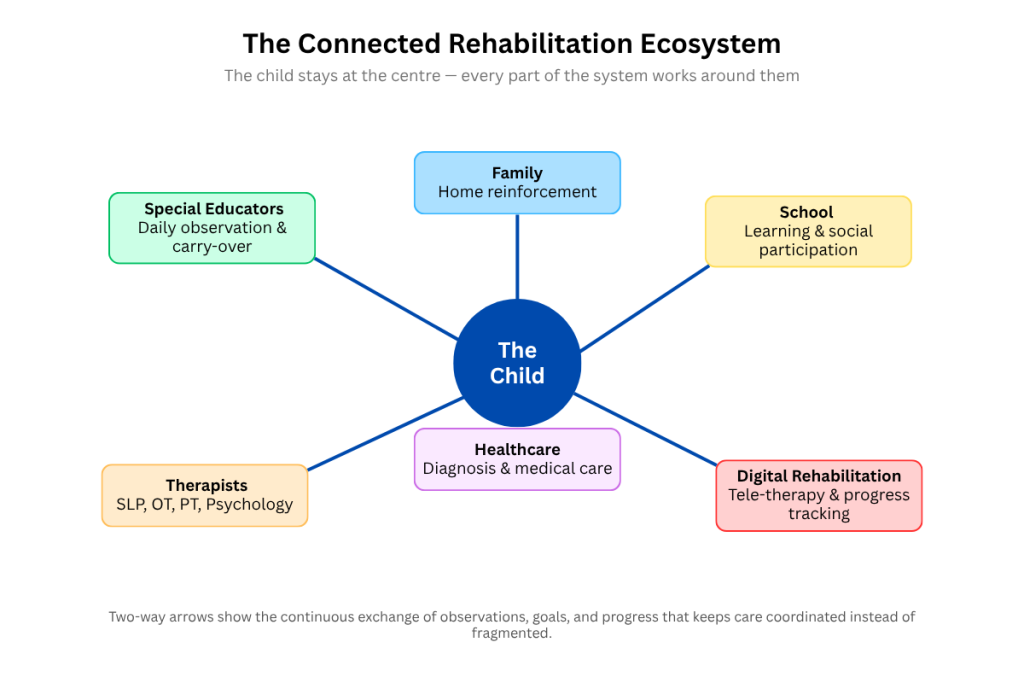
The diagram below shows how this ecosystem holds together, with the child at the centre and every other part working in coordination around them.

 The Connected Rehabilitation Ecosystem — the child stays at the centre while family, school, healthcare, special educators, therapists, and digital rehabilitation work in coordination around them. 

Traditional vs. Connected Rehabilitation Delivery  

AspectTraditional (Isolated) DeliveryConnected / Digital Rehabilitation
Coordination between professionalsTherapists, educators, and doctors often work separately, with reports passed by handReal-time communication and shared progress tracking across the care team
Geographic reachLimited to families who can travel to a centreExtends to rural and underserved areas via tele-rehabilitation
Waiting periodsLong waits for assessment and therapy slotsFaster scheduling and remote assessment options reduce delays
Continuity of careEasily disrupted by relocation, therapist changes, or missed appointmentsProgress history and goals persist digitally, supporting continuity
Parent involvementParents relay updates manually between providersParents access real-time progress and guided home activities
Skill generalisationDepends on informal communication between school and clinicStructured carry-over between therapy, classroom, and home

Why Special Educators Matter in This Ecosystem  

An accessible rehabilitation system depends on collaboration, and special educators are at its centre. Unlike therapists who may see a child periodically, special educators interact with children daily, allowing them to observe progress, identify emerging needs, and reinforce therapeutic goals within natural learning environments. They bridge the gap between home, school, and rehabilitation services by collaborating with families, therapists, and healthcare professionals to ensure consistent, child-centred intervention. As digital rehabilitation expands, their role in monitoring progress, facilitating communication, and promoting continuity of care becomes even more significant.

Conclusion: Looking Beyond the Classroom  

A child’s development does not occur within the boundaries of a classroom or a rehabilitation centre. It is shaped by the collective efforts of families, educators, therapists, healthcare professionals, policymakers, and communities working towards a common goal. When any one of these systems functions in isolation, children are left navigating fragmented services rather than receiving the coordinated support they deserve.

Closing the gaps described above calls for stronger public rehabilitation systems, closer collaboration between education and healthcare, empowered families, multidisciplinary teamwork, and thoughtful integration of digital technologies that extend support beyond traditional service settings.

Within this ecosystem, special educators play a uniquely significant role. Their daily interactions with children, close partnerships with families, and collaboration with rehabilitation professionals position them as the bridge connecting assessment, intervention, education, and participation. Their work reminds us that rehabilitation is not confined to therapy sessions; it becomes meaningful only when it is carried into classrooms, homes, playgrounds, and communities where children learn, communicate, and grow.

Rehabilitation should no longer be viewed as a service that children travel to receive. Instead, it should become a system that reaches children wherever they are through schools, communities, government institutions, digital technologies, and coordinated multidisciplinary care. When rehabilitation becomes accessible rather than exceptional, inclusion moves beyond policy and becomes a lived reality.

When our systems are designed around real outcomes such as confident participation, effective communication, greater independence, and a sense of belonging, rehabilitation becomes more than a service. It becomes an investment in every child’s right to learn, participate, and reach their full potential.


Your Child Has Been Screened. What Happens Next? 

Reading Time: 11 minutes

A Parent’s Guide to Assessment, Therapy, and Developmental Progress


Clinically Reviewed by
Jinson Alias
Consultant Psychologist | Special Educator | Digital Therapy Trainer


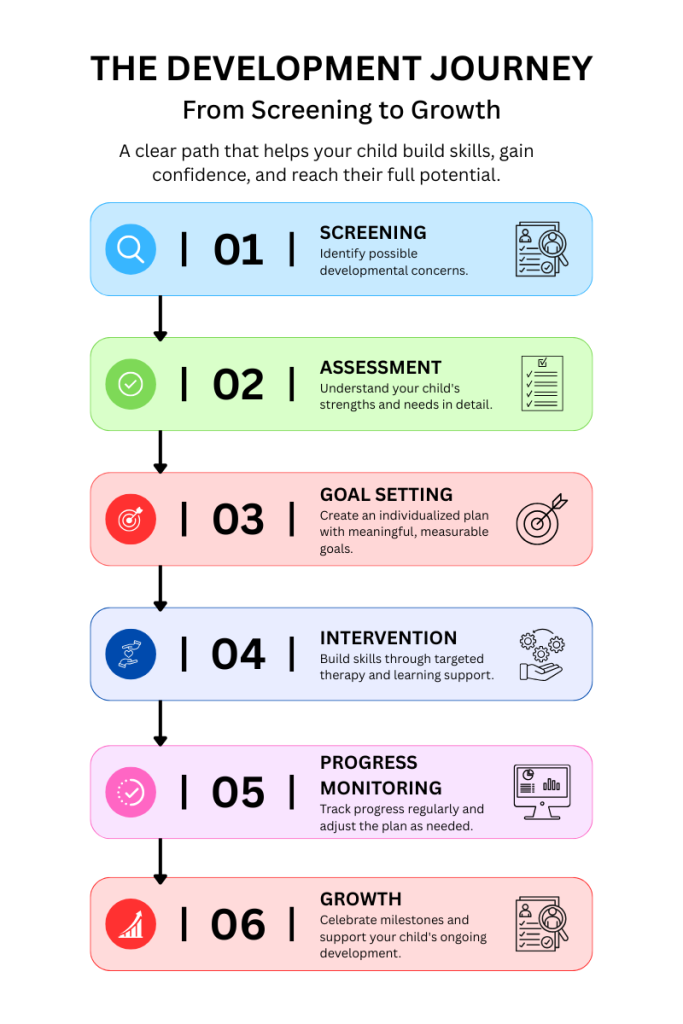
The Development Journey at a Glance

The child development journey from screening to growth.

Before anything else, it helps to see the full picture. Many parents receive a screening report and feel overwhelmed because they can’t see what comes after. Here is the journey from start to growth: 

Screening → Assessment → Goal Setting → Intervention →Progress Monitoring → Growth

Each stage builds on the one before it. Screening opens the door. Assessment provides the map. Goals set the destination. Intervention is the journey itself. Progress monitoring keeps everyone on course. And growth, growth that is real, meaningful, and observable, is what it all leads toward.

What a Developmental Screening Really Means 

A screening is a brief, structured observation designed to identify children who may benefit from a closer look. It measures whether a child’s development is broadly on track for their age, flagging areas where further evaluation might be valuable. Screenings look at communication, motor skills, learning readiness, social interaction, behaviour, and adaptive skills. 

But here is what many parents don’t initially understand: a screening is not a diagnosis. It does not tell you what is wrong, why a challenge exists, or what a child will or won’t be capable of. It is a signal, not a verdict. A flag raised in a screening simply means that a more detailed look would be worthwhile — nothing more, and nothing less. 

Receiving a screening recommendation is not confirmation that something is seriously wrong with your child. It is an invitation to gather better information so that the right support, if needed, can be put in place as early as possible.

Key Takeaway

When the Report Arrives, Many Parents Feel Stuck 

This is one of the most important things to acknowledge, because it is also one of the least spoken about: receiving a developmental screening report can be an emotionally difficult experience, even when the language in the report is calm and clinical. 

Many parents describe feeling confused because they are not sure what the results actually mean in practical terms. Others feel fear about what the future holds. Some feel a quiet guilt, wondering whether something they did or didn’t do contributed to the concern. And almost all parents experience uncertainty about what the right next step actually is. 

These reactions are completely normal. A developmental screening report touches on something deeply personal — a parent’s hopes and worries for their child’s future. What matters most is that the emotional weight of receiving a report doesn’t cause a parent to freeze. Because the most valuable thing a parent can do after a screening is to keep moving forward toward information, clarity, and support.

Does any of this sound familiar? 

  • “The teacher mentioned concerns, but I’m not sure how serious they are.” 
  • “Everyone is giving me different advice.” 
  • “I’m worried about waiting too long, but I don’t want to overreact.” 
  • “I just want to know what my child needs.” 

If you’ve had any of these thoughts, you’re not alone. Many families find themselves asking the same questions after a screening.

The “Wait and See” Trap: The Biggest Mistake Parents Make 

After receiving a screening report, one of the most common responses is to wait. To observe for a few more months. To hope the concern resolves on its own. 

This instinct is understandable. No parent wants to make a big deal out of something that might turn out to be nothing. But the evidence on early intervention is clear and consistent: the earlier appropriate support begins, the better the outcomes tend to be. 

The brain is at its most adaptable in the early years of life. Waiting means missing months, or sometimes even years, during this critical window. In many cases, children who receive support earlier have more opportunities to build skills during critical periods of development. 

Acting early is not overreacting. If further assessment reveals that a child is developing typically and no support is needed, nothing has been lost. But if support is needed and it begins early, the difference it makes can be profound and lasting.

Step 1: Comprehensive Assessment — Looking Deeper Than the Screening  

The next step after a screening recommendation is a comprehensive assessment conducted by qualified professionals. Where a screening casts a wide net, an assessment looks in depth at specific areas of development to understand not just whether a challenge exists, but its nature, its degree, and how it shows up in the child’s daily life.

A full assessment may explore several domains:

  • Speech and language — receptive language, expressive language, articulation, and social communication
  • Motor skills — fine motor control (handwriting, grip, cutting) and gross motor skills (balance, coordination, movement)
  • Sensory processing — how the child’s nervous system processes and responds to sensory input
  • Learning and cognition — problem-solving, memory, attention, and how the child processes new information
  • Behaviour — patterns of response, self-regulation, and emotional management
  • Social skills — how the child interacts with peers, reads social cues, and engages in group settings

This assessment is conducted by a team that may include a speech-language pathologist, an occupational therapist, a special educator, or a psychologist — depending on what the screening flagged and what the child’s specific needs appear to be. The result is not a label. It is a detailed, individualized profile of how this child learns, communicates, and engages with the world.

Step 2: Understanding Your Child’s Strengths — Not Just Challenges  

A good assessment does not only map what a child finds difficult. It also identifies what a child does well — and this matters more than many parents initially realise.

Every child brings a unique combination of strengths, interests, and learning preferences to any therapeutic or educational setting. A child who struggles with spoken language may be a remarkably strong visual learner. A child who finds sitting still difficult may show exceptional creativity or spatial reasoning. A child with challenges in social interaction may demonstrate deep focus and an extraordinary memory for things that interest them.

These strengths are not merely encouraging anecdotes. They are practical tools. Effective intervention is built on a foundation of what a child can already do, using their interests and natural abilities to create pathways toward the skills they are still developing. Understanding your child’s learning style, what motivates them, and where their confidence already exists allows therapists and educators to create support that feels less like struggle and more like genuine progress.

Step 3: Setting Meaningful Goals — From Information to Action  

Once assessment is complete, the findings are translated into individualized goals. This is where the plan begins to take concrete shape. Goals are prioritized based on what will most meaningfully improve a child’s daily life in communication, independence, participation at school, and engagement at home.

Goals should be specific, measurable, and time-bound. Not “improve communication” but “will use two-word phrases to request preferred items in four out of five opportunities.” Not “improve attention” but “will remain on task during a structured activity for ten minutes with minimal prompting.”

Understanding the IEP  

For many children receiving developmental support, goals are formalized in an Individualized Education Program (IEP) — a documented plan that outlines what a child is working toward, what support they will receive, and how progress will be measured. The IEP is developed collaboratively by the therapeutic team, the school, and the family.

Family involvement at the goal-setting stage is not optional; it is essential. Parents bring knowledge of a child’s daily context, home environment, and personal motivations that professionals cannot fully access from a clinical setting. The best goals are always built with parents, not just for them.

Many schools and therapy teams now use digital platforms such as XceptionalLEARNING to document goals, coordinate intervention plans, and monitor progress across settings.

Assessment → Goals → Activities → Progress Review → Updated Goals

Step 4: Beginning Intervention — Putting the Plan Into Practice  

Intervention is where the goals a child and their team have set begin to be actively worked toward. Not every child needs the same combination of services, and not every child needs intensive support across all areas. What intervention looks like depends entirely on the individual child’s profile.

Common types of intervention include:

  • Speech Therapy — building communication, language comprehension, articulation, and social language skills
  • Occupational Therapy — developing fine motor control, sensory processing, daily living skills, and postural stability
  • Special Education Support — personalized academic learning and classroom participation strategies
  • Behavioural Support — developing self-regulation, focus, emotional management, and adaptive behaviour

The most effective intervention is always individualized. Two children with similar screening results may need very different approaches, different intensities of support, and different combinations of services. This is why the assessment stage matters so much — it ensures that intervention is targeted, relevant, and genuinely matched to the child in front of the therapist.

What Happens Between Therapy Sessions?  

Most children attending therapy spend perhaps two hours a week in sessions, which means the remaining 150-plus waking hours happen at home, at school, and in the everyday moments of daily life. Development doesn’t pause between appointments. Skills are reinforced or they fade. Progress is consolidated or it stalls.

The consistency of what happens between sessions is often the single most important factor in how quickly a child moves forward. Parents receive recommendations during sessions but don’t always have clear guidance on how to carry them into daily routines. Teachers want to support therapy goals but rarely have direct access to what a child is currently working on.

XceptionalLEARNING‘s Digital Activity Book (VergeTAB) and home activity tools help bridge that gap — giving parents structured, therapist-approved activities to use between sessions, and giving therapists visibility into how those activities are going.

How Do You Know If Therapy Is Actually Working?  

Developmental progress is rarely sudden or dramatic. It tends to be gradual, sometimes uneven, and easy to miss in the busyness of daily life — particularly when a parent is too close to their child’s day-to-day experience to see the larger arc of change. Progress often appears first in everyday life rather than during formal testing.

Progress shows up in ways that might seem small but aren’t. A child who struggled with dressing independently may now complete the whole routine with just one prompt. A child who rarely initiated conversation may now be the one asking questions. These are significant milestones in a child’s growing independence and confidence — and they deserve to be recognised as such.

For example, a child who once needed repeated reminders to complete a morning routine may begin doing most steps independently. Small changes like these are often early signs that intervention is having an impact.

Progress tracking also supports good decision-making. When progress is measured and recorded consistently, therapists and families can see what is working, identify what needs to be adjusted, and ensure that intervention continues to be well-matched to the child’s current level and next steps.

Signs of Meaningful Progress  

As a parent, knowing what to look for makes it easier to recognise progress as it happens:

  • Better attention and focus during tasks
  • Improved communication — more words, clearer speech, or richer sentences
  • Greater independence in daily routines
  • Better participation in family activities
  • Improved classroom engagement
  • Greater confidence in social situations
  • More willingness to try new tasks
  • Fewer emotional outbursts or quicker recovery from them
How XceptionalLEARNING Tracks Progress  

The XceptionalLEARNING platform gives therapists structured tools to document session observations, track goal completion, and share updates with parents and teachers — all in one place. Parents have access to progress information in real time rather than waiting until the next appointment. And the data captured over time supports evidence-based decisions about when to adjust goals, introduce new areas of focus, or celebrate a milestone that has genuinely been reached.

A Development Journey Is Not Always a Straight Line  

This is one of the most important things for any parent to understand — and one of the most relieving once it truly sinks in: developmental progress is not linear.

It plateaus. It doubles back. It accelerates for a few weeks and then seems to stall. A child may make strong gains in one area and then appear to plateau when a new environment introduces different demands. These are not signs that intervention has stopped working. They are a normal, expected part of how children develop.

Small gains matter. A child who takes two steps forward and one step back is still one step ahead of where they started. Recognising and celebrating incremental progress, rather than measuring a child only against where you hope they will eventually be, is one of the most important things a parent can do to sustain energy through the longer journey. Trusting the process, staying consistent, and holding a long view: these are the habits that distinguish families who see meaningful outcomes over time.

Frequently Asked Questions  

Does every child who is screened need therapy? 

No. A screening recommendation leads to assessment, and assessment determines whether intervention is appropriate — and if so, what form it should take. Some children may only need monitoring, minor support, or a conversation with a specialist to rule out concerns entirely.

How soon should assessment happen after a screening recommendation? 

As promptly as possible, particularly for younger children. The earlier a challenge is identified and understood, the more time there is to intervene during the years when the brain is most responsive. Waiting several months without a specific reason is generally not advisable.

Can developmental delays actually improve with the right support? 

Yes, significantly. Many children make substantial progress with consistent, individualized intervention, particularly when support begins early and is reinforced at home and school. The nature and degree of progress varies between children, but early and consistent support consistently improves outcomes compared to no intervention.

What can parents realistically do at home to support progress? 

Home practice is one of the highest-impact things a parent can contribute. Following through on therapist recommendations, using structured activities between sessions, creating consistent daily routines, and maintaining open communication with the therapeutic team all make a measurable difference in a child’s rate of progress.

My child seems to do well some weeks and struggle others. Is that normal?

Completely. Variability from week to week is entirely expected. Factors like sleep, illness, changes in routine, and emotional stress all influence how a child performs on any given day. What matters is the trend over weeks and months, not performance on any single day.

Every Journey Starts With Understanding  

A developmental screening report can feel like a lot to carry. Many parents expect answers and instead receive more questions, more appointments, and more uncertainty before clarity begins to emerge. That is completely normal, and it is not a sign that something has gone wrong.

Screening is not the destination. It is the first step on a path that, with the right support, leads somewhere genuinely hopeful. Assessment provides the picture. Goal setting creates the direction. Intervention builds the skills. Progress monitoring reveals how far a child has come. And growth, growth that is real, measurable, and life-changing, is what every one of those steps is working toward.

Children who receive early, consistent, individualized support go on to communicate more effectively, participate more fully, learn more confidently, and live more independently than they would have without it. The developmental journey is not always quick or smooth, but it is always worth taking.

Your child’s potential is not defined by a screening result. It is shaped by the support, consistency, and love that come after it.

Every child develops at their own pace. The goal is not to compare children with one another, but to understand where a child is today and what support will help them move forward.

Where Is Your Child on the Journey Right Now?  

Every family reading this is at a different point. Wherever you are, the right next step exists — and you don’t have to figure it out alone.

  • Recently screened
  • Waiting for assessment
  • Beginning intervention
  • Tracking progress
  • Looking for additional support

No matter where your family is today, understanding the next step can help you move forward with greater confidence.

Your Child’s Screening Is Only the Beginning  

If your child has recently been screened and you’re unsure what the next step should be, you don’t have to figure it out alone. Our team can help you understand the recommendations, explore support options, and create a plan that fits your child’s needs.

One challenge many families face is keeping assessments, therapy goals, home practice, and school support connected. When information is scattered, progress becomes harder to track and harder to act on.

From digital screening and assessment to therapy planning, home activities, and progress documentation and review — XceptionalLEARNING connects every stage of your child’s developmental journey in one place, keeping families, therapists, and educators aligned every step of the way.

Therapy Mapping: Turning Limitations Into Real-Life Skills

Reading Time: 6 minutes

Clinically Reviewed by

Aswathy Ponnachan

Medical and Psychiatric Social Worker

How structured therapy planning helps children build independence, confidence, and everyday abilities

When we think of therapy, the first thing that comes to mind is usually fixing what’s broken—helping someone overcome a limitation, difficulty, or challenge. That’s important, of course. But what if therapy could go beyond just addressing problems? What if it could help people discover their potential, explore possibilities, and build real-life skills that matter?

This is where therapy mapping and horizon expansion come in. Instead of just looking at what a person cannot do, this approach focuses on strengths, interests, and achievable goals. It’s about creating a roadmap for growth that is practical, measurable, and empowering.

In this blog, we’ll explore how therapy mapping works, how it can be applied in everyday settings, and how it opens up possibilities that were once thought impossible.

Understanding Therapy Mapping

Therapy mapping is about getting a full picture of an individual’s abilities, challenges, and environment, and using that information to design a personalized plan. Unlike a rigid therapy schedule, it focuses on functional, real-world outcomes.

Think of therapy mapping as creating a personalized map for growth. It helps identify not only the obstacles but also the pathways that lead to independence and confidence.

Core Elements of Therapy Mapping:
  • Identify Strengths: Skills, interests, and natural abilities
  • Recognize Challenges: Areas needing support or adaptation
  • Set Goals: Short-term, achievable wins and long-term aspirations
  • Plan Strategies: Tailored activities, exercises, and environmental adjustments
  • Track Progress: Continuous monitoring and adjustments to the plan
Need Guidance on Therapy Planning?

If you’re exploring therapy strategies for children or individuals with developmental needs, our specialists can help you understand how structured therapy tools and personalized plans work in real-life situations.
Chat with our team on WhatsApp to ask questions, get expert guidance, or learn how the right therapy approach can support your child’s development.

Expanding Horizons: Looking Beyond Limitations

Traditional therapy often concentrates on deficits. Expanding horizons shifts the focus to possibilities and potential. It encourages individuals to build on what they can do and gradually move into new areas of skill and independence.

Practical Ways to Expand Horizons:
  • Strength-Based Activities: Focus on natural interests to engage and motivate
  • Environmental Adjustments: Modify spaces to support success, such as structured routines or quiet areas.
  • Collaborative Planning: Involve families, teachers, or caregivers in setting goals
  • Integrated Approaches: Combine multiple therapy methods to address physical, cognitive, and emotional needs.

Step-by-Step Guide to Therapy Mapping

Here’s a practical approach to making therapy mapping work in everyday life:

1. Observe and Assess
  • Spend time understanding the individual in different settings: home, school, playground
  • Take note of strengths, interests, challenges, and stress triggers
Example:

A child may struggle with following instructions but show strong creativity in art or building activities. Recognizing both the challenge and the strength helps plan meaningful therapy activities.

2. Set Meaningful Goals
  • Use SMART goals (Specific, Measurable, Achievable, Relevant, Time-bound)
  • Include both skill-based and functional goals that impact daily life.
Example Goals:
  • Skill: Improve hand coordination to dress independently
  • Functional: Participate in group play for at least 10 minutes without prompts
3. Select Practical Tools and Techniques
  • Choose activities that match the individual’s strengths and challenges.
  • Use multi-sensory approaches: visual cues, tactile activities, hands-on tasks
  • Incorporate real-life tasks into therapy exercises
Example:

Instead of only practising hand movements on paper, a child could help set the table, fold laundry, or organize small objects—practical skills that reinforce coordination.

4. Implement and Monitor
  • Break sessions into manageable, consistent routines
  • Track progress through journals, observations, or simple charts
  • Adjust strategies as needed based on results and motivation
5. Review and Expand Horizons
  • Conduct regular reviews to track progress and identify new goals
  • Introduce more complex tasks gradually as skills improve
  • Focus on transferring skills to daily life
Example:

A child who learns basic problem-solving through puzzles could progress to planning small projects, such as helping prepare a snack or organizing a small activity at home.

Case Studies: Therapy Mapping in Action

Below are three practical examples showing how therapy mapping works in real-life situations. Each case includes the situation, mapped strengths and challenges, intervention plan, and outcomes — presented in a clear, professional model you can reuse anywhere.

Case 1: Autism Spectrum Disorder

Situation

A 7-year-old child has limited verbal communication but shows strong visual–spatial strengths.

Therapy Mapping Approach
Strengths
  • Strong visual learning
  • Good pattern recognition
  • High engagement with structured visual tasks
Challenges
  • Limited speech
  • Difficulty initiating social interactions
  • Trouble expressing needs verbally
Intervention Strategy
  • Use visual schedules, picture cards, and structured visual activities
  • Engage in guided play sessions to build turn-taking and joint attention
  • Introduce non-verbal communication routines, then gradually add simple verbal prompts
  • Create predictable routines to reduce anxiety and support communication
Outcome
  • Improved use of gestures and non-verbal communication
  • Increased participation in small-group activities
  • Better eye contact, turn-taking, and engagement
  • Gradual acceptance and use of simple verbal prompts

Case 2: ADHD and Executive Function Challenges

Situation

A 10-year-old has difficulty focusing, organizing tasks, and completing school assignments.

Therapy Mapping Approach
Strengths
  • High curiosity and enthusiasm
  • Enjoys hands-on and movement-based activities
  • Learns quickly through practical engagement
Challenges
  • Poor sustained attention
  • Difficulty planning tasks
  • Low task completion without support
Intervention Strategy
  • Short, structured work intervals with movement breaks in between
  • Task breakdown methods (one step at a time)
  • Use timers, checklists, and visual planners
  • Hands-on activities integrated into learning tasks
  • Teach self-monitoring strategies such as “check-in and check-out” routines
Outcome
  • Increased ability to complete tasks independently
  • Improved focus during short bursts of work
  • Better organization and planning skills
  • Classroom tasks become more manageable and less stressful.

Case 3: Physical Therapy Integration

Situation

A teenager recovering from a sports injury needs to regain strength, balance, and coordination.

Therapy Mapping Approach
Strengths
  • Strong motivation to return to sports
  • Good previous athletic conditioning
  • High willingness to follow routine exercises
Challenges
  • Reduced range of motion
  • Limited endurance during prolonged activity
  • Pain during specific movements
Intervention Strategy
  • Personalized physical therapy exercises focusing on strength, balance, and movement control
  • Gradual progression of exercise intensity based on tolerance
  • Use of simple tracking logs or charts to monitor repetitions, strength gains, and mobility
  • Goal-based milestones (e.g., “walk pain-free for 10 minutes,” “complete 20 assisted squats”)
  • Encourage cross-training activities to rebuild confidence without re-injury
Outcome
  • Faster recovery supported by consistent progression
  • Increased motivation through visible progress tracking
  • Improved endurance and coordination
  • Restored confidence to resume sports participation slowly
See Therapy Mapping in Real Sessions

Understanding therapy strategies becomes much easier when you see how therapists apply them in real-life sessions. Explore our therapy video library to learn how structured activities, guided exercises, and digital therapy tools support children with communication, attention, and motor development challenges.
Watch Therapy Videos

Tools and Strategies to Support Therapy Mapping

  • Multi-Sensory Activities: Combine visual, auditory, and tactile exercises to reinforce learning
  • Structured Routines: Predictable schedules help individuals focus and adapt
  • Progress Tracking: Journals, charts, or digital logs to measure improvement
  • Collaborative Support: Involve caregivers, teachers, and therapists for consistency and reinforcement

Tips for Caregivers and Therapists

  • Focus on practical, real-life outcomes
  • Celebrate small achievements to boost confidence
  • Make therapy part of daily routines, not just formal sessions
  • Encourage self-awareness and independence
  • Use tools and activities purposefully, ensuring they match the individual’s abilities and goals

Daily Checklist for Therapy Practice:

  • Review progress from the previous day
  • Conduct focused therapy activities
  • Include a functional, real-world task
  • Record observations and update plans
  • Identify new opportunities to expand skills

Why This Approach Works

  • Holistic Development: Addresses cognitive, emotional, and physical growth
  • Independence: Skills transfer to daily activities
  • Motivation: Strength-based focus increases engagement
  • Family Participation: Consistency across environments improves outcomes
  • Flexible: Can be adapted to any age or condition

Principles to Keep in Mind

  • Start with strengths, not just deficits
  • Integrate skills across multiple domains
  • Focus on functional, real-life outcomes
  • Continuously monitor and adjust goals
  • Gradually expand horizons with achievable challenges

Conclusion: From Limitations to Possibilities

Therapy mapping and horizon expansion shift the focus from limitations to potential and growth. By recognizing strengths, setting meaningful goals, integrating practical strategies, and involving caregivers, therapy becomes more empowering, functional, and motivating.

This approach supports children, teens, and adults alike—whether addressing communication difficulties, attention challenges, or physical coordination. By mapping skills and creating practical pathways for growth, therapy becomes a journey of possibilities rather than just a set of exercises.

Start today:
  • Map strengths and challenges
  • Integrate therapy into daily routines
  • Set achievable, functional goals
  • Track progress and expand horizons gradually

With therapy designed around possibilities rather than limitations, growth becomes real, measurable, and meaningful.

At XceptionalLEARNING, we support therapists, schools, and families through innovative solutions like VergeTAB, our digital therapy platform, along with digital tools for inclusive education and online therapy services for children. As a forward-thinking therapy technology company, we aim to make therapy more accessible and effective across learning environments.

If you’d like to explore how these solutions can support your therapy journey, Contact Us or connect with our team on WhatsApp for quick assistance.

From Tiny Steps to Big Tomorrows: What Christmas and New Year Teach About Hope

Reading Time: 4 minutes

Clinically Reviewed by

Aswathy Ponnachan

Medical and Psychiatric Social Worker

As December arrives, the world slowly transforms — twinkling lights, cheerful songs, and children excitedly preparing for Christmas and the New Year fill every corner. Beyond the celebrations, this season carries a deeper meaning — the spirit of new beginnings.

For educators, therapists, and parents, this is not just the close of a calendar year; it’s a chance to pause, reflect, and renew our commitment to nurturing every child’s growth. Just as Christmas symbolizes hope and generosity, education during this time reminds us that learning is an act of giving — the gift of opportunity, patience, and encouragement.

Lessons from the Season

The holiday season offers lessons far beyond the classroom. It teaches values that are at the heart of inclusive education — compassion, sharing, and understanding differences.

Christmas reminds us to celebrate every child’s uniqueness. Each learner brings their own gifts — curiosity, creativity, persistence — and it’s our role to recognize and nurture them.

The New Year symbolizes growth and renewal. It encourages educators and families to set new goals, try different approaches, and believe that progress, however small, is still progress.

In therapy and learning environments, these seasonal lessons resonate deeply. When children experience setbacks or slow progress, hope becomes the invisible thread that keeps everyone moving forward.

Inclusion as the True Celebration

Inclusive education isn’t just about policies or classrooms — it’s about a mindset of belonging. Festivals like Christmas and New Year create wonderful opportunities to model inclusion naturally.

  • When children decorate a shared Christmas tree, they learn teamwork.
  • When schools host inclusive celebrations, children with special needs feel part of something bigger.
  • When a teacher adapts an activity for a child with speech or motor delays, inclusion becomes an everyday act of kindness.

These small, thoughtful gestures remind us that the most meaningful celebrations are those where every child can participate — in their own way, at their own pace.

Practical Ways to Bring Festive Learning into Classrooms and Homes

Here are a few simple, joyful ways educators and parents can turn Christmas and New Year into opportunities for meaningful learning:

Storytelling for Empathy:
Share stories about kindness, gratitude, and giving. Encourage children to express what these mean to them.

Holiday-Themed Art & Craft:
Activities like making greeting cards, sensory decorations, or handmade gifts help children build fine motor and communication skills.

Music and Movement Sessions:
Christmas carols and dance activities are great for speech, rhythm, and coordination — especially for children in developmental or occupational therapy.

“Acts of Kindness” Calendar:
Encourage kids to perform one kind act a day leading up to Christmas. It builds social understanding and emotional growth.

New Year Goal Board:
Let children create a “Dream Board” with pictures of what they’d like to learn or do in the coming year — teaching self-expression and goal setting.

Holiday Tip:
Always make activities sensory-friendly — avoid loud sounds or flashing lights that may overwhelm children with sensory sensitivities.

The Teacher’s and Therapist’s Reflection  

For educators and therapists, this season is also a time to reflect. Behind every child’s milestone lies endless patience, creativity, and resilience. The festive pause reminds professionals to:

  • Celebrate their own growth as much as their students’.
  • Recognize the importance of collaboration between families and therapy teams.
  • Embrace technology and digital resources that make therapy engaging and measurable.

Because when a therapist sees a child finally pronounce a word they’ve been practising for weeks, or when a teacher witnesses a shy child take part in a Christmas play — that’s the true magic of the season.

Stories of Hope: Every Progress Counts

Take, for example, a therapist who uses a Digital Activity Book to help children improve speech and communication through playful, festive exercises. Over time, a child who once hesitated to speak starts singing along during Christmas music sessions — a small moment that represents enormous growth.

These moments reflect the true essence of Christmas and New Year: progress, no matter how gradual, deserves celebration.

The Role of Technology in Today’s Learning

While warmth and empathy are irreplaceable, modern therapy and learning also grow on the power of digital tools. Technology acts as a bridge — connecting therapists, learners, and families beyond physical boundaries.

Digital platforms and smart devices have made therapy more interactive, tracking every tiny improvement and allowing therapists to personalize sessions like never before.

When used thoughtfully, technology doesn’t replace human connection — it enhances it.

How XceptionalLEARNING Carries the Spirit Forward

As we look ahead to the coming year, one name that stands out in shaping this connected, compassionate learning future is XceptionalLEARNING.

The platform embodies the festive spirit of growth and inclusivity throughout the year by:

  • Providing VergeTAB, a digital activity-based tablet that makes therapy playful and interactive.
  • Offering personalized online therapy programs that connect families and therapists across locations.
  • Creating a safe, structured environment where every learner can progress at their own pace.

Imagine starting the New Year with renewed confidence — a therapist tracking improvements digitally, a parent watching their child’s progress with pride, a learner smiling as therapy feels more like play.

That’s the hope XceptionalLEARNING helps turn into reality.
Just like Christmas lights brighten a room, innovative learning tools brighten a child’s journey.

Looking Ahead: A Year of Growth and Connection

As the calendar turns, we are reminded that learning — like the spirit of Christmas — never truly ends. Every new day, every new activity, every word spoken or task completed becomes part of a larger story of perseverance.

Let’s make the coming year one of growth, compassion, and meaningful learning.

Whether it’s in classrooms, therapy centres, or homes, each of us has the power to create spaces where every child feels valued and capable.

Inclusion in Action

To see how the spirit of Christmas and inclusion comes alive beyond words, explore our gallery from Opening Doors to Inclusion: A Christmas Cake-Making Celebration 2025.

Watch: Inclusion in Action

Experience real-life inclusive learning in this documentary-style video of cake mixing with special children. Inclusion comes alive through moments like Inclusion in Action: Cake Mixing with Special Children at Gokulam Park, capturing how simple festive activities create belonging, joy, and shared learning experiences for every child.

Conclusion: The Promise of Tiny Steps

The holidays remind us of something simple yet profound — the joy of progress.

Just as no two snowflakes are alike, no two learning journeys are the same. But each one, in its own way, reflects hope.

This festive season, may we carry that hope forward — as educators, therapists, and parents — into every session, every smile, and every success story.

How Digital Bibliotherapy and Interactive Stories Enhance Child Learning and Development  

Reading Time: 4 minutes

Clinically Reviewed by

Shilna S

Hybrid Rehabilitation Social Worker

Who does not like a good story? Bedtime fairy tales and picture books did it for the foregone generation, and the digital cartoon versions make the story world come alive for today’s children. Despite the medium, stories have always helped children make sense of the world and engage with new ideas in a safe and structured way.

Unbeknownst to many, this age-old method is also a powerful therapeutic tool. Known as Bibliotherapy, this approach uses books and narratives to support children’s emotional and psychological development. Now, with the rise of technology, digital bibliotherapy is taking this age-old practice into exciting new, interactive formats that make learning more engaging and accessible.

Wondering how digital stories and therapeutic learning is implemented consistently in real therapy sessions?

XceptionalLEARNING supports therapists, schools, and parents with structured activity plans, goal-based programs, and progress tracking tools that help children achieve measurable improvements.
Chat with our team on WhatsApp

What is Digital Bibliotherapy?

Digital bibliotherapy is the use of technology-enabled reading experiences as a therapeutic intervention. It integrates interactive elements such as audio, visuals, and adaptive content, creating immersive story experiences that help children focus, retain information, and enjoy learning.

Methods of Therapeutic Engagement

  • E-books with audio narration: Supports children with reading difficulties and auditory learning styles.
  • Interactive apps with quizzes, prompts, or games: Encourage active participation and critical thinking.
  • Gamified storytelling platforms: Combines the fun of gaming with educational content, maintaining attention and motivation.

Psychological and Developmental Benefits

Emotional Development  
  • Children see themselves reflected in characters, enhancing empathy and self-awareness.
  • Prompts encourage children to express feelings and explore coping strategies.
  • Helps children navigate stress, fear, or frustration safely.
Cognitive Growth  
  • Improves memory, comprehension, and problem-solving skills.
  • Decision-making, predicting outcomes, and answering story-based questions strengthen critical thinking.
  • Exposure to diverse vocabulary and sentence structures supports language development.
Behavioural and Social Skills
  • Stories model social interactions and ethical decision-making.
  • Children learn cooperation, patience, and perspective-taking.
  • Can reduce behavioural difficulties and improve classroom and therapy participation.

Practical Applications in Therapy

Digital bibliotherapy can be integrated with other therapies such as speech, occupational, and behavioural therapy, enhancing outcomes by embedding story-based tasks into therapeutic goals. 

Speech Therapy

Applications

  • Interactive stories with audio narration
  • Repetitive phrases for speech clarity
  • Quizzes & word games for vocabulary

Benefits

  • Strengthens language comprehension & expression
  • Engages children resistant to drills
  • Provides trackable progress

Case Example
A child practices guided story prompts, improving sentence formation and speech confidence.

Occupational Therapy

Applications

  • Story-based sequencing tasks
  • Fine motor exercises (tracing, dragging, arranging)
  • Daily routine simulations

Benefits

  • Enhances hand–eye coordination & motor skills
  • Improves planning & problem-solving
  • Provides safe practice for real-life tasks

Case Example
A child helps a character organize items, boosting sequencing & organization skills.

Behavioural Therapy

Applications

  • Stories on emotions & problem-solving
  • Prompts to link feelings to personal experiences
  • Reflection exercises for mindfulness

Benefits

  • Builds empathy & emotional vocabulary
  • Teaches coping strategies
  • Reduces anxiety & outbursts

Case Example
A story about school anxiety sparks discussion, helping the child practice coping strategies.

Social Skills / Group Therapy

Applications

  • Group story sessions with shared decision-making
  • Role-play scenarios in stories
  • Collaborative story-building

Benefits

  • Improves cooperation, empathy & perspective-taking
  • Encourages peer interaction
  • Provides low-pressure social practice

Case Example
Children decide a character’s action collectively, learning negotiation & turn-taking.

Home Use / Parent-Led Therapy

Applications

  • Guided reading with parent prompts
  • Therapy-aligned interactive stories
  • Progress tracking for feedback

Benefits

  • Strengthens parent–child bonding
  • Extends therapy into daily routines
  • Reinforces coping & academic skills

Case Example
Parents use a story on sharing to reinforce teamwork during playdates.

The Added Advantage of Progress Tracking: Digital platforms make therapy measurable by recording engagement, responses, and learning outcomes. These insights allow therapists, parents, and educators to adjust strategies in real time, ensuring interventions remain personalized and effective. 

Advantages Over Traditional Methods

  • Accessibility: Children can access interactive stories anytime, anywhere, making therapy flexible and continuous.
  • Personalization: Adjustable difficulty levels and pacing make digital stories especially effective for neurodivergent children (e.g., autism, ADHD), ensuring therapy remains accessible and enjoyable.
  • Engagement: Multimedia elements like sound, animation, and quizzes maintain attention and motivation.
  • Data-Driven Insights: Digital tracking enables therapists and educators to identify challenges, measure progress, and adapt interventions effectively.

Bridge Theory With Structured Digital Support

Real progress happens when therapeutic strategies are supported with consistent routines and measurable tracking. With XceptionalLEARNING, caregivers and professionals can monitor development, align goals, and ensure continuity beyond sessions.
Book a free demo

Case Example

Improving Focus and Engagement in a Child with Attention Difficulties

  • Challenge: The child struggles to stay attentive and engaged during therapy sessions.
  • Intervention: Use of an interactive story application featuring short segments, quizzes, and prompts to maintain interest.
  • Outcome: Gradual improvement in focus, comprehension, and participation.
  • Therapist Role: Progress is tracked digitally, allowing the therapist to adjust story difficulty and session structure to suit the child’s needs.

Parent and Educator Involvement  

Parent Engagement
  • Participate in guided reading and discussion sessions to reinforce therapy goals.
  • Encourage consistent at-home reading routines.
  • Use story prompts to discuss emotions, problem-solving, and social situations.
Educator Role
  • Incorporate interactive stories into classroom lessons and social-emotional learning activities.
  • Collaborate with therapists to create a unified approach that reinforces learning across environments.
  • Choose culturally relevant stories to reflect the child’s background and increase relatability.
Practical Tips for Parents and Therapists  
  • Choose interactive stories aligned with therapy goals.
  • Use guided discussion prompts to deepen reflection and comprehension.
  • Schedule consistent short sessions rather than long, overwhelming periods.
  • Track progress using digital platform insights to adjust activities and difficulty.
  • Combine reading with hands-on activities, art, or role-play for reinforcement.

Emerging Trends

  • Culturally Relevant Stories: Using local folktales and multicultural content enhances relatability and engagement.
  • Integrative Approaches: Combining stories with movement, art, or mindfulness exercises for multisensory learning.
  • Future Technologies: Adaptive digital platforms offer personalized, real-time feedback while remaining accessible to all users.

Applying Therapy With Digital Structure

Combining therapy techniques with digital structure helps improve clarity, consistency, and collaboration between therapists and families, leading to better outcomes for children.
WhatsApp our team

In Brief

Digital bibliotherapy transforms storytelling into a dynamic tool that supports children’s growth and well-being. By combining technology with therapeutic strategies, it creates engaging learning experiences that build resilience, empathy, and essential life skills.

If you are looking for ways to turn therapeutic insights into measurable, trackable progress for your child or students, XceptionalLEARNING can help. Our digital platform offers guided therapy-aligned activities, progress dashboards, and caregiver-friendly tools that transform therapy into consistent daily practice.
Chat with us on WhatsApp

How Curiosity, Connection, Consistency, and Creativity Transform Modern Special Education

Reading Time: 6 minutes

Clinically Reviewed by

Ann Mary Jose

Special Educator

For years, special education has often meant separate classrooms, outdated labels, and low expectations. But that’s finally beginning to change. Thanks to new technology and a growing shift in mindset, we’re moving toward a more inclusive, student-centered way of learning—one that meets learners where they are and helps them grow beyond what anyone thought possible. At the heart of this shift are four simple but powerful principles: Curiosity, Connection, Consistency, and Creativity—together known as the Four Cs.

These aren’t just buzzwords. When woven into the fabric of a student’s Individualized Education Program (IEP), the Four Cs can spark real growth—academically, emotionally, and socially. They help students build confidence, resilience, and a sense of independence, all while discovering what makes them shine.

1. Curiosity: Sparking the Desire to Learn

Curiosity is the natural drive to explore, ask questions, and seek answers. Tapping into a student’s natural desire to explore can transform passive learning into active discovery. This is especially relevant for students with special needs, since curiosity often becomes the key to unlocking their engagement and progress.
Curiosity helps motivate students to participate actively, improves their attention span and memory retention, and makes lessons relevant and enjoyable.

Classroom Applications
  • Inquiry-Based Learning:
    Instead of simply teaching facts, educators guide students to ask questions and make predictions. For example, in a science class, rather than explaining how plants grow, students might plant seeds and be asked, “What do you think will happen in a week?” This approach builds anticipation and encourages students to wonder, observe, and investigate—key habits of curious minds.
  • Choice Boards:
    Giving students a menu of learning activities (like art projects, storytelling, or digital games) based on a theme lets them follow their interests. When learners have agency, they’re more likely to explore topics in depth, ask questions, and take risks—all of which feed curiosity and intrinsic motivation.
  • Technology for Exploration:
    Tools like virtual reality field trips open doors to new worlds—literally. A student who can’t physically visit a museum can still walk its halls in VR, ask questions about what they see, and feel inspired to learn more. Digital Activity Books transform learning into a playful experience, inviting students to explore content at their own pace and in their own way—fueling both curiosity and joy.
Case Example

A child with Autism Spectrum Disorder (ASD) often resisted traditional reading lessons. When teachers used his curiosity about trains to build a “train-themed reading activity” on his Digital Activity Book, his engagement skyrocketed. Curiosity turned a challenge into an opportunity.

2. Connection: Building Trust and Belonging

Learning doesn’t happen in isolation—it thrives in relationships. For students in special education, a sense of connection can be the bridge between challenge and growth. When students feel valued and supported, they are more likely to engage fully and take healthy risks.
Connection goes beyond friendliness—it builds trust and belonging, helping to ease isolation and foster communication and social skills within an inclusive classroom culture.

Practical Applications
  • Teacher-Student Relationship:
    Start the day with an emotional check-in using visuals, mood meters, or feelings charts. This not only helps students identify and express their emotions but also shows them they are seen and supported. Simple affirmations like, “I noticed you worked really hard on that puzzle,” go a long way in building trust. They reinforce the idea: You matter here, and your efforts are noticed.
  • Peer-to-Peer Connection:
    Intentional grouping of students with diverse abilities for collaborative activities—like building projects or storytelling role-plays—encourages empathy, communication, and teamwork. These structured interactions help students build friendships, practice social skills, and feel like valued members of the classroom community.
  • Parental Engagement:
    Using platforms like XceptionalLEARNING dashboards helps keep families informed and involved in their child’s day-to-day progress. When parents are included, students feel more supported both at school and at home, reinforcing a sense of security and belonging.
  • Therapy Collaboration:
    When educators, speech therapists, occupational therapists, and counselors collaborate regularly, it ensures a more holistic understanding of each student’s needs. This kind of team-based support fosters consistency and reduces gaps in care—making the student feel surrounded by a network of connection, not a fragmented system. 
Case Example  

A child with ADHD showed disruptive behaviour until teachers introduced peer mentoring. By assigning him a “reading buddy,” his confidence grew, and his behaviour improved. The power of connection turned frustration into motivation.

3. Consistency: The Backbone of Progress

For many students with special needs, predictability is powerful. Knowing what to expect each day helps reduce anxiety, builds trust, and creates the mental space students need to focus, participate, and grow. Consistency isn’t just about doing the same thing every day—it’s about creating a steady, reliable environment where students feel safe enough to take risks and thrive. Consistency reinforces learning through repeated practice and builds trust and independence over time, helping students gain a sense of control in their daily routines.

Classroom Applications
  • Visual Schedules:
    Posting the day’s routine on colourful charts or digital boards helps students understand what’s coming next. This visual roadmap reduces stress during transitions and supports smoother classroom flow—especially for students with autism or executive functioning challenges. Consistent and predictable routines reduce anxiety and help students mentally prepare for changes in activity.
  • Consistent Language and Signals:
    Using the same phrases, hand signals, or visual cues for common instructions—like “quiet time,” “line up,” or “good job”—makes expectations clear and accessible, especially for non-verbal learners or those with language delays. This repetition helps students process instructions more quickly and feel more in control of their environment.
  • Behaviour Reinforcement:
    Tools like token boards, sticker charts, or point systems help reinforce positive behaviors. When paired with consistent praise (e.g., “I love how you waited your turn!”), students begin to associate effort with reward, which encourages internal motivation over time. Consistent reinforcement helps shape behavior and builds emotional resilience by celebrating effort, not just outcomes.
  • Home–School Routine Alignment:
    When parents and educators work together to mirror consistent routines—like reading before bedtime or using the same calming strategies during meltdowns—students benefit from a sense of continuity across environments. These shared routines create a predictable world, which supports emotional regulation and generalization of skills.
Case Example  

A student with Down Syndrome struggled with sudden changes in class. Teachers introduced a visual calendar and gave him 5-minute warnings before transitions. With consistency, his anxiety decreased, and his participation improved.

4. Creativity: Breaking Barriers in Learning

Creativity transforms special education by allowing students to express themselves, solve problems, and engage in learning beyond traditional methods. Creativity helps children with limited verbal communication in expressing themselves in newer and more innovative ways. It also makes lessons adaptable to multiple learning styles.

Creative Applications
  • Art as Expression:
    Students can create mood collages, drawings, or storyboards to express feelings they may not be able to verbalize. This empowers children with speech or language difficulties to share their emotions in a meaningful, visual way.
  • Music Therapy:
    Rhythms, melodies, and repetition support memory, language development, and emotional regulation. For example, a child with apraxia may find it easier to practice words through singing than through spoken drills alone.
  • Play-Based Learning:
    Activities like role-play (e.g., pretending to be a shopkeeper or teacher) foster social interaction, problem-solving, and confidence. Board games also build patience, turn-taking, and cooperative skills in a fun, low-pressure setting.
  • Digital Tools:
    Devices like VergeTAB and interactive Digital Activity Books use colours, animations, and gamified content to keep learning exciting and adaptive. These tools allow for personalized, engaging experiences that respond to each student’s pace and interests.
Case Example  

A child with selective mutism used drawing activities to communicate at school. Over time, combining art with speech therapy gradually encouraged her to use words. Creativity gave her a safe outlet to grow.

The Four Cs in Action: Integration for Impact  

When the Four Cs are combined, they create holistic learning experiences that address academic, emotional, and social needs. Consider this scenario:

  • Curiosity: Students explore animal habitats through a digital story.
  • Connection: They work in groups to share findings.
  • Consistency: Each group follows the same structured reporting format.
  • Creativity: They present findings using posters, songs, or role-play.

This integration turns a single lesson into a multidimensional growth experience.

Role of Teachers, Parents, and Therapists  

Teachers  
  • Encourage curiosity with engaging activities.
  • Maintain consistency in classroom rules.
  • Support creative outlets like art, music, and technology.
Parents  
  • Extend consistency at home with routines.
  • Support connection by attending school activities.
  • Fuel curiosity by exploring hobbies with children.
Therapists  
  • Use creative tools in therapy sessions.
  • Align therapy goals with classroom routines.
  • Build strong connections with both the child and family.

Challenges and Practical Solutions  

Challenges  
  • Limited training for teachers.
  • Inadequate resources in schools.
  • Over-reliance on traditional methods.
Solutions  
  • Professional Development:
    • Continuous teacher training in digital tools and inclusive practices.
  • Technology Integration:
    • Using therapy platforms like XceptionalLEARNING for personalized support.
  • Collaborative Models:
    • Joint action plans between teachers, parents, and therapists.
  • Policy Support:
    • Government incentives for schools adopting inclusive education.

The future of Special Education with the Four Cs

The future of special education is not about one-size-fits-all programs—it’s about personalized, inclusive, and technology-integrated learning. At the heart of this evolution are the Four Cs: Curiosity, Connection, Consistency, and Creativity.

  • Curiosity inspires inquiry-driven, hands-on learning that empowers students to ask questions and explore.
  • Connection strengthens collaboration between families, educators, and therapists—creating a support system that surrounds each child.
  • Consistency brings structure and progress through tools like AI-powered learning dashboards and routine-based strategies.
  • Creativity unlocks new ways of learning through immersive technologies like virtual and augmented reality, along with expressive tools like art and music.

Together, these principles turn limitations into possibilities—supporting not just academic growth, but emotional resilience, confidence, and independence. 

At XceptionalLEARNING, we’re proud to lead this shift. Our platform connects families with licensed therapists online and offers comprehensive child development support through accessible, tech-enabled solutions. We’re transforming therapy and learning—making every child’s journey more connected, more engaging, and more meaningful.

Contact us today to discover how we can support your child’s unique potential.

How Sensory Play Became The Bridge To Communication For A Child With ASD – A Case Study

Reading Time: 3 minutes

Written by

Brijith Maria Anto

Junior Subject Specialist – SLP

Meet Sathwik

Sathwik, a bright 4½-year-old child, entered therapy with a limited speech output and unique sensory responses that shaped his communication and interaction. Diagnosed with Receptive-Expressive Language Disorder (RELD) secondary to Autism Spectrum Disorder (ASD), Sathwik’s developmental journey reflected both linguistic and sensory challenges that required a holistic, multi-sensory approach to intervention.

Despite his gentle curiosity, Sathwik often engaged in repetitive hand movements, showed reduced eye contact, and demonstrated hypersensitivity to touch and certain sounds. These sensory patterns significantly influenced his ability to attend, engage, and communicate effectively in both structured and play-based settings.

The Challenge

Sathwik’s medical and developmental history revealed:

  • Onset of symptoms: 3.5 years
  • Speech milestones: Babbling at 7 months, first word at 2.5 years, phrase level at 4.5 years, and sentence level not yet achieved
  • Previous interventions: Behavioural, speech, and occupational therapies
  • ISAA score: 78 (Mild Autism)

While his oral peripheral mechanism was normal, he struggled with absent pointing, presence of echolalia, and solo play patterns. His receptive language age ranged from 27–30 months, and expressive language age from 20–22 months, showing a clear developmental gap.

The most prominent challenges observed during therapy included:

  • Poor eye contact and reduced attention to speech
  • Difficulty following simple commands
  • Limited expressive vocabulary
  • Sensory defensiveness to touch, sound, and textures
  • Picky eating and avoidance of sticky or unfamiliar sensory experiences

These sensory processing difficulties directly affected Sathwik’s ability to participate in speech-language activities and regulate his attention.

The Sensory-Language Connection

For Sathwik, sensory experiences were the foundation of communication readiness. His hypersensitivity to touch and sound often led to withdrawal or self-stimulatory behavior, reducing engagement in verbal exchanges. Similarly, excessive smelling behaviors, vacant stares, and occasional self-injurious tendencies indicated sensory-seeking or avoidance responses.

Recognizing the sensory base of his language barriers became crucial. Therapy was planned to integrate sensory regulation and communication goals, allowing Sathwik to build comfort before expecting language responses.

Therapy Through Sensory Play

Therapy sessions were structured using a multisensory framework that combined language stimulation with sensory play. Sessions focused on promoting regulation, attention, and engagement, paving the way for expressive and receptive language growth.

The sessions included:

  • Deep pressure and proprioceptive activities (e.g., pushing, squeezing balls) to improve body awareness and calmness.
  • Tactile play with textured materials (e.g., dry grains, soft cloths, non-sticky slime) to gradually increase tolerance.
  • Auditory habituation tasks using controlled exposure to soft environmental sounds to reduce hypersensitivity.
  • Interactive story-based activities with rhythmic movements and gestures to enhance attention span (goal: 5–10 minutes).
  • Comprehension-building tasks for “what” and “where” questions using visual and sensory cues.
  • Command-following games involving two-object actions (e.g., “take the ball and give the car”) using real materials.

Each session prioritized Sathwik’s comfort and readiness, allowing him to participate meaningfully without sensory overload.

Progress Highlights

Over the course of therapy, Sathwik showed measurable and meaningful changes:

  • Increased tolerance to touch-based and sound-based activities
  • Improved eye contact and attention to short story sessions
  • Began responding more accurately to “what” and “where” questions
  • Showed emerging attempts at expressing simple requests and questions
  • Demonstrated reduced sensory-avoidant behaviors with gradual desensitization
  • Displayed better regulation, fewer stimming behaviors, and more sustained joint attention

The inclusion of sensory regulation strategies helped lay the groundwork for functional communication — proving that language growth cannot be separated from sensory readiness.

A Therapist’s Reflection

Working with Sathwik emphasized a vital truth: language cannot thrive without sensory regulation. His journey taught that before expecting verbal output, the child must first feel safe, calm, and connected within their sensory world.

Through structured sensory play, Sathwik learned not just to communicate, but to engage with his environment in a more organized and meaningful way. The therapy process highlighted how blending sensory integration with speech-language techniques creates a more inclusive and effective pathway for children with ASD.

Conclusion

Sathwik’s case beautifully illustrates the interdependence of sensory processing and language development. When therapists integrate sensory play into speech-language sessions, children with sensory sensitivities find not only comfort but also confidence in communication.

Sensory-based language therapy transforms the session from a task to an experience — one where the child learns to listen, feel, and express, all at their own pace.

When Should You Start Physiotherapy for Your Child’s Physical Development?

Reading Time: 4 minutes

Clinically Reviewed by

Meenu Mary Chacko 

Physiotherapist 

Monitoring your child’s physical development as a parent is crucial. Some children may face delays or challenges due to injury, illness, or genetic conditions, making physiotherapy an important tool for helping them achieve optimal growth. Starting physiotherapy early can significantly improve a child’s progress, promoting a healthier, more active life. This blog discusses signs indicating the need for physiotherapy, the benefits of early intervention, and what to expect during physiotherapy sessions.

1. Understanding Child Development and Milestones

It’s important to recognize typical physical development milestones to track your child’s progress and identify when they may need extra support.

Typical Physical Development Milestones:
  • Infants (0-12 months): Lifting head, rolling over, sitting, crawling, standing.
  • Toddlers (1-3 years): Walking independently, climbing stairs, running.
  • Preschoolers (3-5 years): Improving balance, jumping, skipping, riding a tricycle.
  • School-age children (6+ years): Developing motor skills for writing, running, and sports.

If your child is missing these milestones or showing delays, physiotherapy could help address these challenges.

2. Signs That Indicate the Need for Physiotherapy

Early intervention can make a significant difference in addressing physical development challenges. Here are some signs that may indicate your child could benefit from physiotherapy:

  • Delayed Gross Motor Skills: Difficulty with crawling, walking, running, jumping, or reaching milestones like walking by 18 months.
  • Poor Posture and Balance: Struggling with posture, slouching, or balance while walking or standing.
  • Muscle Weakness or Tightness: Weakness or tightness in specific muscles, affecting movement and mobility.
  • Abnormal Gait or Movement Patterns: Walking with limp or abnormal movement patterns, such as dragging feet.
  • Difficulty with Coordination: Trouble with coordination, such as running, jumping, or writing, compared to peers.

If you notice these signs, a physiotherapist can assess and provide targeted interventions to support your child’s physical development.

3. The Role of Physiotherapy in Child Development

Physiotherapy is crucial in addressing developmental delays, promoting health, and improving motor skills. Physiotherapists work with children to achieve goals, recover from injuries, and build strength.

  • Early Intervention for Optimal Results: Starting physiotherapy early helps develop motor skills and prevent future problems. Techniques like exercise, manual therapy, and posture correction are used to improve physical abilities.
  • Strengthening and Improving Flexibility: Physiotherapy targets muscle imbalances, strengthening weak muscles and improving flexibility, which enhances overall mobility and quality of life.
  • Addressing Pain or Discomfort: Techniques like massage and stretching help relieve pain from injuries or conditions, enabling children to engage more fully in daily activities.
  • Building Confidence: As children improve their physical skills, they gain confidence, self-esteem, and a sense of accomplishment, which boosts participation in activities with peers.
4. When to Seek Physiotherapy for Your Child

Knowing when to seek physiotherapy for your child is essential. While some delays are normal, certain signs suggest professional help is needed. Consulting a pediatrician is always a good first step.

Immediate Consultation: Consider physiotherapy if you notice:

  • Persistent delays in motor milestones (e.g., crawling or walking)
  • Abnormal gait patterns or difficulty with balance
  • Muscle tightness, weakness, or discomfort
  • Difficulty with coordination or fine motor skills
  • Pain or discomfort that lasts over time

Referral from a Pediatrician: If concerns arise during a check-up, your pediatrician may refer you to a physiotherapist for further evaluation and specialized care.

5. What to Expect During Physiotherapy Sessions

Physiotherapy for children is personalized to address specific challenges and support overall development.

  • Initial Assessment: The first session involves a comprehensive assessment where the physiotherapist evaluates movement, strength, flexibility, and posture. They will review medical history and discuss concerns to create an individualized treatment plan.
  • Tailored Exercises and Techniques: The physiotherapist will guide your child through exercises such as stretching, balance, strength-building, and coordination activities, using fun and engaging methods appropriate for their age.
  • Ongoing Monitoring and Adjustments: The therapist will track progress and adjust the treatment plan as needed, ensuring the exercises evolve to continue supporting your child’s development.
  • Parental Involvement: Parents may be asked to assist with exercises at home to reinforce therapy and encourage progress.
  • Gradual Progression: Sessions will gradually increase in intensity and complexity as your child improves, promoting long-term physical health.
6. Benefits of Early Physiotherapy for Children

Starting physiotherapy early offers numerous advantages for children with developmental delays. Some key benefits include:

  • Faster Recovery: Early intervention helps children recover more quickly from injuries or physical conditions, preventing long-term complications.
  • Improved Motor Skills and Coordination: Physiotherapy enhances gross and fine motor skills, improving coordination, balance, and overall movement.
  • Reduced Risk of Chronic Physical Problems: Timely physiotherapy reduces the likelihood of developing chronic physical issues, such as joint problems or postural imbalances, in the future.
  • Better Posture and Alignment: Physiotherapy addresses posture issues early on, promoting proper alignment and reducing strain on muscles and joints.
  • Increased Strength, Flexibility, and Mobility: Strengthening weak muscles, improving flexibility, and enhancing mobility help children perform daily activities with ease.
  • Enhanced Self-Esteem and Confidence: As children progress in their physical abilities, they develop a sense of accomplishment and confidence, which positively impacts their overall well-being.
  • Prevention of Further Complications: Early physiotherapy can identify underlying conditions or potential issues, allowing for early correction and preventing future physical challenges.
  • Customized Treatment Plans: Physiotherapy provides individualized care tailored to a child’s specific needs, ensuring more effective results and better progress.
  • Improved Social Interaction: As children gain motor control and confidence, they can engage more in physical activities, leading to better social interaction with peers.

Starting physiotherapy early sets the foundation for healthier physical development and a higher quality of life for your child.

In Conclusion, Identifying the right time to start physiotherapy for your child is crucial for their physical development. Early intervention helps address delays, enhance motor skills, and provide necessary child development support. If you notice any concerns, it’s essential to consult a professional for guidance on the best physiotherapy services. At XceptionalLEARNING, we offer tools like our Digital Activity Book to support your child’s growth, providing additional support in therapy and development. For more information or to schedule a consultation, feel free to contact us today. Your child’s journey toward optimal health and development starts with the right care.