
Picky Eating or Something More? Understanding Feeding and Oral-Motor Challenges in Children with Special Needs

Reading Time: 7 minutes

Clinically Reviewed By

Rakshitha S
Consultant Speech & Swallowing Pathologist
Digital Practitioner (SLP)

Key Takeaways

  • Typical picky eating usually improves gradually with time and gentle exposure. A feeding or oral-motor challenge tends to stay narrow, or get worse, without support.
  • Two or more red flags (gagging, food refusal by texture, stalled weight gain, mealtimes over 30–45 minutes) are worth a professional look.
  • Feeding therapy is a team effort — SLPs, OTs, pediatricians, and dietitians working together, not any one discipline alone.
  • Earlier support tends to mean a shorter, less intensive path to progress.

A Familiar Mealtime Scene

Dinner time at home shouldn’t feel like a negotiation. But for many parents, it does. A child pushes the plate away the moment a new food touches it. Another gags at the sight of mashed vegetables, or won’t touch anything that isn’t crunchy. Meals stretch on for over an hour, full of coaxing and bargaining, and everyone ends up back at the same three “safe” foods that never change.

Picky eating on its own is extremely common. Most children go through phases of narrow preferences that ease with time and a bit of gentle exposure. But research shows that feeding difficulties are significantly more common among children with developmental, sensory, or neurological conditions, including autism, cerebral palsy, and certain genetic or neuromuscular conditions, than they are in the general pediatric population.

So what looks like stubbornness at the table is often something else entirely: a physical or sensory difficulty with the actual mechanics of eating. That’s a skill that needs support, not a preference that needs correcting.

Knowing the difference matters. Getting it right early can change a child’s relationship with food for years to come.

Could It Be More Than Picky Eating?

Frequent gagging or choking during meals
Refuses entire food textures
Eats only a few “safe” foods
Mealtimes regularly last more than 30–45 minutes
Poor weight gain or growth concerns
Distress around new foods

What Feeding and Oral-Motor Therapy Actually Addresses

Feeding therapy usually involves a multidisciplinary team, simply because eating draws on so many different systems at once. Depending on what a child needs, that team may include:

  • Speech-Language Pathologists (SLPs), particularly those trained in swallowing and oral-motor coordination
  • Occupational Therapists (OTs), who address sensory processing, self-feeding skills, and posture or positioning during meals
  • Pediatricians, who rule out or manage underlying medical causes
  • Dietitians and nutritionists, who monitor growth, weight, and nutritional adequacy when a diet is significantly restricted

Together, this team looks at a few core things:

Chewing mechanics. Can the child move food side to side with the tongue, grade the strength of a bite, and coordinate the jaw across different textures?

Swallowing safety (dysphagia). Does food or liquid move safely from the mouth to the stomach without entering the airway? For some children this is a genuine medical safety concern, not just a comfort issue.

Texture progression. Can the child move gradually from purees to soft solids to more complex textures, at a pace their oral-motor system can actually handle?

Oral sensory aversion. Some children find certain textures, temperatures, or smells genuinely distressing because of heightened sensory sensitivity. That’s not defiance.

Both ASHA and the American Occupational Therapy Association (AOTA) treat interprofessional collaboration as the preferred model of care for pediatric feeding disorders. No single discipline manages this alone; SLPs and OTs in particular work as complementary members of the same care team.

Feeding therapy can help improve: chewing skills, swallowing safety, oral-motor coordination, texture acceptance, mealtime confidence, independent eating skills, and the overall family mealtime experience.

Why Early Identification Matters

Feeding difficulties rarely resolve on their own when there’s an underlying oral-motor or sensory cause, and left unaddressed, they tend to compound over time. A child who avoids entire textures for years may fall behind on the oral-motor strength needed for clearer speech, develop real nutritional gaps, or build lasting anxiety around mealtimes that only gets harder to unlearn the longer it goes on.

Early intervention works with a child’s development instead of against it. Oral-motor skills, sensory tolerance, and mealtime confidence all respond better to therapy at a younger age. Catching a feeding concern early often means a shorter, less intensive course of intervention than addressing the same concern years later.

A Small Story from the Clinic

Note: the details below are a composite, anonymized illustration based on patterns we see often in pediatric feeding cases. It doesn’t describe one identifiable child.

When Arun, age 3, first came in for therapy, his parents described him simply as “a picky eater who’s a bit behind.” He ate only three foods: plain rice, a specific brand of biscuit, and banana. He’d never accepted anything with a mixed texture. Mealtimes routinely ran past 45 minutes and usually ended in tears, his and his mother’s both.

An oral-motor and sensory assessment, done jointly by an SLP and an OT, turned up two things. His tongue lateralization was mildly reduced, which made it hard for him to move food side to side. And he had a strong aversion to wet, mixed textures rooted in sensory processing differences rather than behaviour. Neither of these had been obvious from the outside. Arun’s parents had simply assumed he was being stubborn.

Therapy combined direct oral-motor exercises to build chewing strength with a structured, low-pressure texture-exposure plan the family could follow at home. They also set up a visual mealtime routine on VergeTAB, so Arun could see and anticipate each step before a new food showed up. Over four months, he went from three accepted foods to twelve, and mealtime dropped to under 20 minutes. His parents reported that the predictable visual routine appeared to ease his anxiety around mealtimes.

You can also read our blog, How Sensory Play Became the Bridge to Communication for a Child with ASD, which shares a real therapy journey and highlights how proper assessment can identify underlying sensory challenges and guide effective intervention.

Typical Picky Eating vs. Feeding/Oral-Motor Challenges

AspectTypical Picky EatingFeeding/Oral-Motor Challenge
Food rangeNarrow but slowly expands over timeStays narrow or shrinks further over months
New foodsReluctance, but will sometimes taste with encouragementRefusal, gagging, or distress even at the sight or smell
Physical signsNoneGagging, coughing, choking, excessive drooling
Weight/growthTypically on trackMay show poor weight gain or growth concerns
ChewingManages age-appropriate texturesFood pocketing, avoids chewing, prefers purees past the expected age
Mealtime durationOccasionally long, improves with routineConsistently very long, high distress
Response to timeImproves gradually with patience and exposureDoesn’t improve, or gets worse, without intervention

Red Flags to Watch For — and When to Ask for Help

Some patterns are worth raising with a pediatrician or feeding specialist rather than waiting them out. Ask yourself whether your child:

Gags, coughs, or chokes frequently during meals
Drools excessively beyond the typical age range
Pockets food in the cheeks instead of chewing and swallowing
Has trouble moving from purees to textured or solid foods
Avoids an entire category of textures, like all mixed textures or all crunchy foods
Avoids self-feeding well past the age you’d expect
Shows poor weight gain or a stalled growth curve
Has mealtimes that consistently run far longer than expected for their age
Shows visible distress, crying, or shuts down around new foods
Eats fewer than 20 different foods overall
Has frequent respiratory issues or unexplained congestion after eating or drinking

None of these signs confirm a problem on their own. But if you’re answering yes to two or more, that’s a reasonable point to stop waiting and start asking.

Common Causes of Feeding and Oral-Motor Challenges

Feeding difficulties can come from several overlapping causes, including:

  • Sensory processing differences. Heightened or reduced sensitivity to taste, texture, smell, or temperature.
  • Oral-motor weakness or poor coordination. Difficulty with the muscle strength or sequencing needed to chew and swallow efficiently.
  • Underlying medical conditions. Reflux, allergies, or structural issues that make eating physically uncomfortable.
  • Neurological or developmental conditions. Autism, cerebral palsy, and genetic syndromes can all affect motor planning and sensory regulation.
  • Early negative experiences. A choking incident or a painful swallowing episode can create lasting food-related anxiety.

Figuring out the underlying cause is a key part of what a feeding assessment sets out to do.

What Happens During a Feeding and Oral-Motor Assessment

A typical assessment is collaborative and non-invasive. It usually includes:

  • A detailed conversation with parents about feeding history, current diet, and mealtime behaviour
  • Watching the child eat familiar foods to assess positioning, chewing, and swallowing patterns
  • An oral-motor examination to check muscle tone, coordination, and the structure of the mouth
  • Screening for sensory sensitivities across different textures, tastes, and temperatures
  • A referral for further medical evaluation, such as a swallow study, if there’s a safety concern like aspiration

The goal is to build a clear picture of why a child is struggling, so therapy can target the actual cause instead of just the symptom.

Where Technology Can Support the Process

Feeding and oral-motor therapy is, at its core, hands-on clinical work — no app replaces a trained therapist working directly with a child’s mouth, muscles, and swallowing patterns. But between sessions, a tool like VergeTAB, XceptionalLEARNING‘s Digital Activity Book, can support the broader mealtime experience through visual routines, therapist-assigned home activities, and progress tracking — always alongside therapist-guided intervention, never instead of it.

What Parents Can Do at Home

Professional guidance is essential for genuine feeding difficulties, but a few things can support progress between sessions:

  • Keep mealtimes calm and predictable. Consistent timing and seating can reduce anxiety.
  • Introduce new foods alongside familiar, accepted ones rather than swapping them in outright.
  • Avoid pressuring or bargaining around eating. It tends to increase resistance over time.
  • Let your child explore food with their hands or through play outside of mealtimes, if sensory aversion is part of the picture.
  • Follow any specific exercises or techniques your child’s feeding therapist recommends, and stay consistent with them.
  • Keep a simple food and symptom log to share with your specialist, noting new foods tried and any reactions.

Frequently Asked Questions

The Takeaway

Mealtimes are one of the most repeated, daily moments of connection between a child and their family, which is exactly why feeding difficulties can feel so exhausting for parents to navigate alone. Understanding the difference between a passing phase and a genuine feeding challenge isn’t about labeling every fussy eater as having a disorder. It’s about recognizing when a child needs more support than patience alone can offer.

If your child’s mealtime struggles feel bigger than a typical phase, an early assessment can make a real difference. The earlier the underlying cause is identified, the sooner your child can begin building safer, more confident eating skills. Our speech-language pathologists and occupational therapists work together to identify the underlying cause and build an individualized therapy plan.

This article is meant for educational purposes and isn’t a substitute for professional medical advice, diagnosis, or assessment. If you’re concerned about your child’s feeding, growth, or swallowing safety, please talk to a qualified pediatrician or feeding specialist.

References

  1. American Speech-Language-Hearing Association (ASHA). Pediatric Feeding and Swallowing (Practice Portal). Available at: https://www.asha.org/practice-portal/clinical-topics/pediatric-feeding-and-swallowing/
  2. American Occupational Therapy Association (AOTA). Occupational Therapy and Feeding, Eating, and Swallowing. Available at: https://www.aota.org/practice/clinical-topics/feeding-eating-swallowing-deficits
  3. Gronski, M. P. (2021). Occupational Therapy Interventions to Support Feeding and Toileting in Children From Birth to Age 5 Years. American Journal of Occupational Therapy, 75(5). Available at: https://research.aota.org/ajot/article/75/5/7505390010/12674/
  4. Arvedson, J. C., Clark, H., Lazarus, C., Schooling, T., & Frymark, T. (2010). An Oral, Motor, Medical, and Behavioral Approach to Pediatric Feeding and Swallowing Disorders: An Interdisciplinary Model. Perspectives on Swallowing and Swallowing Disorders (Dysphagia). Available at: https://pubs.asha.org/doi/10.1044/sasd20.3.65

Beyond the Classroom: Why Accessible Rehabilitation Matters

Reading Time: 8 minutes

Written by

Jasna K
Special Educator


Introduction  

A child’s development is shaped by far more than what happens inside a classroom. While education provides opportunities to learn, communicate, and participate, it cannot, on its own, address every developmental challenge a child may face. A child may receive high-quality instruction at school and still struggle with communication, sensory processing, motor coordination, behaviour, attention, or independent living skills. These challenges are not a reflection of poor teaching; rather, they highlight the need for rehabilitation alongside education.

For many children with developmental disabilities, learning difficulties, or other developmental challenges, meaningful progress depends not only on education but also on timely rehabilitation. Yet for countless families, accessing rehabilitation remains one of the greatest barriers to a child’s development. Understanding why requires us to look beyond classrooms and examine how rehabilitation is delivered, accessed, and connected within our communities.

The Role of a Special Educator: More Than Teaching  

The role of a special educator is often misunderstood. To many, a special educator is simply a teacher who works with children with disabilities or learning difficulties. While teaching is certainly an important part of the profession, it represents only one aspect of a much broader responsibility. In practice, special educators function as observers, facilitators, advocates, coordinators, and collaborators who help ensure that every child receives the support necessary for meaningful participation in learning and everyday life.

Their responsibilities extend far beyond classroom instruction and include:

  • Early identification of developmental concerns through continuous observation in natural learning environments.
  • Monitoring children’s progress across communication, behaviour, social interaction, academic readiness, motor skills, and adaptive functioning.
  • Adapting the learning environment by modifying teaching methods, classroom routines, and learning materials to meet individual needs.
  • Referring children for multidisciplinary assessment when additional support from rehabilitation professionals is required.
  • Collaborating with therapists by sharing classroom observations and reinforcing therapeutic goals during everyday school activities.
  • Facilitating carry-over of skills learned during therapy into classroom routines, helping children generalize skills across different settings.
  • Partnering with families by communicating concerns, sharing progress, and providing guidance that supports learning and rehabilitation at home.
  • Monitoring functional outcomes, focusing not only on academic achievement but also on communication, participation, independence, and quality of life.
  • Advocating for inclusive practices and ensuring that children receive the services and accommodations necessary to participate meaningfully in education.

Ultimately, special educators are more than teachers. They are the vital link connecting children, families, schools, and rehabilitation professionals, ensuring that education and rehabilitation work together to support every child’s overall development.

Understanding Rehabilitation: Beyond Individual Therapies  

When people hear the word rehabilitation, they often think of therapy sessions. However, rehabilitation is much more than a weekly visit to a therapist. According to the World Health Organization (WHO), rehabilitation is a coordinated set of interventions that helps individuals optimize functioning, reduce disability, and participate more independently in education, family life, work, and the community.

For children with developmental disabilities, rehabilitation is not about “fixing” limitations but about building abilities, removing barriers, and improving participation in everyday life. It is a multidisciplinary process involving professionals such as speech-language pathologists, occupational therapists, physiotherapists, psychologists, behaviour therapists, special educators, assistive technology specialists, and, most importantly, families.

Effective rehabilitation depends on collaboration rather than isolated interventions. Skills learned during therapy become meaningful only when they are reinforced at home, in school, and within the community. This shared approach ensures continuity of care and promotes better functional outcomes.

Rehabilitation is also an ongoing process that evolves with a child’s changing needs. Ultimately, its success is measured not by the number of therapy sessions provided, but by how effectively children are empowered to communicate, learn, participate, and live as independently as possible.

The Real Challenge: Accessibility Is More Than Distance  

When we talk about rehabilitation accessibility, the first question is often, “Is there a rehabilitation centre nearby?” While distance is an important factor, accessibility is much more than geographical proximity. A rehabilitation centre may exist, yet families may still struggle to access services because of several interconnected challenges.

Some of the major barriers include:

  • Limited availability of services: Rehabilitation centres and specialists are often concentrated in urban areas, leaving rural and remote communities with fewer options.
  • Shortage of professionals: The demand for speech-language pathologists, occupational therapists, physiotherapists, psychologists, and other specialists often exceeds the available workforce, leading to heavy caseloads and delayed intervention.
  • Long waiting periods: Children may wait weeks or even months for assessment or therapy, reducing the benefits of early intervention.
  • Fragmented service delivery: Schools, hospitals, rehabilitation centres, and private clinics often work independently, with limited communication and coordination.
  • Parents as care coordinators: Families are frequently responsible for managing appointments, carrying reports, and coordinating communication between different professionals.
  • Geographic barriers: Long travel distances, especially for rural families, make regular rehabilitation difficult and time-consuming.
  • Financial burden: Beyond therapy fees, families must often manage transportation, accommodation, assistive devices, repeated assessments, and loss of income due to frequent appointments.
  • Time constraints: Parents balance work, household responsibilities, school schedules, and multiple therapy appointments, while limited appointment slots and waiting lists add further delays.
  • Lack of awareness: Many families are unsure where to seek help, which professional to consult, or what rehabilitation services are available.
  • Poor continuity of care: Therapy may be interrupted by financial difficulties, transportation issues, therapist changes, family relocation, or poor coordination among professionals, affecting a child’s long-term progress.

A rehabilitation centre being nearby doesn’t guarantee a child receives coordinated care — accessibility depends just as much on whether professionals, schools, and families are actually working from the same page.

Consider a family in a small town whose child is referred for both speech therapy and occupational therapy. The nearest clinic offering both is over an hour away, with separate waitlists for each. By the time both assessments are complete, months have passed, and the two therapists have never spoken to one another, leaving the parents to relay progress notes back and forth by hand. This is not a story about a lack of services; it is a story about a lack of coordination — and it plays out, in some form, for countless families every day.

Accessibility is therefore not simply about the presence of rehabilitation centres. It is about ensuring that children receive timely, affordable, coordinated, and continuous support. Achieving this requires an integrated system where healthcare, education, rehabilitation professionals, families, and communities work together to support every child’s development. Families who are unsure where to start can use resources such as Find a Therapist to connect with the right professional more quickly.

Building a More Accessible Rehabilitation System: The Role of Government  

Improving rehabilitation accessibility requires more than expanding infrastructure; it demands systemic reforms that place children and families at the centre of service delivery. Governments can strengthen public rehabilitation by recruiting more rehabilitation professionals, establishing multidisciplinary teams, integrating education and healthcare, and creating clear referral pathways that connect schools, hospitals, and rehabilitation centres. Reducing waiting periods through increased service capacity, community-based rehabilitation, and efficient referral systems is equally important, particularly for early intervention.

Digital solutions such as tele-rehabilitation can further improve access, continuity of care, and support for families in underserved areas. At the same time, community outreach, developmental screening, and public awareness programmes can promote early identification and timely intervention. Building an accessible rehabilitation system therefore requires coordinated action across health, education, and social welfare sectors, supported by policies that encourage collaboration, digital innovation, workforce development, and child-centred care rather than fragmented service delivery.

Digital Rehabilitation: Building a Connected Ecosystem of Care  

Digital rehabilitation is more than online therapy — it is a connected ecosystem that uses technology to improve access, continuity, and collaboration in rehabilitation. Through tele-rehabilitation, digital assessments, home programmes, progress tracking, AI-assisted intervention planning, and digital activity libraries, rehabilitation can extend beyond clinical settings into homes and schools. It also enables real-time communication among therapists, special educators, families, and healthcare professionals, ensuring coordinated, multidisciplinary care and reducing fragmentation. By supporting parent training, monitoring outcomes, and reinforcing intervention across environments, digital rehabilitation transforms rehabilitation from isolated therapy sessions into a continuous, child-centred process.

Platforms such as XceptionalLEARNING demonstrate how digital technologies can successfully integrate remote service delivery, collaborative care, and data-driven intervention. Rather than replacing conventional rehabilitation, digital rehabilitation strengthens it by creating a more accessible, connected, and sustainable system that helps children receive consistent support wherever they are.

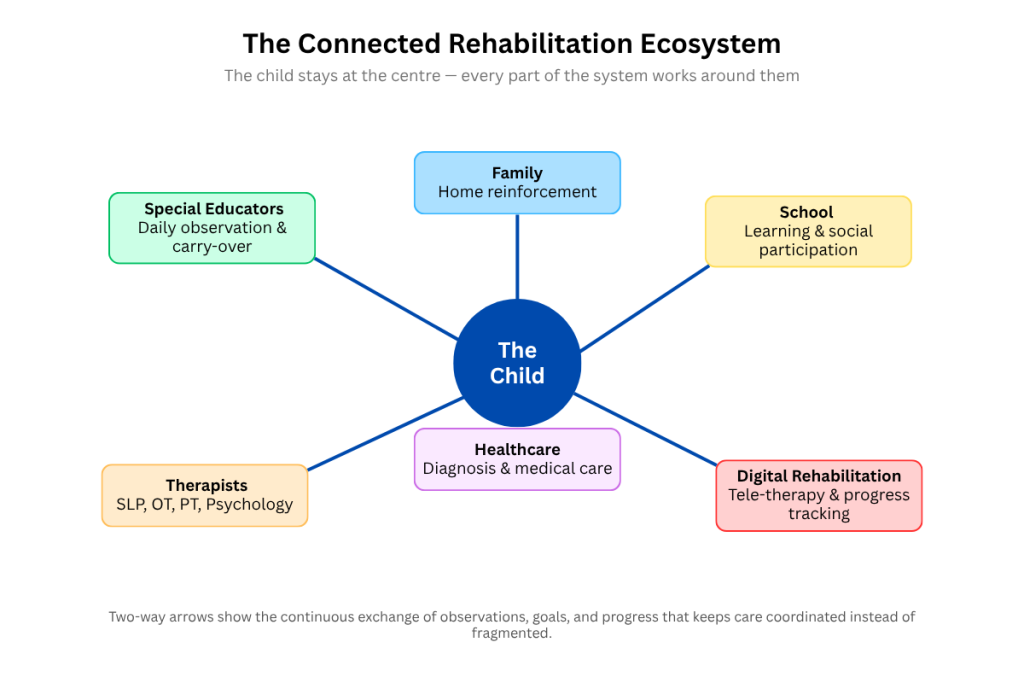
The diagram below shows how this ecosystem holds together, with the child at the centre and every other part working in coordination around them.

 The Connected Rehabilitation Ecosystem — the child stays at the centre while family, school, healthcare, special educators, therapists, and digital rehabilitation work in coordination around them. 

Traditional vs. Connected Rehabilitation Delivery  

AspectTraditional (Isolated) DeliveryConnected / Digital Rehabilitation
Coordination between professionalsTherapists, educators, and doctors often work separately, with reports passed by handReal-time communication and shared progress tracking across the care team
Geographic reachLimited to families who can travel to a centreExtends to rural and underserved areas via tele-rehabilitation
Waiting periodsLong waits for assessment and therapy slotsFaster scheduling and remote assessment options reduce delays
Continuity of careEasily disrupted by relocation, therapist changes, or missed appointmentsProgress history and goals persist digitally, supporting continuity
Parent involvementParents relay updates manually between providersParents access real-time progress and guided home activities
Skill generalisationDepends on informal communication between school and clinicStructured carry-over between therapy, classroom, and home

Why Special Educators Matter in This Ecosystem  

An accessible rehabilitation system depends on collaboration, and special educators are at its centre. Unlike therapists who may see a child periodically, special educators interact with children daily, allowing them to observe progress, identify emerging needs, and reinforce therapeutic goals within natural learning environments. They bridge the gap between home, school, and rehabilitation services by collaborating with families, therapists, and healthcare professionals to ensure consistent, child-centred intervention. As digital rehabilitation expands, their role in monitoring progress, facilitating communication, and promoting continuity of care becomes even more significant.

Conclusion: Looking Beyond the Classroom  

A child’s development does not occur within the boundaries of a classroom or a rehabilitation centre. It is shaped by the collective efforts of families, educators, therapists, healthcare professionals, policymakers, and communities working towards a common goal. When any one of these systems functions in isolation, children are left navigating fragmented services rather than receiving the coordinated support they deserve.

Closing the gaps described above calls for stronger public rehabilitation systems, closer collaboration between education and healthcare, empowered families, multidisciplinary teamwork, and thoughtful integration of digital technologies that extend support beyond traditional service settings.

Within this ecosystem, special educators play a uniquely significant role. Their daily interactions with children, close partnerships with families, and collaboration with rehabilitation professionals position them as the bridge connecting assessment, intervention, education, and participation. Their work reminds us that rehabilitation is not confined to therapy sessions; it becomes meaningful only when it is carried into classrooms, homes, playgrounds, and communities where children learn, communicate, and grow.

Rehabilitation should no longer be viewed as a service that children travel to receive. Instead, it should become a system that reaches children wherever they are through schools, communities, government institutions, digital technologies, and coordinated multidisciplinary care. When rehabilitation becomes accessible rather than exceptional, inclusion moves beyond policy and becomes a lived reality.

When our systems are designed around real outcomes such as confident participation, effective communication, greater independence, and a sense of belonging, rehabilitation becomes more than a service. It becomes an investment in every child’s right to learn, participate, and reach their full potential.


Late Talker or Speech Delay? What A Mother Learned During Her Son’s Speech Evaluation

Reading Time: 9 minutes

Clinically Reviewed by

Elba Rose James
Speech Therapist

When Meera worried about her son’s speech, she thought the answer would be found in a milestone chart. Instead, a speech evaluation taught her that communication is about much more than words. Here’s what parents should know about late talking, speech delays, and the signs therapists look for.

“Everyone Told Me to Wait.”

The first thing Meera said when she sat down for her son’s speech evaluation was surprisingly simple: everyone had told her to wait.

For nearly a year, she had heard the same advice from relatives, neighbours, friends, and even strangers at family gatherings — that boys talk late, that she shouldn’t worry, that their own sons hadn’t spoken properly until age three, and that one day he would start talking and never stop.

At first, those comments helped. They gave her permission to believe everything was fine.

After all, her son Arjun, at just over two years old, seemed bright in so many ways. He could identify almost every vehicle on the road. He knew the difference between a bus, a lorry, a tractor, and a van long before most children his age. If Meera mentioned going outside, he ran straight to the front door. If she asked him to bring his shoes, he usually returned with the correct pair.

He understood far more than he could say, and that was exactly what confused her. If he understood so much, why did communication still feel difficult?

Every evening before dinner, Arjun lined up his vehicles across the living room floor. The blue bus always came first. The red fire engine had to be next. If one was moved out of place, he quietly put it back before continuing his game.

When he wanted something, he rarely used words. Instead, he would take Meera by the hand and lead her to whatever he needed. If a toy had rolled under the sofa, he would point toward it and make sounds, expecting her to understand.

Sometimes she understood immediately. Other times she didn’t, and both of them ended up frustrated.

One evening, Arjun stood beside a shelf reaching toward something he wanted. Meera handed him a toy car. He pushed it away. She offered another vehicle. Again, he shook his head. Within moments, both of them were frustrated. Arjun began to cry, and Meera found herself trying to solve a puzzle without enough clues.

Moments like that happened more often than people realised.

To relatives, Arjun seemed perfectly fine. They saw a bright little boy who understood instructions, recognised objects, and enjoyed playing. What they didn’t see were the small communication struggles that filled ordinary moments at home.

It wasn’t that Arjun wasn’t communicating. He was. He pointed. He gestured. He looked toward things he wanted. He pulled his mother’s hand when he needed help. But there were still many times when he couldn’t clearly express what he was thinking, and those moments left both of them frustrated.

The concern didn’t appear overnight. It grew slowly over months. Every time Meera watched children his age chatting with their parents, she found herself wondering whether she was worrying unnecessarily or missing something important.

She had no intention of seeking a diagnosis. She had no intention of labelling her child. All she wanted to know was whether Arjun was just a late talker or if there was more going on. This question had been silently haunting her for months.

It Was Never Really About the Number of Words

As many parents worried about a possible speech delay, Meera became focused on milestones. She searched online late at night, compared developmental charts, and read countless parenting forums.

Some sources reassured her, while others made her worry more. One article suggested waiting, while another recommended seeking professional advice.

The more information she found, the less certain she became.

What frustrated her most was that Arjun didn’t seem to fit neatly into any category. He understood instructions, recognised familiar objects, and appeared bright and engaged. Yet communication still felt harder than it should have.

Eventually, Meera realised she wasn’t looking for another article or milestone chart. She was looking for clarity. She wanted someone trained in child communication to help her understand whether Arjun was simply developing at his own pace or whether he needed additional support.

That decision led her to schedule a speech evaluation — one that would change the way she thought about communication altogether.

A Birthday Party Changed What She Noticed

A few weeks before the evaluation, Meera took Arjun to a birthday party. Most of the children were around his age, and for much of the afternoon, she watched them play while chatting with other parents.

At first, nothing seemed unusual. The children ran across the garden chasing balloons, climbed over play equipment, and crowded around the snack table whenever treats appeared.

Then a small moment caught her attention.

Someone had brought a bubble machine, and suddenly, dozens of bubbles drifted across the yard. One little boy spotted them and immediately pointed toward the sky. Then he turned to his mother with a huge smile on his face before pointing again. His mother laughed and told him she could see them too, and the boy smiled even wider and continued watching the bubbles float overhead.

It lasted only a few seconds, but Meera found herself thinking about it on the drive home. At a traffic signal, she glanced in the rear-view mirror and saw Arjun quietly watching the vehicles passing by.

Arjun noticed interesting things all the time. He could spend several minutes watching a bird on a fence or tracking a large lorry as it moved down the road. He loved anything that moved.

But as she replayed the afternoon in her mind, she realised something she had never consciously noticed before. When Arjun saw something interesting, he usually enjoyed it on his own. He watched carefully and paid close attention, but he rarely turned to someone else as if to say, did you see that too?

The little boy at the party had been so eager to share what he saw. The comparison stayed with her long after the party ended. She couldn’t explain why it felt important, but it was one more observation she couldn’t quite dismiss.

The Evaluation Wasn’t What She Expected

When the day of the evaluation arrived, Meera expected something that looked like a test. She imagined flashcards, questions, and perhaps someone keeping track of how many words Arjun could say.

Instead, the speech therapist sat down on the floor and pulled out a box of toys.

For the first few minutes, it hardly looked like an assessment at all. A toy car rolled across the room. Arjun chased after it and pushed it back. They looked through a picture book together. A tower of blocks was built, knocked over, and built again.

As the session continued, Meera found herself wondering when the actual evaluation would begin. Then she realised it already had.

While Arjun played, the therapist was paying attention to things Meera had never thought to watch for. She noticed how he responded when someone tried to engage him in a game. She watched whether he looked between an object and another person. She observed how he communicated when he needed help or wanted something to continue.

At one point, Arjun happily pushed a toy car back and forth with the therapist several times. He was clearly enjoying himself. The therapist smiled and made a quick note. Meera wasn’t entirely sure why. To her, it looked like ordinary play, but the therapist was gathering information from every interaction.

A little later, the therapist asked a question that caught her by surprise — whether Arjun pointed to show her things. The question seemed simple, and Meera replied that of course he did: he pointed at snacks he wanted, toys that were out of reach, and anything else he needed.

But as the conversation continued, she realised that wasn’t quite what the therapist meant. What the therapist was asking was something more specific: did he point to things he found interesting, and then look back at Meera to see if she was watching too?

Meera paused.

She thought about the birds Arjun loved watching from the window. She thought about the buses and lorries that captured his attention whenever they passed by. He definitely noticed those things. But did he try to share them? She wasn’t sure.

The therapist explained that communication begins long before children speak in full sentences. Sometimes the most important moments are surprisingly small — a child pointing at an aeroplane, looking back at a parent, and silently inviting them to share the experience.

As she listened, Meera found herself thinking back to the birthday party a few weeks earlier and the little boy excitedly pointing at the bubbles. For months, she had been focused on words. The therapist was looking at the bigger picture of communication.

What Speech Therapists Often Notice Before Parents Do

As the evaluation continued, Meera began to understand why simply counting words doesn’t tell the whole story.

The therapist wasn’t focused on how many words Arjun could say. Instead, she paid attention to dozens of small interactions that most parents would never think to measure. She watched how he tried to get someone’s attention during play, whether he looked toward another person when something interesting happened, how he communicated when he needed help, and whether he naturally used gestures or copied actions demonstrated by others.

To Meera, many of these moments seemed ordinary. To the therapist, they provided important clues about how communication was developing.

That was one of the biggest surprises of the evaluation: speech therapists don’t evaluate only speech. They evaluate communication.

Two children can have a similar number of words but communicate in very different ways. One child may actively seek interaction, share experiences, and use gestures confidently, while another may rely on adults to interpret their needs. Looking at vocabulary alone rarely tells the full story.

In some children, speech difficulties are not always related to vocabulary alone but may involve motor planning and speech coordination challenges that require a different therapeutic approach.

“But He Understands Everything”

This was one of the comments Meera heard most often from family members — that if he understood everything, he was probably fine.

And in many ways, they had a point. Arjun understood a lot. He followed familiar routines, recognised everyday objects, and usually knew what people were asking him to do. Those were all encouraging signs.

But during the evaluation, Meera learned something she had never fully considered: understanding language and expressing language are not the same thing.

A child may understand far more than they can communicate. In Arjun’s case, that gap was part of what made everyday situations so frustrating. He often knew what was happening around him and understood what others were saying, but expressing his own thoughts, needs, and experiences was much harder.

That is why speech therapists evaluate both understanding and expression. Looking at only one side of communication can leave important pieces of the picture unexplored.

So, Was Arjun a Late Talker or Was It Something More?

This was the question Meera had been carrying for months.

The answer, she learned, wasn’t based on a single milestone or a specific number of words.

Some children speak later than expected but continue to show strong communication skills in other ways. They use gestures naturally, seek interaction, share experiences, and find ways to connect with the people around them, even before their vocabulary grows.

For other children, the challenges extend beyond speech itself. Difficulties with gestures, interaction, imitation, play, or social communication can provide important clues about how communication is developing.

That is why evaluations focus on the whole child rather than a single milestone. Rather than asking how many words a child can say, therapists work to understand how that child communicates overall.

Three Months Later

Three months after the evaluation, Meera noticed something she hadn’t expected. She had stopped counting words.

For nearly a year, every new word had felt important. She tracked them mentally and compared them to milestones she found online. Now she was noticing different things.

Arjun brought books to her and waited for her to read with him. When he needed help, he looked toward her instead of struggling alone. During walks, he pointed excitedly at birds, buses, and aeroplanes.

Sometimes, after pointing, he looked back at her as if to make sure she was seeing them too.

The moments were small, and most people probably wouldn’t have noticed them. Meera noticed everything.

Communication was becoming easier. The words were still developing, but something else was growing alongside them: connection.

For the first time in a long while, she felt she understood what the therapist had been looking for all along.

Why Waiting Isn’t Always the Best Plan

Some children are simply late talkers. Others benefit from early support. The challenge is that parents rarely know which situation applies by reading milestone charts or comparing their child to others.

That was exactly where Meera found herself. She wasn’t looking for someone to predict the future. She was looking for clarity.

A speech evaluation doesn’t automatically mean therapy will be recommended. Sometimes families leave reassured. Sometimes they receive practical strategies to support communication at home. Sometimes additional support is advised.

In every case, the goal is the same: to better understand a child’s communication strengths, challenges, and developmental needs. And that understanding often replaces months of uncertainty with confidence.

Research and clinical practice continue to highlight the value of early intervention and structured communication opportunities during the early years of development.

Supporting Communication at Home

One of the most reassuring things Meera learned was that communication development doesn’t happen only during therapy sessions.

Many opportunities already exist in everyday life — while reading books, sharing meals, taking walks, or playing together. These simple interactions help children learn how to express needs, share experiences, ask for help, and connect with others.

Parents play the most important role in this process. Consistent, meaningful interaction throughout the day often creates powerful opportunities for communication growth.

For families seeking additional support, structured learning tools such as XceptionalLEARNING and VergeTAB can complement everyday experiences by providing engaging activities that reinforce communication, listening, and language skills alongside professional guidance.

See Communication Growth in Action

Parents often ask what meaningful communication progress actually looks like in everyday life.

The video below features Speech-Language Pathologist Chinnu Thomas and highlights how structured intervention, engagement-focused activities, and technology-supported learning experiences can help children strengthen communication skills over time.

From Struggles to Success: How VergeTAB Transformed My Client’s Therapy | Chinnu Thomas, SLP

Final Thoughts

Months earlier, Meera believed the most important question was how many words her child should be saying. The evaluation taught her to ask a different question: how is my child communicating?

That shift changed everything.

For months, she had focused on milestones and word counts. What she eventually learned was that understanding communication involves much more than measuring vocabulary alone.

Some children are simply late talkers. Others benefit from additional support. The value of a speech evaluation is not in predicting the future but in helping families better understand where a child is today.

For Meera, that understanding replaced uncertainty with confidence. And for many families, it can be the first step toward helping a child communicate, connect, and thrive.

National Conference on Autism (NCA 2026): Key Clinical Insights and Emerging Trends in Autism Therapy

Reading Time: 3 minutes

Written by
Elizabeth Francis
Occupational Therapist

Attending the National Conference on Autism (NCA 2026) at SRM Institute of Science and Technology was a highly enriching academic and clinical experience. The conference served as a valuable platform for learning, professional networking, and gaining exposure to evolving, evidence-based practices in autism care.

Conference Overview

  • Dates: 28th, 29th & 30th April 2026
  • Organized by: SRM College of Occupational Therapy, SRM Institute of Science and Technology
  • Venue: Dr. T. P. Ganesan Auditorium, SRMIST

The central theme, Transforming Autism Care: Integrating Technology with Human-Centered Practice, highlighted the growing shift toward person-centered, strengths-based approaches supported by innovative technology.

Day 1: Conference and Oral Presentations

I, along with Dwitheeya ma’am, reached SRM College of Occupational Therapy at 1:00 PM. We had the opportunity to interact with eminent professionals including Dr. Ganapathi Shankar (Dean), Dr. S. Lakshmanan (Senior Occupational Therapist), along with other clinicians, faculty members, and students.

The oral presentations were scheduled at 2:30 PM but began at 3:30 PM due to the delayed arrival of judges. The schedule was rearranged, and our presentation was positioned 8th in the sequence.

Our Presentation

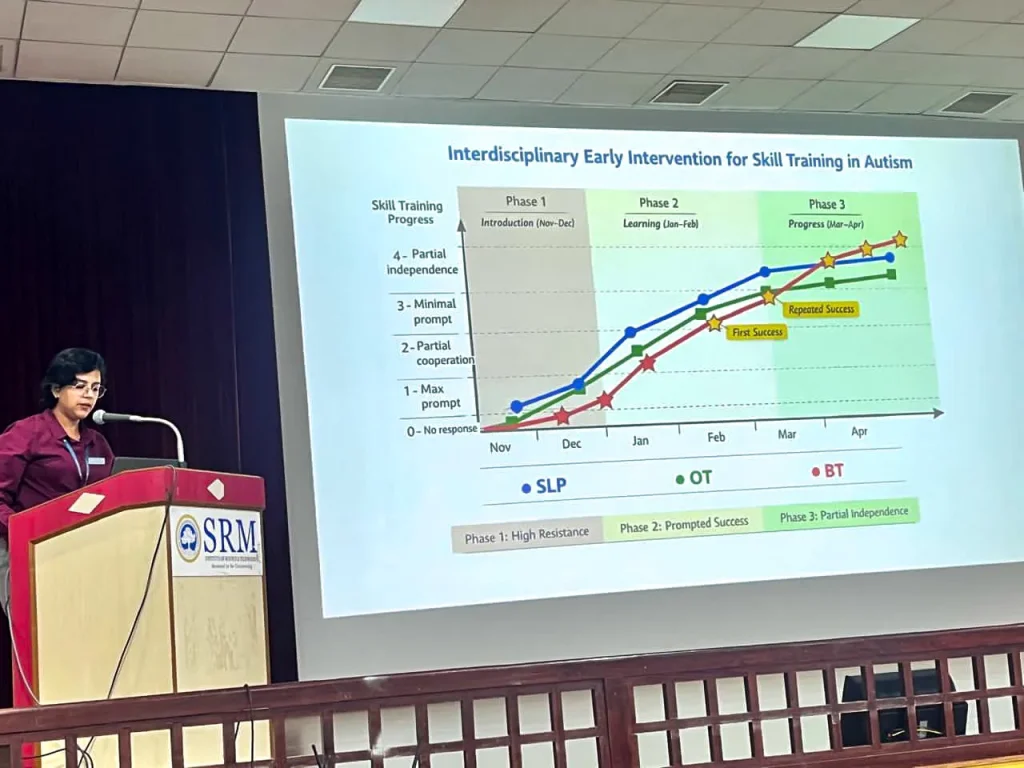
Topic: Advancing Autism Management Through Integrated Early Intervention

Presenting ‘Advancing Autism Management Through Integrated Early Intervention’ at NCA 2026, SRM Institute of Science and Technology

Our presentation focused on the importance of early, interdisciplinary approaches in improving outcomes for children with Autism Spectrum Disorder (ASD). The session was delivered confidently, and all questions from the panel were addressed clearly and effectively.

Highlights from Other Presentations

Several insightful topics were presented, reflecting current trends and innovations in autism care:

  • Digital Jaap Mala and Occupational Therapy: A Human-Centred Approach to Self-Regulation in Autism
  • Impact of Virtual Reality Intervention on Reducing Gravitational Insecurity Among Children with Autism
  • Library-Based Occupational Therapy Intervention for Adaptive Skills (Single Case Study)
  • Visual Perceptual Skills Training for Improving Handwriting
  • Sensory Integration vs. Snoezelen Therapy
  • Sensory-Based Bedtime Routine and Its Impact on Sleep Quality
  • Mothers’ Lived Experiences in Managing Autism
  • Sensory Motor Activities and Behaviour Therapy for Reducing Repetitive Behaviour

Key Clinical Takeaways

The conference brought forward several important clinical insights: 

  • Early and integrated intervention plays a critical role in long-term outcomes
  • Technology-based interventions are becoming increasingly relevant in therapy
  • Person-centered and strengths-based approaches are essential in autism care
  • Sensory and environmental modifications significantly impact behaviour and development
  • Interdisciplinary collaboration enhances overall therapy effectiveness

Day 2: Visit to MERF Institute of Speech and Hearing

On the second day, we visited MERF Institute of Speech and Hearing (MERF-ISH), Chennai, a globally recognized center in audiology and speech-language pathology.

MERF-ISH is:

  • The 3rd largest Auditory Brainstem Implant center globally
  • The only Indian member of the HEARRING network

The institution is well known for setting benchmarks in clinical services, innovative treatment approaches, and research advancements.

Clinical Leadership and Professional Interaction

We had the privilege of interacting with Dr. Ranjith Rajeswaran, Professor, Director, and Chief Audiologist at MERF-ISH. His contributions to audiology and speech-language pathology, particularly in hearing implant research and clinical innovation, are highly significant.

During the interaction, we discussed potential opportunities for future collaboration, including:

  • Organizing clinical training programs
  • Strengthening knowledge exchange between institutions
  • Promoting interdisciplinary learning

We also shared an informal lunch interaction, which allowed further professional discussion in a collaborative setting.

Additionally, I had the opportunity to observe a therapy session at MERF-ISH, providing practical exposure to advanced clinical practices.

What This Experience Showed 

This conference was not just an academic event—it provided practical clarity on where autism care is heading.

  • The integration of technology in therapy is no longer optional—it is becoming essential
  • Early intervention continues to be the foundation of effective autism management
  • Collaboration across disciplines leads to better clinical outcomes
  • Real-world application of research is critical in improving therapy effectiveness

Overall Reflection

Overall, this experience significantly enhanced my clinical knowledge, exposure to advanced rehabilitation practices, and understanding of interdisciplinary collaboration. It also emphasized the value of continuous learning and evidence-based approaches in autism and communication disorders. 

Get Expert Guidance for Autism Therapy

If you’re a parent, therapist, or educator looking to apply these clinical insights in real-world therapy, our team can guide you with structured, technology-supported solutions tailored to your needs.

Digital Transformation in Special Education: Integrating Therapy, Assessment and Progress Tracking

Reading Time: 4 minutes

Clinically Reviewed by

Meha P. Parekh
Special Educator

Quick Summary

  • Digital systems connect therapy, assessment, and progress tracking in one place
  • Eliminates fragmented documentation across professionals
  • Enables real-time progress monitoring and better decision-making
  • Improves collaboration between therapists, educators, and parents
  • Helps institutions deliver consistent, measurable outcomes

Introduction: Why Many Therapy Systems Still Struggle

Why do many therapy programs struggle to deliver consistent results despite expert intervention?

Special education is evolving rapidly. More children are being identified with speech delays, learning difficulties, developmental disorders, and behavioural challenges at an early stage. While this is a positive shift, it also exposes a major gap in how therapy services are delivered.

Most therapy systems today still operate in silos:

  • Therapy sessions happen in isolation
  • Progress is recorded manually
  • Assessments are not continuously tracked
  • Parents receive limited updates

This lack of integration makes it difficult to ensure consistent, measurable outcomes.

Digital transformation solves this by connecting therapy, assessment, and progress tracking into one structured ecosystem.

Challenges in Traditional Therapy Systems

1. Fragmented Documentation

Different professionals maintain separate records:

  • Speech therapy notes
  • Occupational therapy reports
  • Classroom observations

Result: No unified view of the child’s development.

Without a centralized system, valuable insights across developmental areas are often missed.

2. Limited Progress Visibility

Manual tracking makes it difficult to:

  • Measure long-term improvement
  • Identify developmental patterns
  • Adjust therapy strategies effectively

Therapists rely on periodic reviews instead of continuous data.

3. Low Parent Involvement

Parents often:

  • Receive updates only during review meetings
  • Lack structured guidance for home practice

This reduces therapy consistency outside sessions.

Want to see how a connected therapy system solves these challenges?

Traditional vs Digital Therapy Systems

Traditional ApproachDigital Approach
Manual documentationReal-time tracking
Isolated sessionsConnected ecosystem
Limited insightsData-driven decisions
Minimal parent involvementContinuous collaboration
A Comparative View of Traditional and Digital Therapy Systems in Special Education

This shift is the foundation of modern special education systems.

What a Modern Digital Therapy System Should Include

A truly effective system should support the entire therapy workflow, not just one part of intervention:

  • Therapy Session Management – Conduct and record structured sessions
  • Digital Screening and Assessments – Identify developmental needs early
  • Structured Activity Libraries – Pre-designed therapy exercises across domains
  • Progress Tracking Dashboards – Visual reports and analytics
  • Parent Collaboration Tools – Guided home-based activities
  • Institutional Management Systems – Manage schedules, records, and performance

Together, these create a complete therapy ecosystem, not just a tool.

How a Digital Therapy System Works (Step-by-Step)

A connected therapy platform follows a structured workflow:

  1. Child Profile Creation
    Developmental history, screening results, and therapy goals
  2. Assessment and Evaluation
    Identify strengths, delays, and intervention areas
  3. Therapy Plan Creation
    Personalized therapy programs based on data
  4. Therapy Sessions
    Interactive, structured activities for engagement
  5. Progress Tracking
    Real-time recording with reports and analytics
  6. Parent Collaboration
    Guided home activities and regular updates

This ensures consistency, accountability, and measurable progress.

See How a Digital Therapy Platform Works in Real Environments

Instead of imagining how a connected therapy system works, watch how therapy sessions, assessments, and progress tracking come together in real environments.

Watch the platform in action below:
Revolutionary Change in Rehabilitation | XceptionalLEARNING’s Digital Therapy Platform

Want to implement this structured system in your school or clinic?

Example of a Connected Therapy Ecosystem

Platforms like XceptionalLEARNING are designed specifically for special education and therapy environments.

They integrate:

  • Digital therapy content libraries
  • Tele-therapy capabilities
  • Therapy plan creation and management
  • Progress monitoring
  • Parent engagement tools

This creates a seamless ecosystem where therapy, learning, and tracking work together.

Digital Screening and Early Identification

Early intervention is critical for better outcomes.

Digital screening tools help professionals:

  • Identify developmental delays early
  • Assess multiple developmental domains
  • Start targeted therapy faster

Early identification = more effective intervention and better long-term results

Technology and Assistive Devices in Therapy

Therapy is no longer limited to traditional tools.

Assistive devices like VergeTAB are transforming therapy sessions by enabling:

  • Structured learning activities
  • Speech and communication training
  • Cognitive and behavioural development
  • Motor skill improvement

Unlike regular tablets, these are designed specifically for therapy-focused environments.

When combined with digital platforms, they also provide performance insights and engagement tracking.

See How VergeTAB Transform Learning in Special Schools

Understanding the concept is one thing—but seeing how structured digital tools are used in real classrooms makes the difference.

Watch how VergeTAB support learning, engagement, and therapy outcomes in special school environments:
How VergeTAB Is Transforming Learning for Children with Special Needs | A Special School Perspective

Want to implement this in your school?

Benefits for Schools and Therapy Centres

Digital systems provide significant advantages:

  • Improved therapy consistency
  • Clear tracking of student progress
  • Better collaboration between professionals
  • Reduced manual workload
  • Data-driven decision making

Institutions gain both operational efficiency and better therapy outcomes.

Emerging Trends in Digital Special Education

The future of therapy systems is moving toward:

  • AI-driven progress analysis
  • Adaptive learning content
  • Cloud-based collaboration
  • Personalized therapy pathways

The goal: Fully connected, intelligent therapy ecosystems.

Frequently Asked Questions

What is a digital therapy system?

A platform that connects therapy sessions, assessments, and progress tracking in one structured environment.

How does it improve outcomes?

By enabling progress data tracking, structured workflows, and consistent intervention strategies.

Can parents use it at home?

Yes. Parents can access guided activities and support therapy goals outside sessions.

Conclusion: The Future is Connected Therapy

Special education is rapidly moving toward structured, connected systems that ensure consistency across therapy, classroom, and home. Platforms like XceptionalLEARNING are enabling schools, therapists, and families to collaborate more effectively while delivering measurable, data-driven outcomes. Combined with assistive tools like VergeTAB and structured activity libraries, institutions can build scalable, consistent, and result-oriented intervention programs.

Institutions that adopt digital therapy systems can:

  • Deliver better outcomes
  • Improve collaboration
  • Track progress more effectively

If your current system is still fragmented, now is the time to evolve.

Ready to Upgrade Your Therapy System?

See how it can work for your school or clinic.

Why Special Education is Important for Real-Life Skill Development in Children

Reading Time: 3 minutes

Written by: Jasna K
Special Educator

Introduction  

When we see a child with different learning needs say a new word, hold a pencil, or stay focused for a few minutes, it feels like a big achievement. These moments often come through speech therapy, occupational therapy, and behavioural support.

However, development does not stop there.

Special education programs play an equally important role in helping children use these skills in real-life situations. Skills become meaningful only when they are applied in daily life—at home, in school, and in social environments.

This is where therapy and special education work together, supporting the child’s overall development in a complete and practical way.

Beyond Learning a Skill  

Therapies help children develop essential abilities like communication, movement, and behaviour, creating a strong foundation for growth.

But learning a skill is only the first step.

What truly matters is:
Can the child use that skill in real life?

Special education bridges this gap by helping children apply what they learn during therapy into everyday situations. This makes learning more meaningful, functional, and useful.

How Special Education Supports Daily Learning  

Special education focuses on practical application through structured support.

It helps children by:

  • Providing consistent routines
  • Using simple, guided activities
  • Encouraging repetition and practice
  • Supporting learning in real-life environments like home and school

Children are guided step-by-step to understand:

  • What to do
  • When to do it
  • How to do it

Over time, this builds confidence, independence, and consistency.

Real-Life Examples of Skill Application  

  • A child learns to say “water” in speech therapy → uses it when thirsty at home or in class
  • A child learns greetings → starts saying “hello” to teachers and family
  • A child practices sitting during therapy → follows classroom sitting routines

These small transitions show how skills become meaningful when used naturally.

Watch how special education helps children apply skills in real-life classroom settings:
How VergeTAB Is Transforming Learning for Children with Special Needs | A Special School Perspective

This video shows how structured support and guided activities help children use learned skills naturally in everyday environments like classrooms and home.

Want to implement this structured learning approach for your child or school?

Supporting Daily Life Through Special Education  

Special education helps children connect learning with real-life experiences. It supports them in:

  • Using communication skills in different situations
  • Following daily routines and instructions
  • Participating in classroom and home activities
  • Interacting with others confidently

With regular practice, children begin to use their skills more independently in everyday life.

Working Together for the Child  

A child’s development becomes stronger when all supports work together.

  • Therapy builds the skill
  • Special education helps apply the skill

When combined, they create a complete learning system that supports real progress.

This integrated approach is especially important in early intervention programs, where consistency and collaboration make a big difference.

Platforms like XceptionalLEARNING are designed to support this model by connecting therapists, educators, and parents—ensuring that every skill learned is practiced and applied effectively in daily life.

Conclusion  

A child’s development becomes truly meaningful when learning goes beyond acquiring skills and extends into using them in everyday life.

Special education plays a vital role in this journey by helping children apply what they learn through therapy in real-world situations. When therapies and special education programs work together, children gain not only skills but also the confidence and independence to use them naturally.

Want to see how structured therapy and special education work together in real life?

Explore how this approach can support your child or institution.

Empowering Parents at Home: Building a Structured Digital Learning Ecosystem for Children

Reading Time: 4 minutes

Written by

Athira. M.K

Special Educator

The Role of Technology in a Connected Therapy Ecosystem

A child’s learning journey does not end at the classroom door. For children receiving therapy, special education support, or early intervention, learning continues at home through structured routines, guided practice, and meaningful parent involvement.

In today’s digital age, education and therapy no longer function in isolation. Instead, they operate within a connected learning and therapy ecosystem — where children, parents, therapists, educators, and digital platforms work together toward shared developmental goals.

For parents, this ecosystem creates powerful opportunities. When used thoughtfully, technology does not replace parental involvement — it strengthens it. With structured tools and guided digital systems, parents become active partners in their child’s progress.

Establishing a Structured Learning Routine at Home

Children — especially those receiving speech therapy, occupational therapy, behavioural support, or early intervention — develop in predictable environments. Structure reduces anxiety, improves attention, and increases engagement.

Parents can establish consistency by:
  • Setting fixed times for learning, therapy practice, play, meals, and rest
  • Balancing digital sessions with offline reinforcement
  • Using visual schedules and guided transitions

Within the XceptionalLEARNING ecosystem, tools like the XL Portal support structured implementation by organizing therapy goals, digital sessions, and daily reinforcement activities in one unified space. Parents can clearly see what needs to be practiced and when — reducing uncertainty and increasing confidence.

When routines are structured, children transition more smoothly between activities and engage more positively with learning tasks.

Using Technology as a Support System, Not a Substitute

Technology is most effective when it supports human interaction — not replaces it. Emotional connection, encouragement, and presence remain central to a child’s development.

Parents can strengthen learning by:
  • Sitting with their child during guided digital sessions
  • Discussing therapy goals and progress
  • Asking open-ended questions
  • Encouraging reflection and communication

Structured tools such as VergeTAB, a digital activity book, enable therapists to assign targeted activities aligned with speech, motor, behavioural, and cognitive goals. Parents can reinforce these goals at home using the same structured activities, ensuring consistency and continuity across environments.

This alignment transforms digital tools into collaborative support systems rather than passive screen time.

Enabling Personalized Learning Through Digital Tools

Every child learns differently. One of the most powerful advantages of technology-enabled therapy is personalization.

Digital systems allow:
  • Adjustment of learning pace
  • Custom difficulty levels
  • Visual, auditory, and interactive formats
  • Repetition without pressure

This is especially critical in Early Intervention Programs, where small, consistent gains build long-term developmental foundations.

Through the XL Portal, therapy goals are clearly structured and measurable. Parents can see what skill is being targeted — whether it is speech articulation, fine motor coordination, sensory regulation, or social communication — and support it appropriately at home.

Personalization removes comparison and builds confidence.

Strengthening Communication Through Structured Digital Supports

Communication is central to learning — particularly for children with speech delays, autism spectrum conditions, or expressive language challenges.

Digital tools support communication by:
  • Providing visual-based interaction formats
  • Supporting structured choice-making
  • Reducing frustration during expression

When parents consistently use structured communication supports at home, children experience fewer breakdowns and greater confidence. This strengthens both learning engagement and emotional bonding.

Connecting Home Practice With Institutional Goals

One of the biggest challenges in therapy is lack of continuity between clinic/school sessions and home practice.

A connected ecosystem solves this.

With institutional dashboards, educators and therapists can:

  • Track progress
  • Monitor consistency
  • Adjust therapy goals
  • Share updates transparently

Parents gain visibility into performance metrics and session engagement, ensuring that home reinforcement directly aligns with professional objectives.

This consistency significantly improves skill retention and generalization.

Balancing Digital Learning With Real-World Reinforcement

Technology enhances learning — but real-world application strengthens it.

Digital sessions introduce skills in a structured way, but children truly internalize those skills when they practice them in everyday situations. Real-life reinforcement builds confidence, independence, and meaningful skill transfer.

Parents can:
  • Follow digital therapy sessions with drawing, building, or sensory-based play
  • Reinforce communication skills during meals, playtime, or family outings
  • Practice motor skills through daily routines like dressing, organizing toys, or helping in simple household tasks

Within this connected ecosystem, the XL Marketplace further supports families by providing access to qualified therapists, specialized intervention services, and structured digital therapy resources. Parents can explore professional guidance, curated learning supports, and additional therapy services that complement their child’s goals.

This ensures that digital guidance does not remain confined to the screen. Instead, it becomes part of a broader, professionally supported learning journey — translating structured therapy into practical, everyday progress.

Using Data to Understand Progress and Intervene Early

One of the most empowering aspects of a connected therapy ecosystem is visibility.

Through centralized platforms, parents can:
  • Track engagement patterns
  • Identify emerging strengths
  • Detect learning gaps early
  • Collaborate with therapists proactively

Rather than reacting to challenges months later, parents can respond early and confidently.

This is particularly impactful in early childhood, where timely intervention shapes long-term developmental outcomes.

Encouraging Healthy and Responsible Technology Use

Structured digital ecosystems are not about unlimited screen exposure — they are about purposeful engagement.

Healthy habits include:
  • Defined session durations
  • Movement breaks
  • Calm, distraction-free environments
  • Parent-guided participation

When technology is structured and goal-oriented, it becomes a developmental tool rather than entertainment.

How a Connected Therapy Ecosystem Empowers Parents

Technology, when implemented within a unified system like XceptionalLEARNING, empowers parents by:

  • Reducing confusion about therapy goals
  • Offering structured reinforcement pathways
  • Providing measurable progress tracking
  • Strengthening collaboration with institutions
  • Supporting early intervention consistency

Parents move from uncertainty to clarity — from passive observers to informed partners.

Conclusion

When parents actively participate in a connected therapy ecosystem, children experience structured progress, personalized support, and consistent developmental growth. Learning at home becomes focused, measurable, and aligned — never random or overwhelming.

Through solutions offered by XceptionalLEARNING, families gain access to digital therapy systems that unify therapy goals with practical home-based support.

Learning becomes consistent. Progress becomes measurable. Development becomes collaborative.

Take the Next Step

Ready to build a structured digital therapy ecosystem for your child or institution?

Connect with our team on WhatsApp for personalized guidance on implementation, solutions, and professional support.

Let’s create clarity, continuity, and measurable growth — together.

When Should You Start Physiotherapy for Your Child’s Physical Development?

Reading Time: 4 minutes

Clinically Reviewed by

Meenu Mary Chacko 

Physiotherapist 

Monitoring your child’s physical development as a parent is crucial. Some children may face delays or challenges due to injury, illness, or genetic conditions, making physiotherapy an important tool for helping them achieve optimal growth. Starting physiotherapy early can significantly improve a child’s progress, promoting a healthier, more active life. This blog discusses signs indicating the need for physiotherapy, the benefits of early intervention, and what to expect during physiotherapy sessions.

1. Understanding Child Development and Milestones

It’s important to recognize typical physical development milestones to track your child’s progress and identify when they may need extra support.

Typical Physical Development Milestones:
  • Infants (0-12 months): Lifting head, rolling over, sitting, crawling, standing.
  • Toddlers (1-3 years): Walking independently, climbing stairs, running.
  • Preschoolers (3-5 years): Improving balance, jumping, skipping, riding a tricycle.
  • School-age children (6+ years): Developing motor skills for writing, running, and sports.

If your child is missing these milestones or showing delays, physiotherapy could help address these challenges.

2. Signs That Indicate the Need for Physiotherapy

Early intervention can make a significant difference in addressing physical development challenges. Here are some signs that may indicate your child could benefit from physiotherapy:

  • Delayed Gross Motor Skills: Difficulty with crawling, walking, running, jumping, or reaching milestones like walking by 18 months.
  • Poor Posture and Balance: Struggling with posture, slouching, or balance while walking or standing.
  • Muscle Weakness or Tightness: Weakness or tightness in specific muscles, affecting movement and mobility.
  • Abnormal Gait or Movement Patterns: Walking with limp or abnormal movement patterns, such as dragging feet.
  • Difficulty with Coordination: Trouble with coordination, such as running, jumping, or writing, compared to peers.

If you notice these signs, a physiotherapist can assess and provide targeted interventions to support your child’s physical development.

3. The Role of Physiotherapy in Child Development

Physiotherapy is crucial in addressing developmental delays, promoting health, and improving motor skills. Physiotherapists work with children to achieve goals, recover from injuries, and build strength.

  • Early Intervention for Optimal Results: Starting physiotherapy early helps develop motor skills and prevent future problems. Techniques like exercise, manual therapy, and posture correction are used to improve physical abilities.
  • Strengthening and Improving Flexibility: Physiotherapy targets muscle imbalances, strengthening weak muscles and improving flexibility, which enhances overall mobility and quality of life.
  • Addressing Pain or Discomfort: Techniques like massage and stretching help relieve pain from injuries or conditions, enabling children to engage more fully in daily activities.
  • Building Confidence: As children improve their physical skills, they gain confidence, self-esteem, and a sense of accomplishment, which boosts participation in activities with peers.
4. When to Seek Physiotherapy for Your Child

Knowing when to seek physiotherapy for your child is essential. While some delays are normal, certain signs suggest professional help is needed. Consulting a pediatrician is always a good first step.

Immediate Consultation: Consider physiotherapy if you notice:

  • Persistent delays in motor milestones (e.g., crawling or walking)
  • Abnormal gait patterns or difficulty with balance
  • Muscle tightness, weakness, or discomfort
  • Difficulty with coordination or fine motor skills
  • Pain or discomfort that lasts over time

Referral from a Pediatrician: If concerns arise during a check-up, your pediatrician may refer you to a physiotherapist for further evaluation and specialized care.

5. What to Expect During Physiotherapy Sessions

Physiotherapy for children is personalized to address specific challenges and support overall development.

  • Initial Assessment: The first session involves a comprehensive assessment where the physiotherapist evaluates movement, strength, flexibility, and posture. They will review medical history and discuss concerns to create an individualized treatment plan.
  • Tailored Exercises and Techniques: The physiotherapist will guide your child through exercises such as stretching, balance, strength-building, and coordination activities, using fun and engaging methods appropriate for their age.
  • Ongoing Monitoring and Adjustments: The therapist will track progress and adjust the treatment plan as needed, ensuring the exercises evolve to continue supporting your child’s development.
  • Parental Involvement: Parents may be asked to assist with exercises at home to reinforce therapy and encourage progress.
  • Gradual Progression: Sessions will gradually increase in intensity and complexity as your child improves, promoting long-term physical health.
6. Benefits of Early Physiotherapy for Children

Starting physiotherapy early offers numerous advantages for children with developmental delays. Some key benefits include:

  • Faster Recovery: Early intervention helps children recover more quickly from injuries or physical conditions, preventing long-term complications.
  • Improved Motor Skills and Coordination: Physiotherapy enhances gross and fine motor skills, improving coordination, balance, and overall movement.
  • Reduced Risk of Chronic Physical Problems: Timely physiotherapy reduces the likelihood of developing chronic physical issues, such as joint problems or postural imbalances, in the future.
  • Better Posture and Alignment: Physiotherapy addresses posture issues early on, promoting proper alignment and reducing strain on muscles and joints.
  • Increased Strength, Flexibility, and Mobility: Strengthening weak muscles, improving flexibility, and enhancing mobility help children perform daily activities with ease.
  • Enhanced Self-Esteem and Confidence: As children progress in their physical abilities, they develop a sense of accomplishment and confidence, which positively impacts their overall well-being.
  • Prevention of Further Complications: Early physiotherapy can identify underlying conditions or potential issues, allowing for early correction and preventing future physical challenges.
  • Customized Treatment Plans: Physiotherapy provides individualized care tailored to a child’s specific needs, ensuring more effective results and better progress.
  • Improved Social Interaction: As children gain motor control and confidence, they can engage more in physical activities, leading to better social interaction with peers.

Starting physiotherapy early sets the foundation for healthier physical development and a higher quality of life for your child.

In Conclusion, Identifying the right time to start physiotherapy for your child is crucial for their physical development. Early intervention helps address delays, enhance motor skills, and provide necessary child development support. If you notice any concerns, it’s essential to consult a professional for guidance on the best physiotherapy services. At XceptionalLEARNING, we offer tools like our Digital Activity Book to support your child’s growth, providing additional support in therapy and development. For more information or to schedule a consultation, feel free to contact us today. Your child’s journey toward optimal health and development starts with the right care.